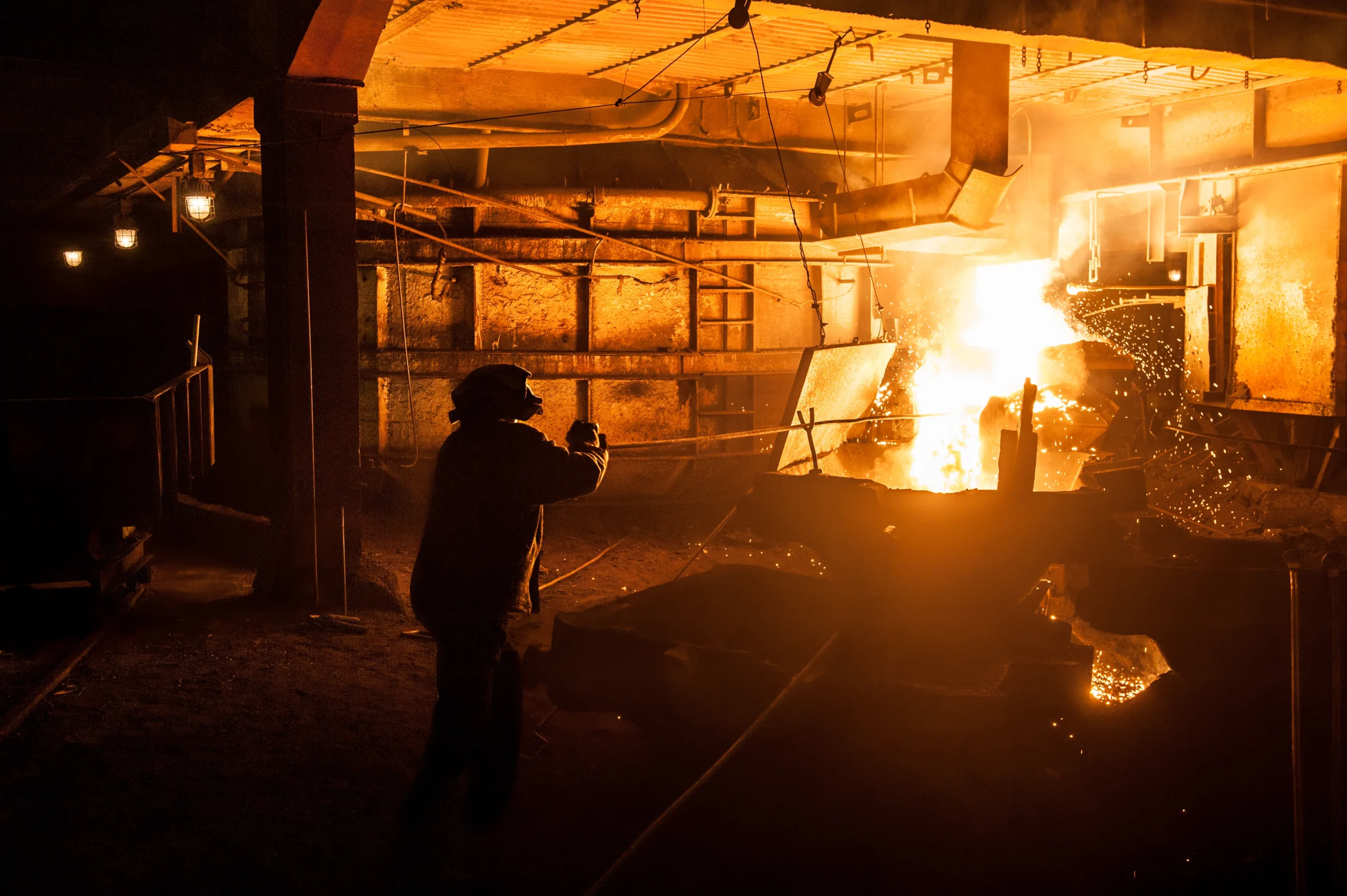
Steel production in Pakistan has become one of the most important pillars supporting national development, infrastructure progress, and industrial expansion. As the country continues to urbanize and invest in major construction activities, the demand for high-quality steel has increased consistently. This rise in demand has pushed both established and emerging steel manufacturers to expand production capabilities and adopt modern technologies. Today, steel production in Pakistan is not only essential to the construction sector but also critical for transportation, manufacturing, energy projects, and long-term economic stability.
This article provides an in-depth look at the current condition of steel production in Pakistan, the competitive landscape, ongoing challenges, and the potential future growth of the industry. It is tailored to meet SEO needs and integrates the keyword steel production in Pakistan naturally throughout the content.
Introduction to Steel Production in Pakistan
The steel industry in Pakistan has grown from a small re-rolling market into a large-scale industrial sector supplying millions of tons of steel products each year. From deformed steel bars to billets, coils, sheets, and structural sections, the industry caters to construction, engineering, energy, and manufacturing needs across the country. Steel production in Pakistan acts as the backbone of roads, bridges, dams, railways, industrial buildings, and residential housing projects.
The rise of private-sector steel mills, combined with increased domestic demand, has created a more competitive environment. Although Pakistan Steel Mills, once the largest integrated steel plant, has remained non-operational for years, the private sector has stepped in to fill the gap. Modern technologies, induction furnaces, continuous casting processes, and quality-control mechanisms have helped improve the overall standard of steel production in Pakistan.
Demand and Consumption Trends
To understand the direction of steel production in Pakistan, it is important to highlight the rising consumption levels. The country’s steel consumption has steadily increased due to:
- Expansion of residential housing schemes
- Growth in commercial and industrial projects
- Government-funded infrastructure and road networks
- Rapid urbanization
- Increasing preference for earthquake-resistant construction materials
Pakistan’s steel consumption per capita remains lower than many regional countries, meaning there is significant scope for future growth. As population density rises and megacities expand, demand for premium-quality steel products is expected to increase sharply in the coming years. This ensures that steel production in Pakistan will continue to be a critical driver of economic activity.
Segments Contributing to Steel Production in Pakistan
The steel industry in Pakistan is divided into several important categories, each contributing differently to national output.
1. Long Steel Products
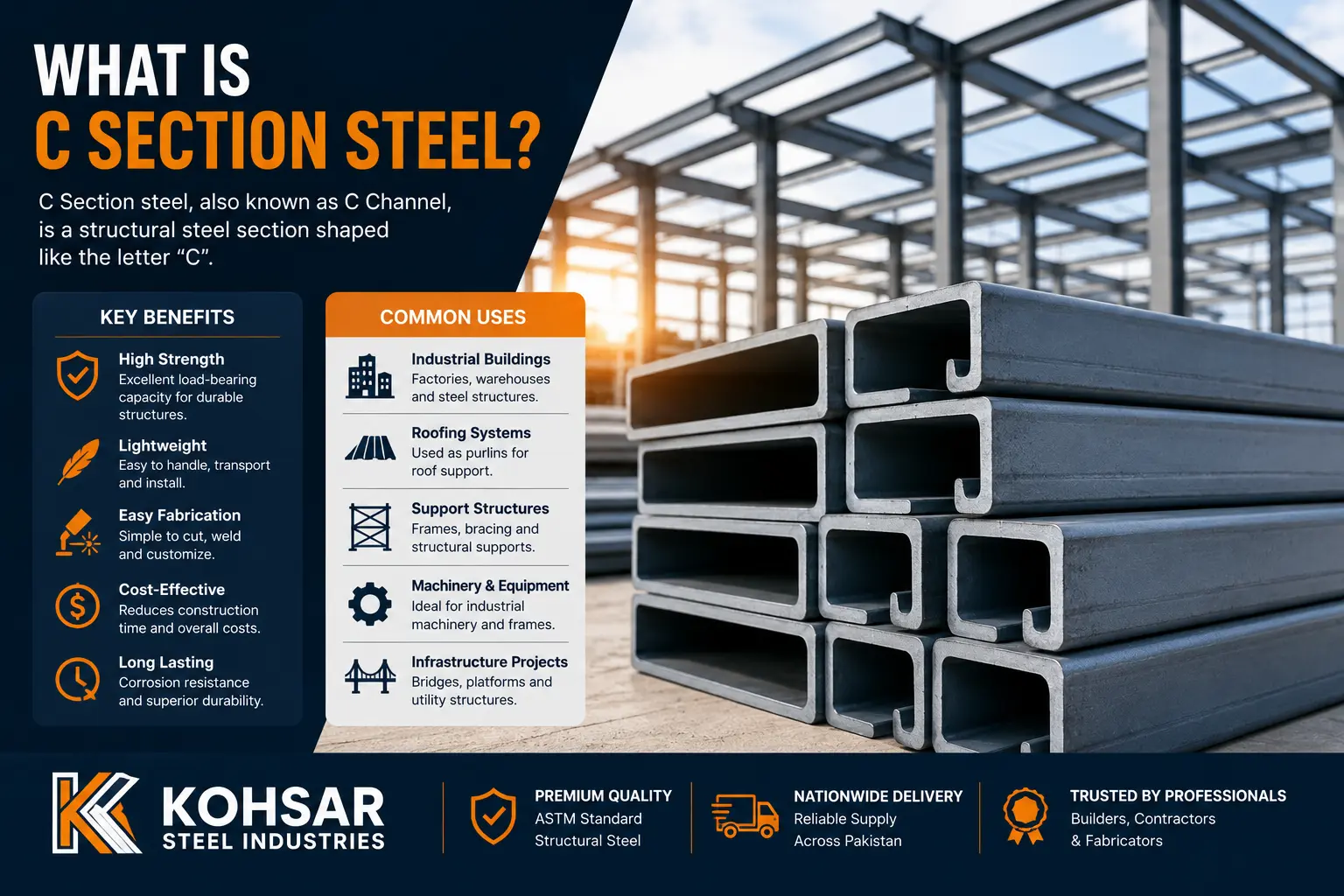
Long steel products include deformed bars, billets, girders, angles, channels, and T-sections. These products are essential for construction and infrastructure development. Among them, deformed steel bars represent one of the largest segments, as they are used in almost every type of structure—from homes and plazas to bridges and industrial buildings.
Because the construction sector in Pakistan is constantly growing, long steel remains a dominant contributor to steel production in Pakistan.
2. Flat Steel Products
Flat products include hot-rolled, cold-rolled, and galvanized coils and sheets. They are necessary for machinery manufacturing, automobile production, engineering equipment, household appliances, and industrial fabrication. Large privately owned companies have invested heavily in producing flat steel products to reduce dependence on imports.
3. Small and Medium Re-Rolling Mills
Hundreds of re-rolling mills across Pakistan play a major role in regional supply. These mills produce bars, rods, and various steel profiles that support small-scale construction and local industry. Although their production capacity may be smaller compared to large mills, collectively they significantly contribute to overall steel production in Pakistan.
Challenges Facing Steel Production in Pakistan
Despite rapid growth, the steel sector faces several challenges that affect both production and pricing. Understanding these issues is important for predicting future performance.
1. Dependence on Imported Raw Materials
One of the biggest challenges for steel production in Pakistan is the reliance on imported raw materials, particularly scrap metal and iron ore. Since global scrap prices fluctuate frequently, local steel production becomes vulnerable to international market instability. Currency depreciation also increases the cost of raw materials, which directly affects steel prices in Pakistan.
2. High Energy and Fuel Costs
Steel manufacturing requires a large amount of electricity and natural gas. Pakistan’s high energy tariffs significantly increase the production cost for local manufacturers. When electricity becomes expensive or gas shortages occur, steel production in Pakistan slows down and mills are forced to reduce output.
3. Competition from Imported Finished Products
Imported steel products, especially from countries with low production costs, sometimes enter the market at competitive prices. This creates pressure for local manufacturers who must maintain quality while staying price-competitive. Although some protective measures exist, imports still affect demand for domestic steel.
4. Quality Control Issues
The presence of substandard and uncertified steel products in the market creates safety concerns. Low-quality steel is a threat to infrastructure durability, especially in earthquake zones. To maintain customer confidence, reputable manufacturers follow strict quality standards, but low-cost, poor-quality products from unregulated mills continue to pose challenges.
5. Under-Utilization of Production Capacity
Although Pakistan’s steel industry has the capacity to produce millions of tons annually, only a portion of this capacity is actively used. Economic slowdowns, inflation, higher financing costs, and energy issues force many mills to operate below full potential.
Current Production Capacity and Industry Strengths
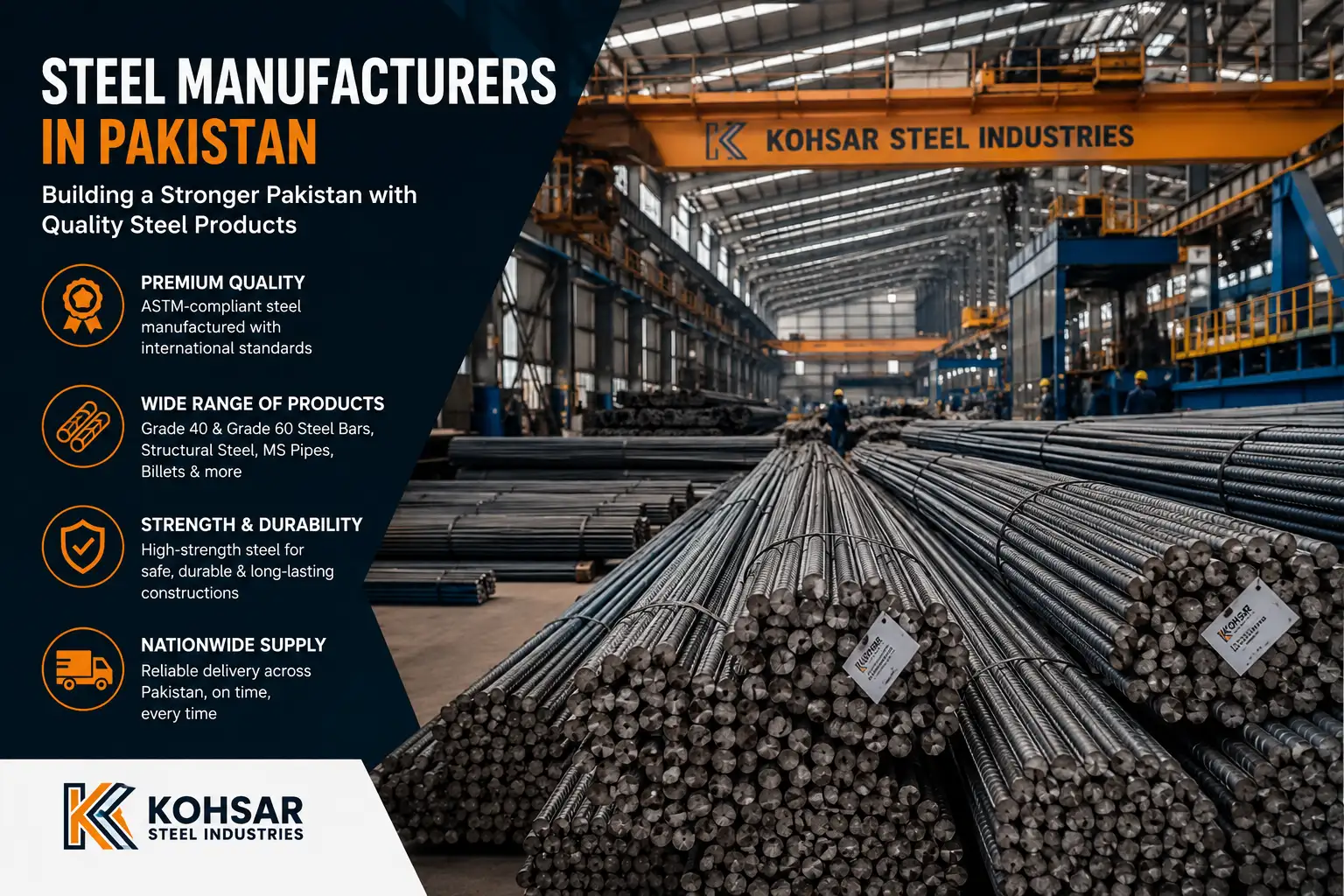
The private sector has greatly strengthened steel production in Pakistan. Modern plants operating in Karachi, Lahore, Islamabad, and other industrial hubs use advanced machinery for melting, casting, and rolling steel. Automated processes ensure consistency, while advanced testing labs ensure high tensile strength and durability.
Some major strengths of the industry include:
- Modern induction and arc furnaces
- Automated rolling lines
- Quality certifications and international-grade production
- Increased investment in environmentally friendly production
- Support for major infrastructure projects
These strengths position Pakistan’s steel sector to grow rapidly in the future.
Economic Importance of Steel Production in Pakistan
Steel is essential for economic development. Every major sector—from construction to transportation—relies heavily on steel. Due to this interdependency, steel production in Pakistan influences national progress in several ways:
- Supports infrastructure projects such as highways, bridges, and dams
- Facilitates industrial expansion and manufacturing growth
- Creates jobs at factories, distribution points, and retail outlets
- Encourages local investment in engineering and fabrication
- Reduces reliance on imported steel
- Contributes to GDP and industrial output
A strong steel sector leads to stronger national development.
Future Potential and Growth Opportunities
There is significant potential for expanding steel production in Pakistan. Key growth opportunities include:
- Development of local iron ore resources to reduce import dependency
- Use of renewable and cost-effective energy sources
- Adoption of advanced steelmaking technologies
- Increasing production of earthquake-resistant steel grades
- Export opportunities in regional markets
- Rising demand due to housing and industrial expansion
As Pakistan shifts toward high-rise construction, smart cities, and large infrastructure projects, demand for steel will continue to rise. This ensures long-term stability and continuous growth of steel production in Pakistan.
Conclusion
Steel production in Pakistan is a rapidly evolving sector with enormous potential. Despite challenges such as raw material dependency and high energy costs, the industry continues to expand due to strong domestic demand. Modern technology, improved quality standards, and investment in production capacity have transformed the steel industry into a major economic contributor.
With increasing construction activities and future mega-projects, steel production in Pakistan will remain an essential part of the nation’s development. As the sector grows stronger, it will not only support infrastructure and industry but also open new opportunities for innovation and economic prosperity.