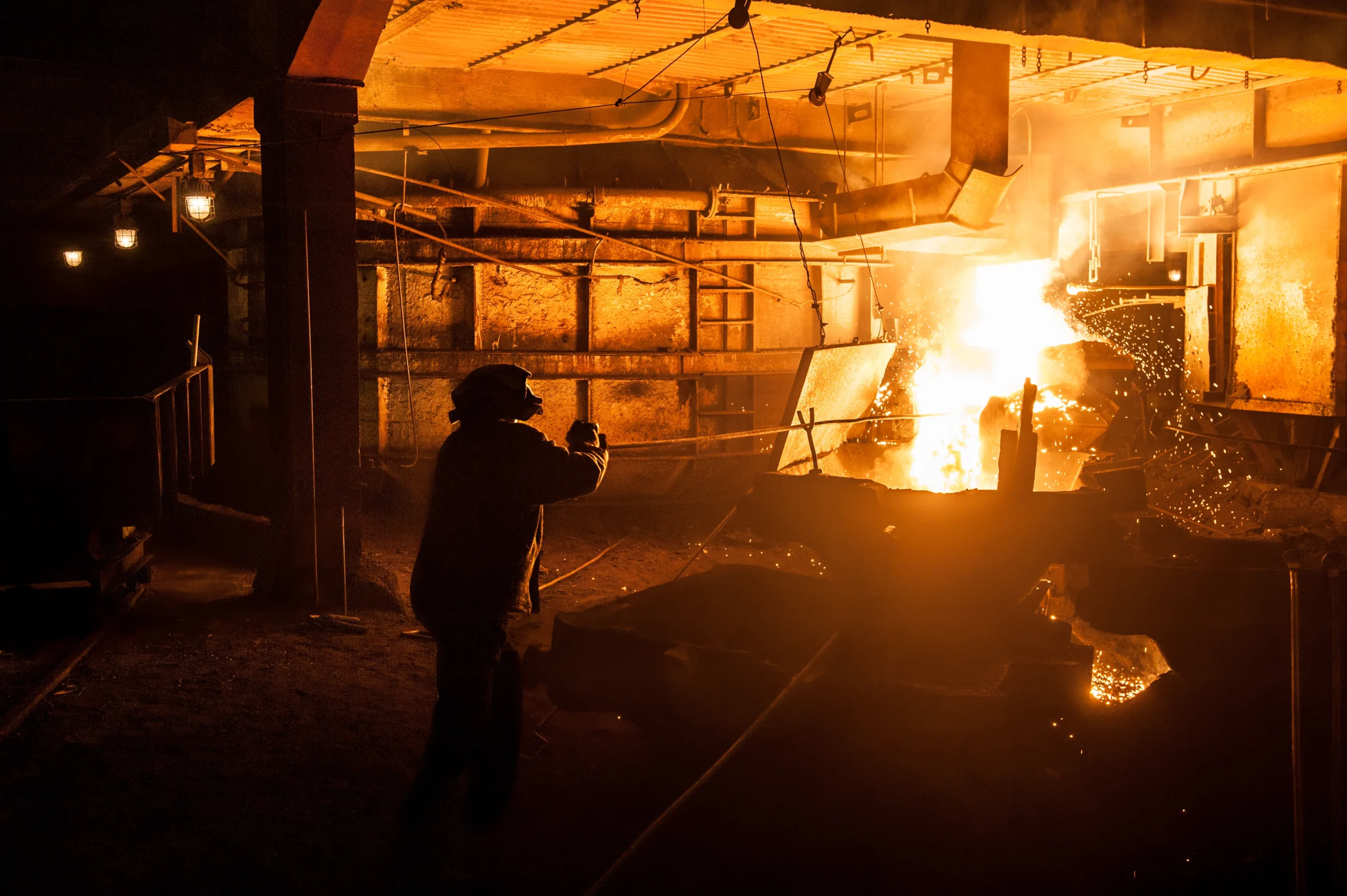
Steel production in Pakistan plays a vital role in shaping the country’s industrial development, infrastructure growth, and economic progress. As one of the most important sectors of the manufacturing industry, steel not only fuels construction and engineering projects but also supports strategic industries such as automotive, energy, and transportation. Over the past few decades, Pakistan’s steel industry has undergone significant transformation, evolving from a limited-capacity sector into a rapidly expanding market driven by private investments, technological upgrades, and rising domestic demand.
History and Development of Pakistan’s Steel Industry
The foundation of modern steel production in Pakistan began with the establishment of Pakistan Steel Mills (PSM) in Karachi during the 1970s. This marked the country’s first major step toward self-reliance in steel manufacturing. Although PSM faced operational and financial challenges over time, its creation paved the way for private sector enterprises to enter the steel market.
In the early 2000s, demand for steel began to rise sharply due to urbanization, infrastructure projects, and increased construction activity. This shift encouraged private players to set up new steel mills, re-rolling units, and billet manufacturing plants across major cities including Karachi, Lahore, and Islamabad.
Today, Pakistan’s steel industry consists of integrated steel mills, re-rolling mills, induction furnace units, and scrap-melting factories that collectively contribute to millions of tons of annual production.
Current Status of Steel Production in Pakistan
Pakistan currently produces a wide range of steel products including billets, rebars, wire rods, and flat steel. The industry relies heavily on imported scrap and iron ore, but technological improvements have strengthened local production capacity.
The steel sector is closely connected with major construction projects such as:
- CPEC (China–Pakistan Economic Corridor)
- Motorways and highway expansions
- Hydropower and dam projects
- Large-scale housing schemes
- Commercial and industrial buildings
Due to these developments, the demand for high-quality steel—especially reinforcement bars (rebars) and structural steel—has surged, making steel production a key contributor to economic growth.
Major Steel-Producing Regions in Pakistan
Steel production hubs in Pakistan include:
Karachi
A major center for steel melting and re-rolling units, benefiting from seaport access and industrial zones.
Lahore
Home to several modern steel mills known for producing high-grade rebars and construction steel.
Islamabad & Rawalpindi
The twin cities host various re-rolling mills and medium-size production units that supply steel to northern Pakistan. Growing construction activity in these regions has strengthened the demand for high-quality steel.
Technological Advancements in Steel Manufacturin
Over the past decade, private steel companies in Pakistan have invested in:
- State-of-the-art induction furnaces
- Automatic re-rolling mills
- Continuous casting technology
- Quality testing laboratories
- Energy-efficient production systems
These advancements have significantly improved product quality, production efficiency, and compliance with international steel standards such as ASTM and ISO.
Modern steel mills in Pakistan now produce earthquake-resistant rebars, corrosion-resistant steel, and high-strength grades suited for Pakistan’s climate and construction needs.
Challenges Facing Steel Production in Pakistan
Despite strong growth, the steel industry faces several challenges:
High Energy Costs
Steel production is energy-intensive, and rising electricity and gas prices directly increase manufacturing costs.
Dependence on Imported Raw Materials
Most local plants rely on imported scrap and iron ore, making costs vulnerable to exchange rate fluctuations.
Inconsistent Government Policies
Unpredictable taxation and import regulations create uncertainty for manufacturers and investors.
Competition from Imported Steel
Cheaper imported steel products can affect local mills, especially smaller units.
Opportunities and Future Potential
Even with industry challenges, Pakistan’s steel production sector has immense future potential. Factors that support growth include:
1. Rising Construction Demand
Housing projects, commercial buildings, highways, and hydropower developments will continue driving steel consumption.
2. Industrial Expansion
Pakistan is expanding its industrial base, requiring more structural steel and machinery-grade materials.
3. Local Manufacturing Shift
There is increasing emphasis on reducing dependence on imports by improving domestic production.
4. Technological Upgrades
Modernization of steel plants will boost efficiency, quality, and competitiveness.
5. Export Potential
Pakistan has the capability to supply steel products to regional markets, including Afghanistan, Central Asia, and the Middle East.
Role of Private Companies in Boosting Steel Production
Today, private steel manufacturers are the backbone of steel production in Pakistan. With modern technologies, strong distribution networks, and commitment to quality, these companies ensure consistent supply of steel products nationwide.
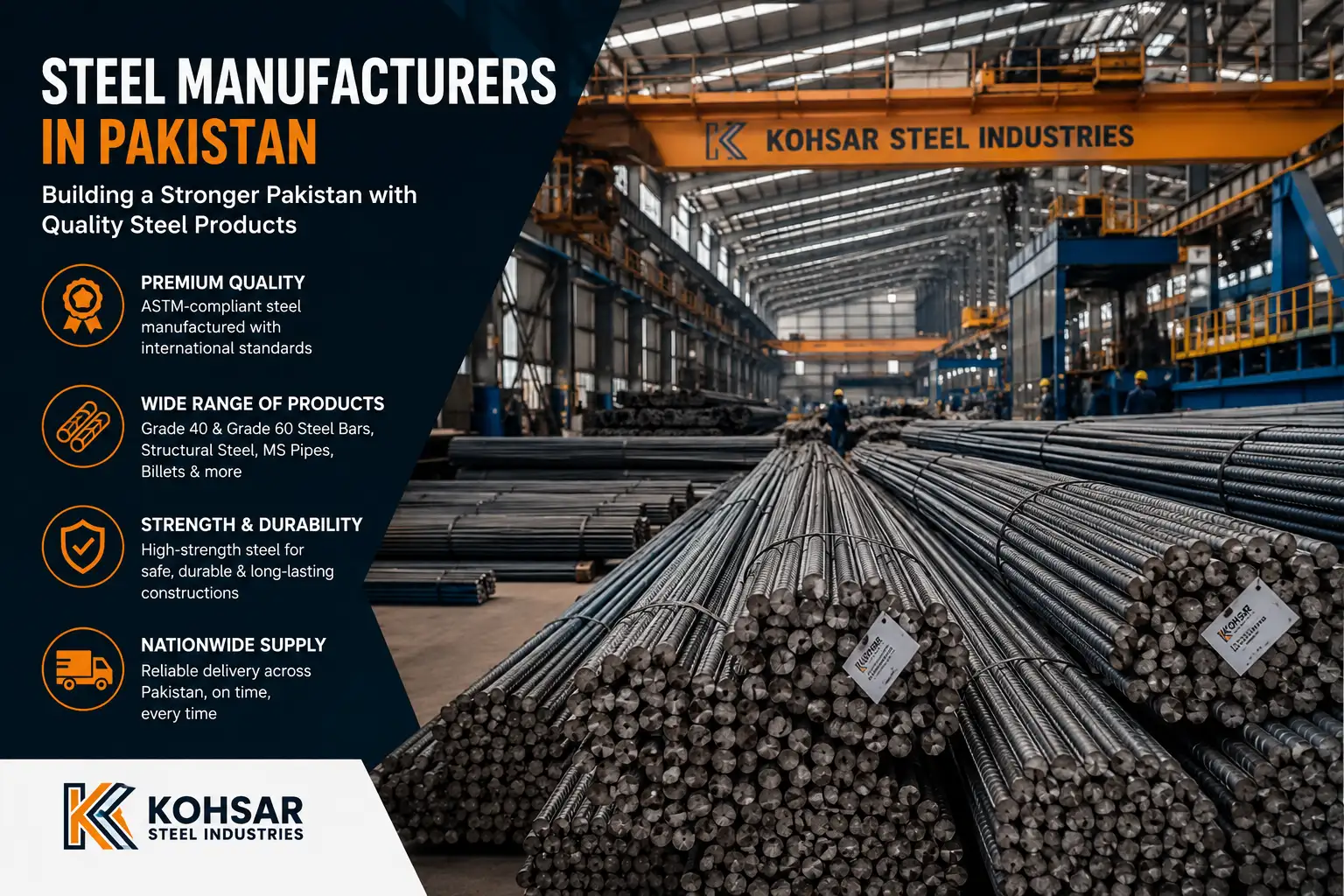
One such contributor is Kohsar Steel Industries, providing high-quality steel solutions for construction and infrastructure projects. Companies like these strengthen local production capacity and support Pakistan’s economic development.
Conclusion
Steel production in Pakistan is a dynamic and rapidly evolving sector. Despite economic challenges and global market fluctuations, the industry continues to grow due to rising domestic demand, technological advancements, and private sector investments. As Pakistan moves toward large-scale infrastructure development and urban expansion, the importance of a strong and reliable steel industry becomes even more critical. With continuous upgrades, improved regulations, and strategic planning, Pakistan’s steel production sector is expected to play a central role in shaping the nation’s economic future.