
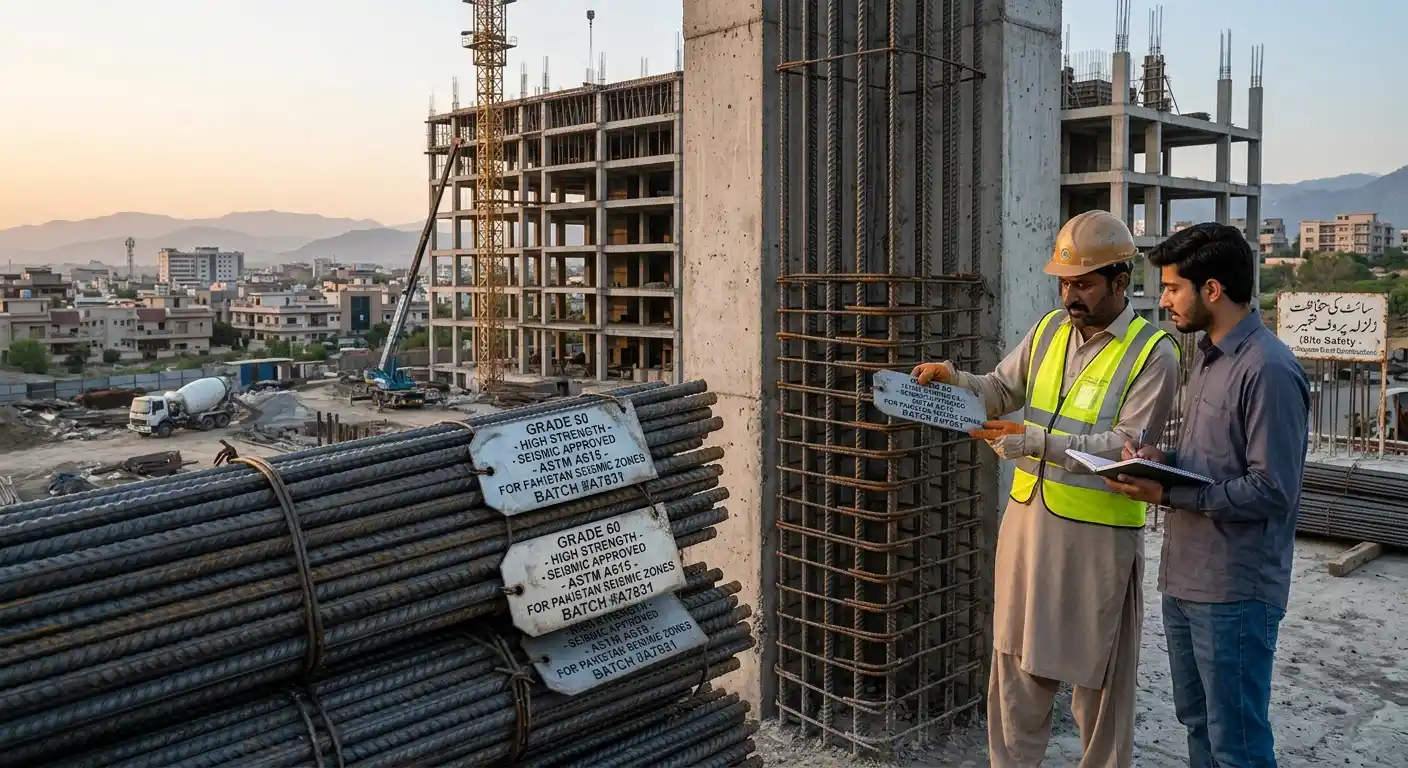
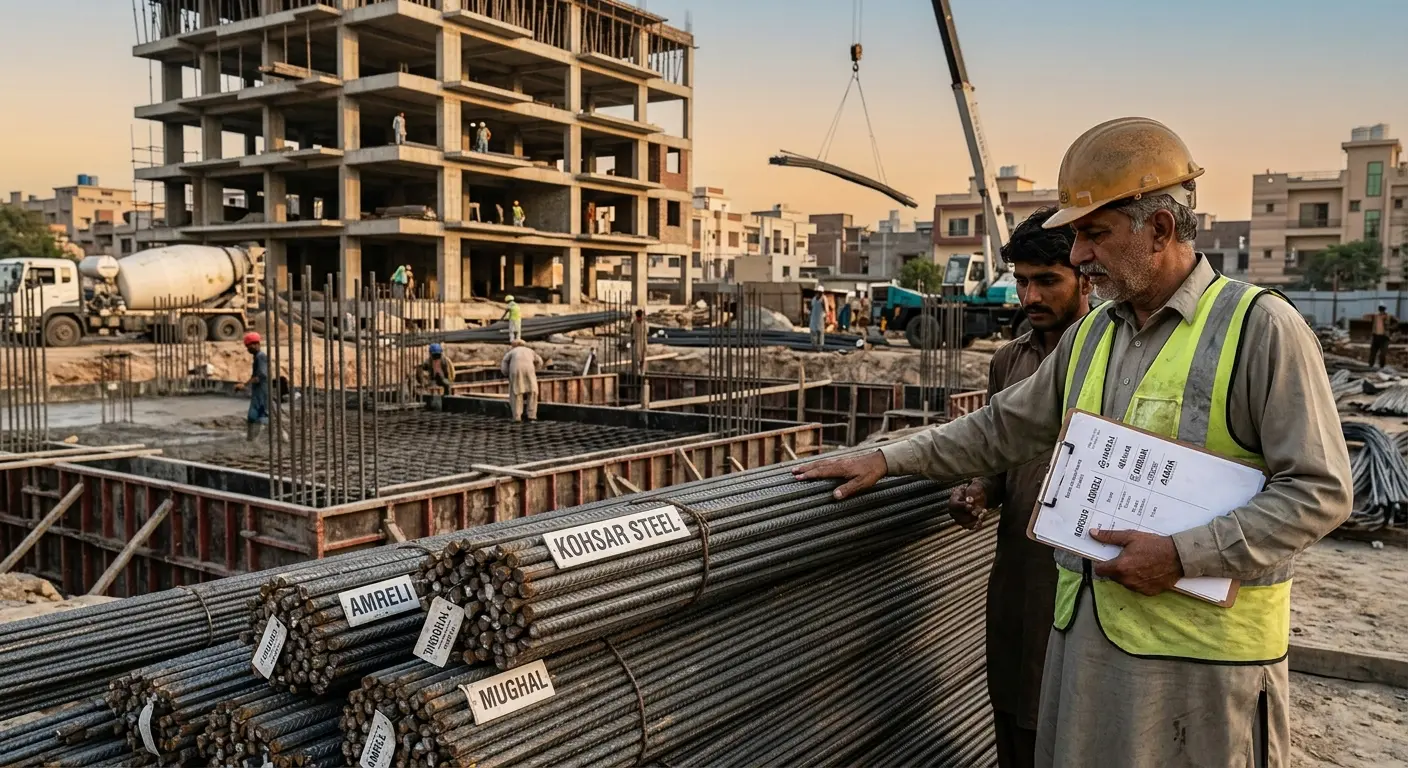
Building a house in Islamabad, Rawalpindi, Murree, or Khyber Pakhtunkhwa (KPK) requires more than choosing quality bricks, cement, and steel. These regions face varying levels of earthquake risk, making structural design and reinforcement selection essential considerations for construction safety.
One of the most common questions homeowners ask is: Which saria is suitable for earthquake-resistant construction in Pakistan?
The answer depends on several factors, including the building’s location, soil conditions, structural design, number of floors, and the mechanical properties of the reinforcement steel.
Choosing appropriate earthquake-resistant steel for Pakistan construction projects require is an important part of developing a safer reinforced concrete structure. However, even high-strength steel cannot make a building earthquake-resistant without proper engineering, reinforcement detailing, and construction practices.
This article explains the seismic zones of Pakistan, the role of Grade 60 steel, regional construction considerations, and what homeowners should discuss with a qualified structural engineer before starting construction.
The Seismic Zones of Pakistan
Pakistan is located in a tectonically active region where the Indian and Eurasian plates interact. This geological setting exposes several parts of the country, particularly northern Pakistan, to significant earthquake hazards.
The Building Code of Pakistan Seismic Provisions 2007, commonly referred to as BCP SP-2007, divided the country into five seismic classifications:
- Zone 1
- Zone 2A
- Zone 2B
- Zone 3
- Zone 4
These classifications represent increasing levels of expected seismic ground acceleration. Higher classifications generally indicate greater earthquake-related design demands.
The BCP 2007 seismic zone map provides historical seismic classifications for different areas of Pakistan. However, Pakistan has also published an updated Building Code of Pakistan 2021, so engineers should use the currently applicable code and seismic hazard information rather than relying exclusively on the older map.
Seismic Zone Classifications for Islamabad, Rawalpindi, Murree and KPK
The following table provides a useful reference based on the historical BCP SP-2007 classifications.
| Location | BCP SP-2007 seismic classification | Construction consideration |
| Islamabad | Zone 2B (historical classification) | Seismic-resistant structural design |
| Rawalpindi | Zone 2B | Reinforcement detailing and structural stability |
| Murree | Zone 3 | Higher seismic demands and hillside stability |
| KPK | Varies by tehsil | Location-specific seismic and soil assessment |
These are historical classifications, not a substitute for the latest site-specific seismic design parameters. The exact location and current applicable code must be checked by a structural engineer.
For homeowners searching for Islamabad mein zalzala zone, understanding the local seismic hazard is the first step toward making informed construction decisions.
Which Saria Is Suitable for Earthquake-Resistant Construction in Pakistan?
For reinforced concrete buildings in earthquake-prone areas, engineers commonly consider high-quality deformed reinforcement bars with verified strength and ductility properties.
Grade 60 deformed steel bars can be suitable for seismic construction when they meet the applicable material standards and the requirements of the structural design.
Grade 60 steel has a specified minimum yield strength of approximately 60,000 psi, or 420 MPa. This makes it a widely used reinforcement option for residential, commercial, and infrastructure construction.
However, strength alone does not determine seismic performance.
During an earthquake, reinforcement must work together with concrete and the building’s structural system to resist repeated lateral forces and accommodate deformation.
Important steel properties include:
- Yield strength: The stress level at which steel begins to deform permanently.
- Ductility: The ability of reinforcement to undergo deformation before fracture.
- Tensile strength: The maximum tensile stress the material can withstand.
- Bond performance: The interaction between reinforcement and surrounding concrete.
- Bendability: The ability to form required reinforcement bends without cracking.
- Material consistency: Reliable mechanical properties supported by testing.
For homeowners and contractors evaluating steel options, Kohsar Steel Industries Grade 60 Steel Bars provide a relevant starting point for understanding the product’s stated properties.
Before purchasing, request the applicable mill test certificates and have the structural engineer confirm whether the specific product meets the project’s seismic design requirements.
Why Grade 60 Steel Is Considered for Earthquake Zones
The search for grade 60 steel for earthquake zone construction often begins with its relatively high yield strength.
Grade 60 reinforcement can help engineers achieve the required structural capacity in reinforced concrete members when used according to approved calculations and detailing requirements.
1. High Yield Strength
Grade 60 steel provides a specified minimum yield strength of approximately 420 MPa, allowing engineers to design reinforced concrete members for calculated structural loads.
This does not mean Grade 60 automatically makes a building safer than every alternative grade. Reinforcement area, bar spacing, ductility, anchorage, and structural design must all be considered.
2. Reinforcement Bond With Concrete
Deformed steel bars feature surface ribs that improve mechanical interaction with surrounding concrete.
This bond helps transfer forces between concrete and reinforcement, provided that sufficient development length, cover, and anchorage are included in the design.
3. Suitability for Engineered Reinforced Concrete Structures
Grade 60 bars are commonly used in structural elements such as foundations, beams, columns, slabs, and reinforced concrete walls.
Their suitability depends on the applicable seismic provisions, material specifications, and structural design.
4. Availability for Residential and Commercial Projects
Grade 60 reinforcement is a familiar material in Pakistan’s construction market, making it a practical option for many projects where the engineer specifies it.
Nevertheless, not all Grade 60 bars are interchangeable for seismic applications. The engineer must verify the required ductility, tensile-to-yield strength relationship, and other material characteristics.
Earthquake-Safe Building Construction in Islamabad
Islamabad is an important location for seismic-resistant construction because of its regional tectonic setting and varying ground conditions.
Homeowners planning an earthquake-safe building in Islamabad should consider the entire structural system rather than focusing only on steel strength.
Important Considerations for Islamabad Construction
Soil investigation: Soil conditions influence how earthquake shaking affects a structure. A geotechnical assessment helps determine appropriate foundation design parameters.
Structural analysis: A qualified structural engineer should evaluate gravity loads, lateral earthquake forces, building configuration, and the required seismic performance.
Reinforcement detailing: Proper placement of steel in columns, beams, beam-column joints, and structural walls is essential.
Quality-controlled materials: Steel, concrete, and other construction materials should satisfy the specifications in the approved design.
Construction supervision: Even a properly designed building may perform poorly if reinforcement is misplaced or concrete quality is inadequate.
For homeowners planning zalzala rodhak ghar ki tameer, investing in structural engineering before construction is more valuable than relying on a particular steel grade alone.
Earthquake-Resistant Construction in Rawalpindi
Rawalpindi shares many regional seismic concerns with Islamabad, although ground conditions and construction characteristics vary across different neighborhoods.
According to the BCP SP-2007 classification, Rawalpindi falls within Seismic Zone 2B. This historical designation emphasizes the need for earthquake-resistant structural design.
What Should Rawalpindi Homeowners Consider?
For residential projects, a structural engineer should assess:
- Foundation design: Foundations must be appropriate for the soil and the structural loads.
- Column and beam reinforcement: Steel quantities, bar diameters and placement must follow approved drawings.
- Seismic detailing: Beam-column joints, transverse reinforcement and anchorage require particular attention.
- Concrete quality: Adequate concrete strength and proper curing are essential.
- Structural configuration: Irregular building layouts, open ground floors, and poorly positioned walls can increase earthquake vulnerability.
Builders should avoid changing reinforcement sizes or removing structural elements without engineering approval.
For those planning construction in the twin cities, learning about a local supplier’s manufacturing capabilities can also help with material procurement. Explore Kohsar Steel Mill in Islamabad for information about its reinforcement products and facilities.
Which Saria Should Be Used for Construction in Murree?
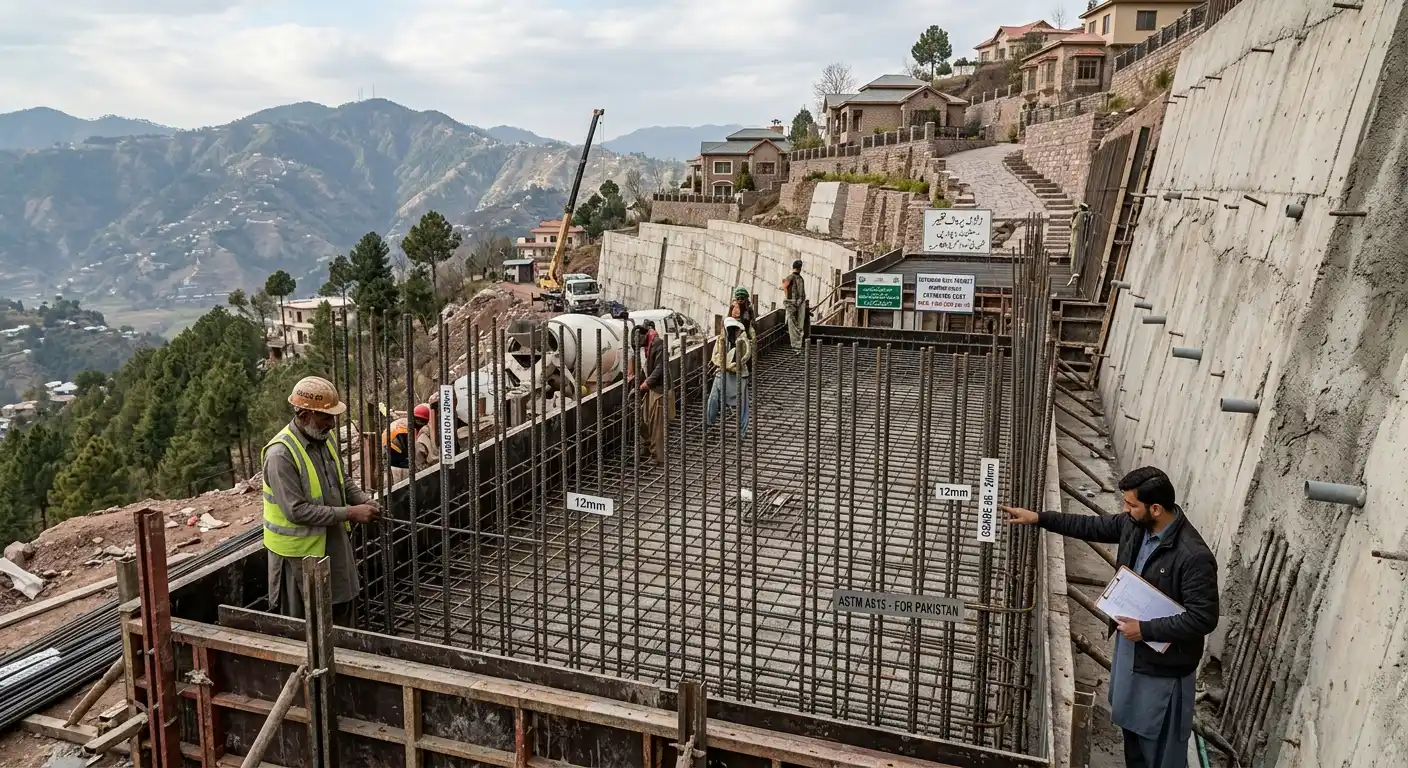
Murree presents additional construction challenges because of its mountainous terrain, sloping sites, and geological conditions.
The historical BCP 2007 seismic zone map places Murree in Zone 3, indicating higher seismic design demands than the Zone 2B classification assigned to Rawalpindi.
However, seismic classification is only one part of the engineering assessment.
Why Construction in Murree Requires Additional Attention
Hillside stability: Buildings on slopes may face landslide, slope movement, and foundation stability risks, particularly where drainage is poor.
Uneven foundations: Stepped foundations and changes in ground elevation require careful structural and geotechnical evaluation.
Retaining structures: Retaining walls must be designed for the applicable earth pressures, water pressures, and seismic demands.
Weather conditions: Heavy rainfall, snow, and temperature changes may affect construction practices and long-term structural durability.
Building configuration: Irregular structures on steep slopes can experience complicated earthquake responses.
Murree Construction Rules and Structural Requirements
Anyone researching Murree construction rules should confirm the latest requirements with the relevant local development or municipal authority before beginning a project.
Depending on the site’s jurisdiction and project characteristics, these may include building plan approvals, land-use restrictions, height limitations, slope-related requirements, and structural documentation.
A structural engineer should determine whether the project requires additional seismic detailing, slope stability investigations, or specialized foundation solutions.
For Murree projects, Grade 60 deformed bars may be specified where their certified material properties satisfy the applicable design requirements. However, selecting Grade 60 steel without evaluating the slope, foundation, and building structure is not sufficient.
Earthquake-Resistant House Construction in KPK
Khyber Pakhtunkhwa includes areas with substantial seismic hazards, particularly in northern and mountainous regions.
The province experienced severe earthquake damage during the 2005 Kashmir earthquake, demonstrating the importance of appropriate structural design, construction supervision, and building-code compliance.
However, KPK should not be treated as a single seismic zone.
Seismic hazard levels vary between districts, tehsils, and individual building sites. Local soil conditions and proximity to active faults can further influence seismic design requirements.
Important Considerations for KPK Construction
For earthquake-resistant house construction in Pakistan, homeowners should prioritize the following factors:
- Obtain a site-specific structural design prepared by a qualified engineer.
- Confirm the applicable seismic hazard parameters for the building location.
- Select reinforcement with verified mechanical properties and appropriate ductility.
- Ensure proper reinforcement detailing in structural members and connections.
- Investigate soil and foundation conditions, particularly on mountainous sites.
- Follow approved construction drawings and material specifications.
- Arrange engineering inspections during critical construction stages.
In high-seismic-demand areas, the type of reinforcement and the detailing requirements may be more restrictive than those used in lower-hazard locations.
A qualified structural engineer must confirm whether the proposed steel grade and material standard are appropriate for the selected structural system.
Grade 40 vs Grade 60 Steel: Which Is Better for Earthquake Zones?
Both Grade 40 and Grade 60 steel bars are used in Pakistan’s construction industry, but their mechanical properties differ.
| Property | Grade 40 Steel | Grade 60 Steel |
| Minimum specified yield strength | 40,000 psi | 60,000 psi |
| Approximate yield strength | 280 MPa | 420 MPa |
| Typical application | Engineered concrete reinforcement | Engineered concrete reinforcement |
| Seismic suitability | Depends on design and material properties | Depends on design and material properties |
| Selection requirement | Engineer approval | Engineer approval |
Grade 60 offers higher specified yield strength, but that does not automatically make it more earthquake-resistant than Grade 40.
The performance of reinforcement during earthquakes also depends on ductility, strain capacity, connection detailing, and the overall structural system.
Why ASTM Standards Matter
Reinforcement standards such as ASTM A615 and ASTM A706 define different material requirements.
ASTM A706 is specifically relevant when controlled mechanical properties and weldability are important. Its requirements can make it suitable for applications requiring particular seismic reinforcement characteristics.
ASTM A615 reinforcement may also be permitted in seismic construction under applicable code conditions, but the engineer must verify compliance with the relevant restrictions.
Kohsar Steel Industries provides information about these material specifications on its ASTM Standard Steel Bars page.
Important: A supplier’s general statement of compliance with ASTM standards should not replace verification of the specific steel batch, grade, test results, and applicable seismic requirements.
Building Code of Pakistan Seismic Provisions 2007: What Homeowners Should Know
The Building Code of Pakistan Seismic Provisions 2007 established requirements for seismic hazard assessment and earthquake-resistant structural design.
The provisions address important engineering considerations, including:
- Seismic hazard classification
- Soil and foundation requirements
- Structural analysis and earthquake loading
- Reinforced concrete design and detailing
- Structural steel requirements
- Seismic performance of building systems
The BCP 2007 seismic zone map remains useful for understanding Pakistan’s historical seismic classifications.
However, the Pakistan Engineering Council has published the Building Code of Pakistan 2021, which incorporates updated seismic provisions. The engineer must establish which version and amendments are applicable to the project and the local approval authority.
For reference, homeowners and construction professionals can consult the Building Code of Pakistan Seismic Provisions 2007.
Why Building-Code Compliance Matters
A building’s seismic safety cannot be assessed simply by checking whether Grade 60 steel was purchased.
The structural design must account for how earthquake forces move through the building, from slabs and beams into columns, walls, and foundations.
Improper reinforcement anchorage, inadequate confinement, weak beam-column connections, and unsuitable structural configurations can compromise earthquake performance even when the steel itself meets the specified strength requirements.
Common Mistakes to Avoid When Selecting Saria for Earthquake Zones
Homeowners often focus on the price and grade of reinforcement while overlooking other important factors.
Choosing Steel Based Only on Price
Lower-priced reinforcement may appear attractive, but purchasing decisions should consider certified material properties, dimensional accuracy, traceability, and compliance with the engineer’s specifications.
Assuming All Grade 60 Bars Are Identical
Grade 60 describes a strength classification, not a complete seismic performance specification.
Different manufacturing standards and material properties can affect whether a particular product is appropriate for the project.
Using Incorrect Bar Diameters
The reinforcement diameter and quantity must be determined through structural calculations.
Using thicker bars without engineering approval is not necessarily safer and can create reinforcement congestion, inadequate concrete placement or detailing problems.
Ignoring Reinforcement Connections
Lap splices, development lengths, hooks, and transverse reinforcement are important components of structural performance.
Incorrect placement or insufficient anchorage can weaken the structure.
Constructing Without Structural Engineering Approval
Using good-quality steel cannot compensate for a poorly designed foundation, inadequate structural system, or improper reinforcement detailing.
For a zalzale se mehfooz ghar, every major structural decision should be based on an approved engineering design.
How to Choose Quality Steel for Earthquake-Resistant Construction
When purchasing reinforcement for a residential or commercial project, homeowners and contractors should follow a practical quality-checking process.
Step 1: Confirm the structural specifications. Ask the structural engineer to identify the required steel grade, material standard, diameters, and reinforcement details.
Step 2: Verify material certification. Request relevant mill test certificates and confirm that the supplied material meets the specified requirements.
Step 3: Check steel identification. Review manufacturer markings, bar identification and batch traceability where applicable.
Step 4: Inspect the material. Look for visible damage, severe corrosion, unusual surface defects, or other concerns that may require rejection or further inspection.
Step 5: Arrange independent testing when necessary. Project specifications may require tensile, bend, or other tests from a suitable laboratory.
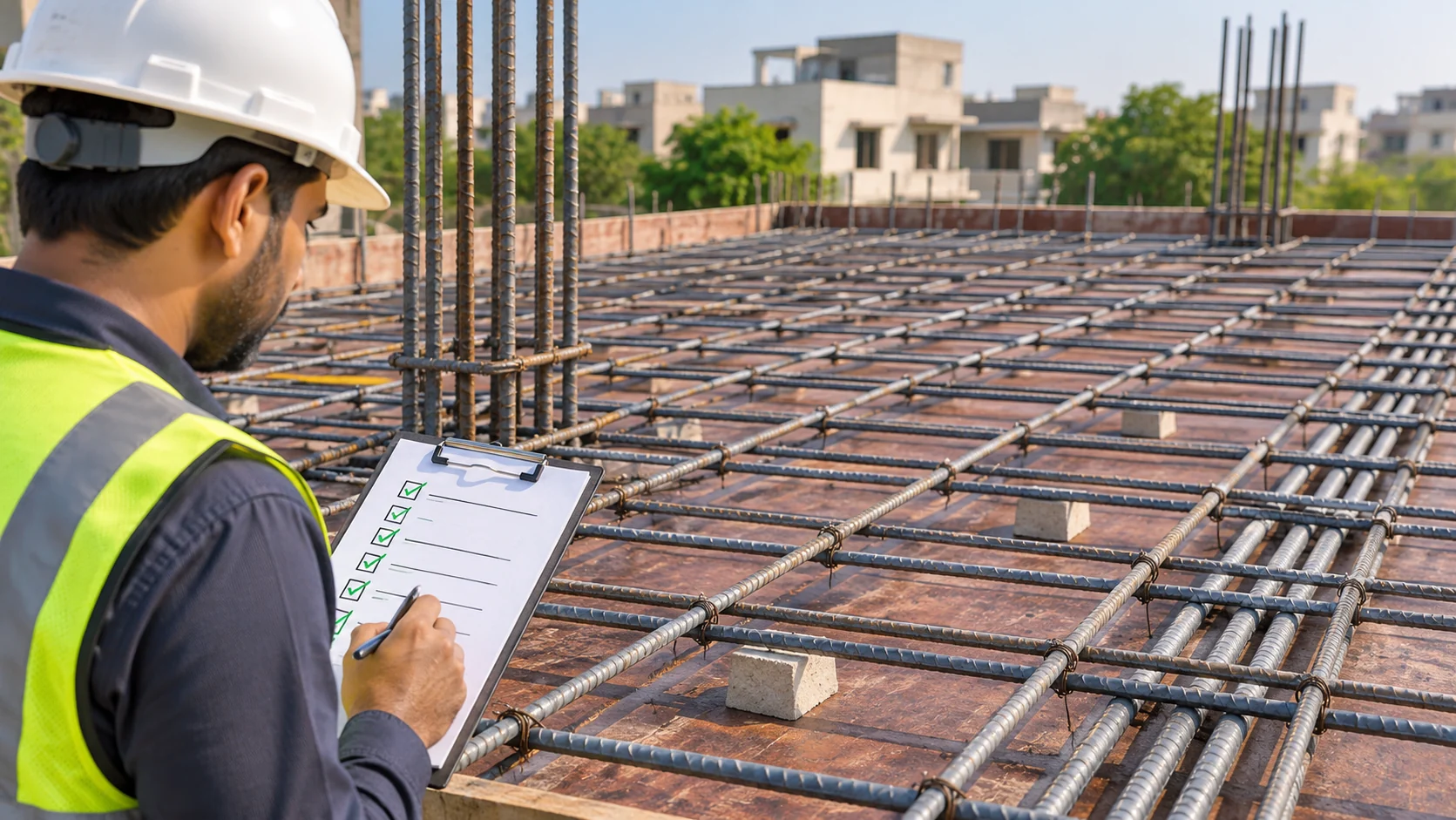
Step 6: Maintain proper construction supervision. Ensure the reinforcement is installed according to approved structural drawings before concrete is poured.
Following these steps helps reduce the risk of purchasing or installing reinforcement that does not satisfy project requirements.
Why Choose Kohsar Steel Industries for Construction Steel?
Selecting a reliable reinforcement supplier is an important part of construction planning.
Kohsar Steel Industries manufactures and supplies reinforcement products for residential, commercial, and industrial construction in Pakistan.
Its product range includes Grade 40 and Grade 60 deformed steel bars, along with other steel products used in construction.
The company also describes manufacturing and quality-control processes involving chemical analysis and physical testing.
For projects in Islamabad, Rawalpindi, Murree, and KPK, customers can discuss steel specifications, available grades, and supply requirements with the company.
Before placing an order for seismic construction, confirm that the available reinforcement meets the precise material requirements specified by your structural engineer.