
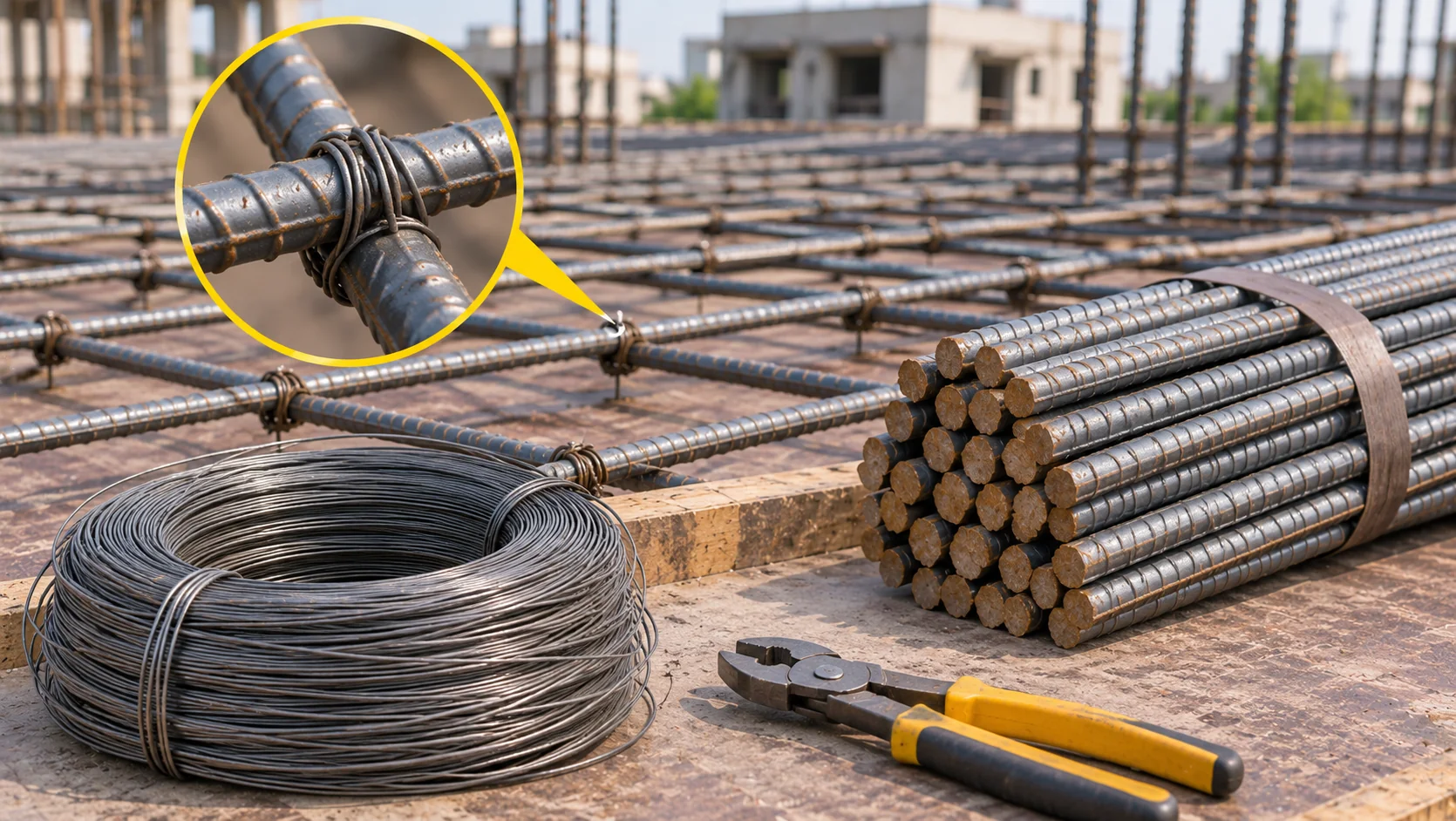
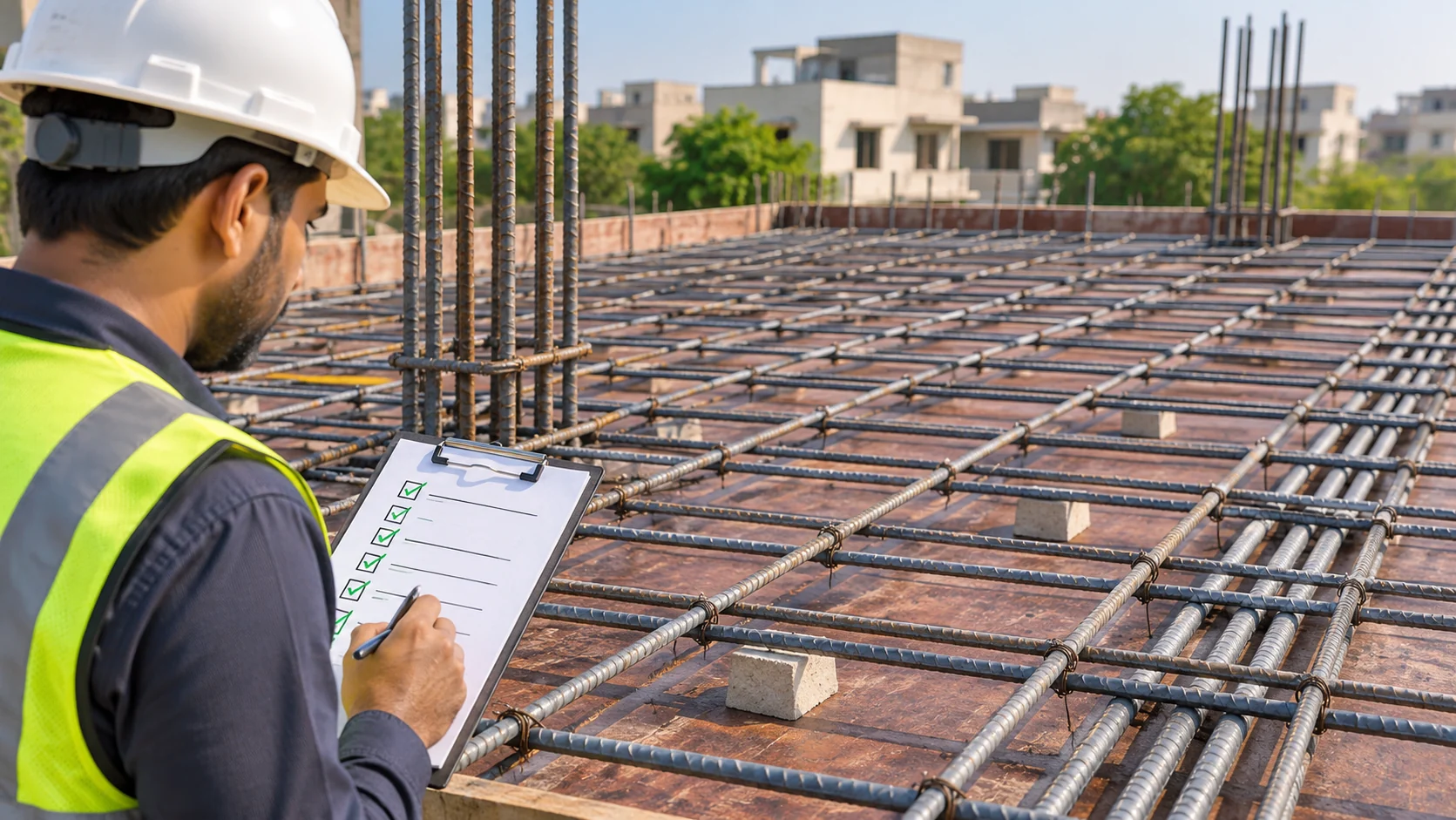
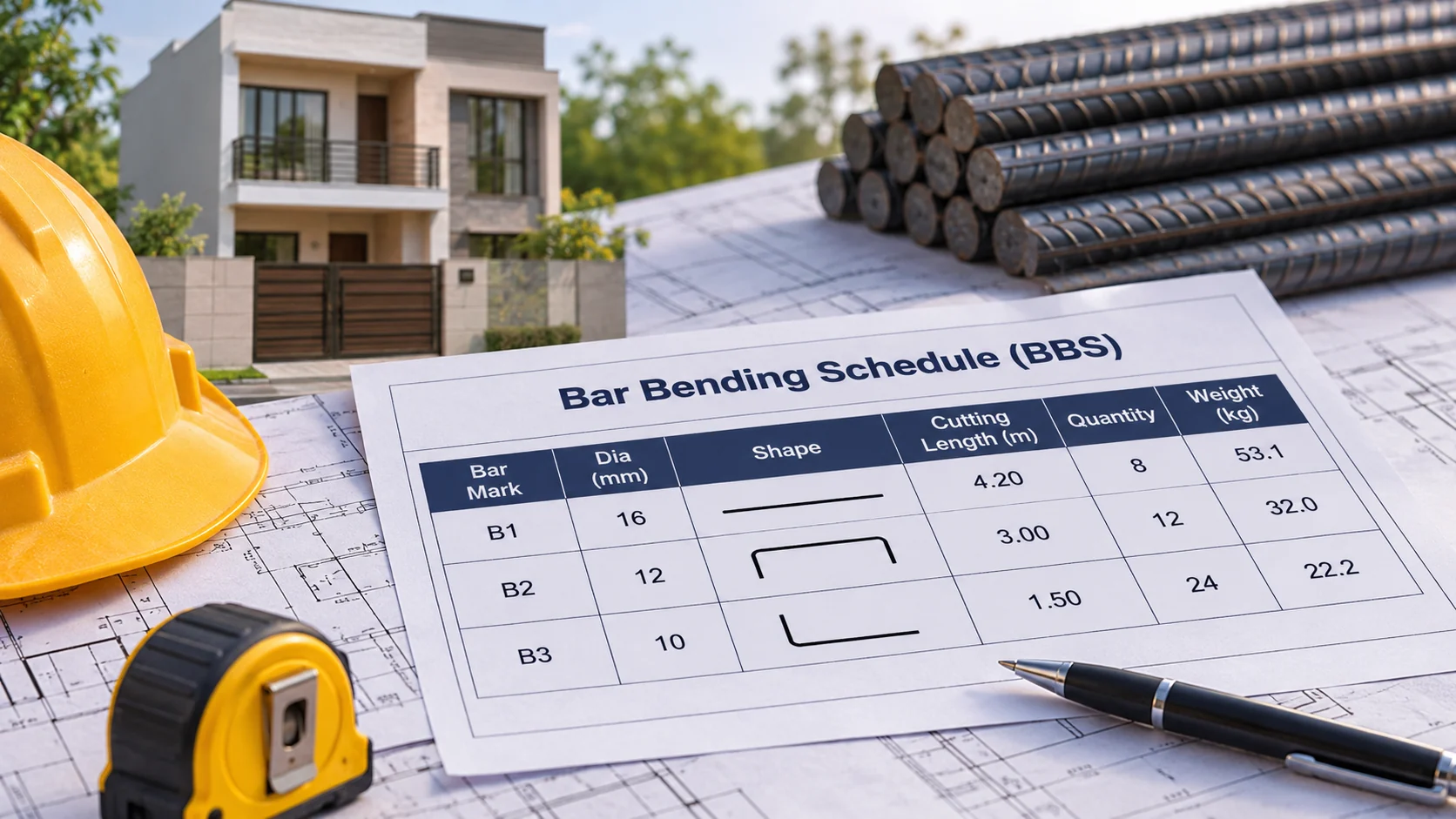
When building a house in Pakistan, most people carefully calculate how much saria they need. But what about the binding wire used to tie that saria together? Ordering too little binding wire can interrupt steel fixing work, while buying too much can increase unnecessary material costs.
A common question among homeowners and contractors is: How much binding wire per ton of steel is required?
As a general starting estimate, 1 ton (1,000 kg) of saria may require around 8–10 kg of binding wire. However, the actual quantity depends on the type of RCC work, bar spacing, number of ties, and wire thickness.
How Much Binding Wire Per Ton of Steel Is Required?
For preliminary material planning, contractors sometimes use an estimate of 8–10 kg of binding wire for every 1,000 kg of reinforcement steel.
This means binding wire may account for approximately 0.8–1% of the total saria weight. It is a planning thumb rule, not a fixed construction standard.
Here is a simple estimation table:
| Saria Quantity | Estimated Binding Wire |
| 100 kg | 0.8–1 kg |
| 500 kg | 4–5 kg |
| 1 ton (1,000 kg) | 8–10 kg |
| 2 tons (2,000 kg) | 16–20 kg |
| 3 tons (3,000 kg) | 24–30 kg |
| 5 tons (5,000 kg) | 40–50 kg |
| 10 tons (10,000 kg) | 80–100 kg |
These figures are approximate and assume similar reinforcement arrangements. Closely spaced steel bars, complex reinforcement cages, and additional tying requirements can increase consumption.
For example, two construction projects may use the same 1 ton of saria but require different amounts of binding wire because their bar spacing and tying patterns are different.
1 ton saria ke liye kitni binding wire chahiye? Aam andazay ke mutabiq 1 ton saria ke liye taqreeban 8 se 10 kg binding wire ka budget rakha ja sakta hai. Lekin asal quantity slab, beam, column aur steel ki spacing par depend karti hai.
How to Calculate Binding Wire Quantity for Saria
You don’t need complicated calculations to prepare an initial binding wire estimate. There are two useful methods: calculating from the total steel weight or estimating from the number of ties.
Simple Binding Wire Calculation Formula:
For a quick estimate, use this formula:
Binding Wire (kg) = Total Saria Weight (kg) × Estimated Wire Rate (kg per ton) ÷ 1,000
For example, if your project requires 2,000 kg of saria and you use an estimated rate of 8 kg per ton:
Binding wire = 2,000 × 8 ÷ 1,000
Binding wire = 16 kg
You can then add a reasonable allowance for cutting waste and other site losses.
For a more detailed calculation, count the estimated tying points and calculate the wire needed for each tie:
Binding Wire (kg) = Number of Ties × Wire Length per Tie (m) × Wire Weight per Metre (kg/m)
This method is more accurate when the reinforcement layout, wire diameter, and tying pattern are known.
Saria Bandhne Ki Taar Ka Hisab
Agar aap ghar ki tameer ke liye saria khareed rahe hain, to binding wire ka andaza lagana bhi zaroori hai.
Misal ke taur par:
- Agar saria 1,000 kg hai, to shuruati andaza 8–10 kg binding wire ho sakta hai.
- Agar saria 2,000 kg hai, to andaza 16–20 kg ho sakta hai.
- Agar saria 3,000 kg hai, to andaza 24–30 kg ho sakta hai.
Saria bandhne ki taar ka hisab lagate waqt steel ki spacing, tying points aur taar ki motai ko bhi dekhna chahiye.
Agar aapko apne project ke liye total steel weight maloom nahi, to Kohsar Steel Industries ka saria weight chart dekh kar steel quantity ka andaza laga sakte hain.
Binding Wire Estimate for RCC Slabs, Beams, Columns and Foundations
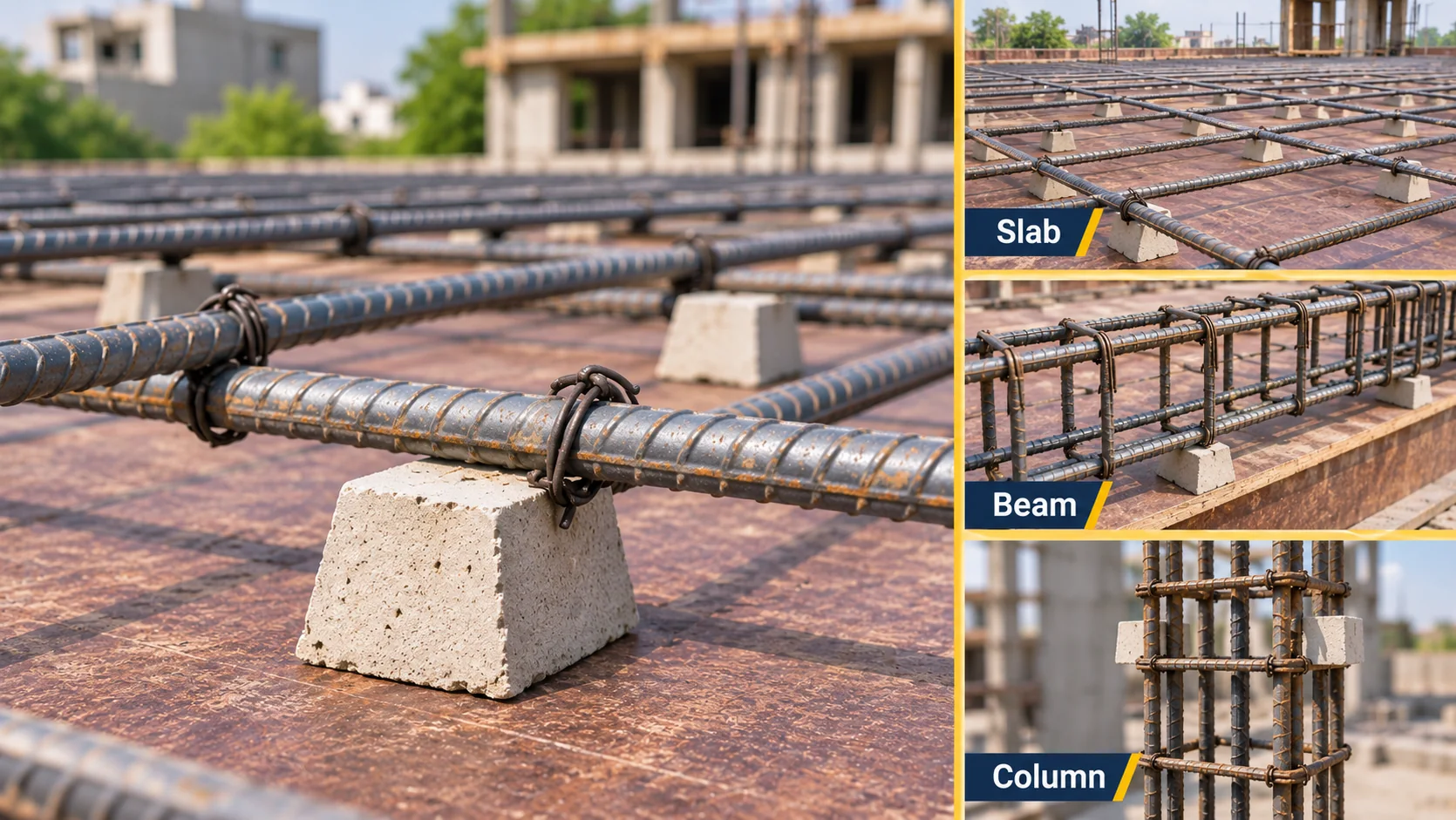
Binding wire consumption for steel fixing is not the same for every part of a building. An RCC roof slab, column, beam, and foundation may have different reinforcement arrangements.
Understanding these differences can help you order the right quantity of binding wire.
Binding Wire Estimate for RCC Slab
An RCC slab contains steel bars arranged in a grid or according to the structural design. Binding wire helps keep the reinforcement in position before and during concrete pouring.
The binding wire estimate for an RCC slab mainly depends on:
- Total slab area and reinforcement layout
- Distance between steel bars
- Number of crossing points requiring ties
- Wire gauge and length used for each tie
- Single or double reinforcement layers
Example: Binding wire for a 100-square-foot slab
Suppose a 10 ft × 10 ft slab has reinforcement bars spaced approximately 6 inches apart in both directions.
For a simplified single-layer grid, assuming bars run across the full slab width:
| Detail | Estimated Quantity |
| Slab size | 10 ft × 10 ft |
| Bar spacing | 6 inches |
| Bars in each direction | 21 |
| Total intersections | 441 |
| Assumed wire length per tie | 0.30 m |
| Total wire length if every intersection is tied | 132.3 m |
If the binding wire is approximately 1.2 mm in diameter, its theoretical steel weight is about 0.0089 kg per metre.
Therefore:
132.3 × 0.0089 = approximately 1.18 kg of binding wire.
With a 10% allowance, the estimate becomes approximately 1.30 kg.
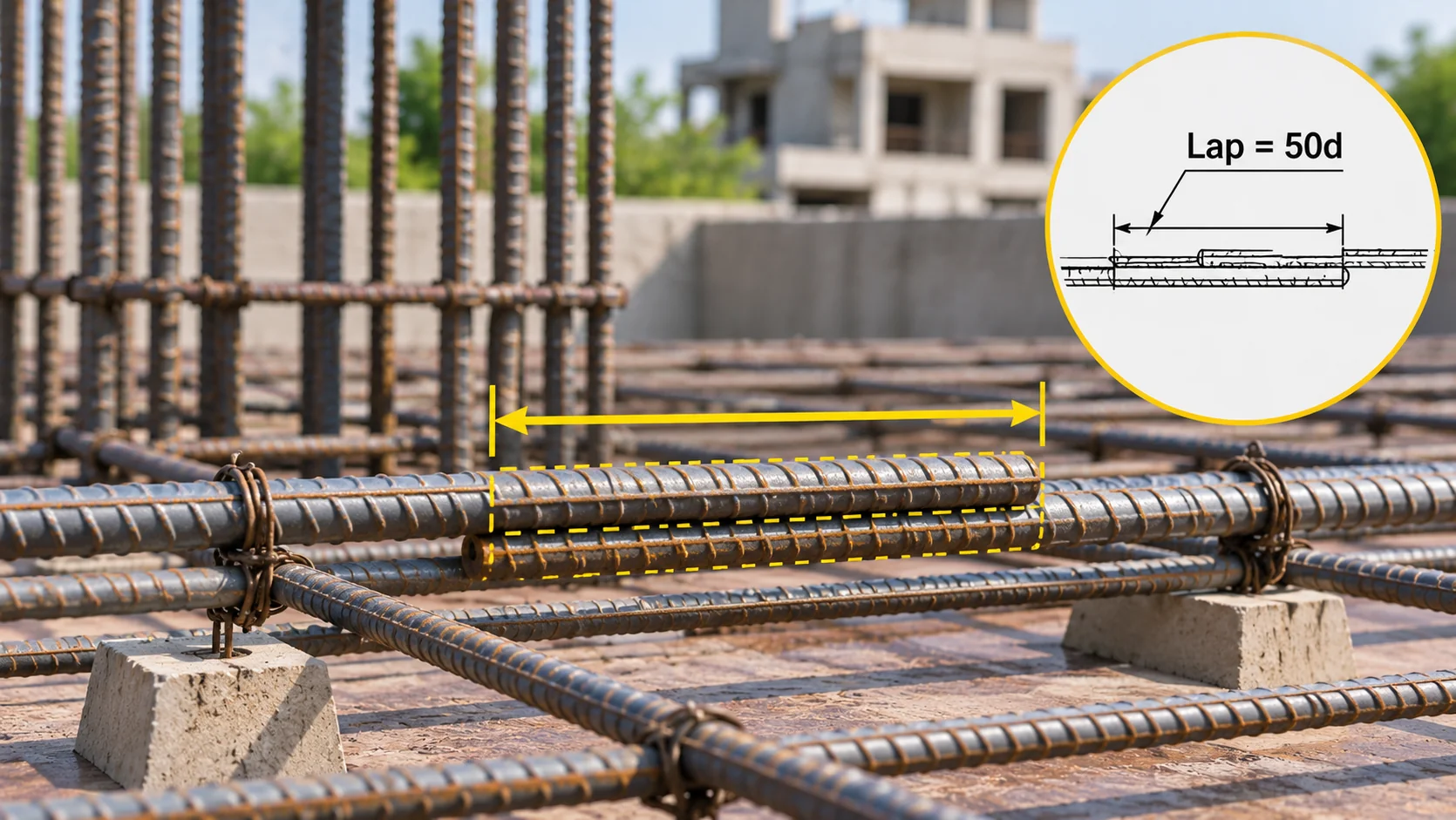
This is only an illustrative calculation for a simplified grid. Actual slab reinforcement includes details such as laps, supports, additional bars, and approved tying patterns. Not every crossing necessarily requires an individual tie, and the structural drawings should determine the reinforcement arrangement.
Binding Wire for Beams and Columns
Beams and columns use main reinforcement bars and stirrups or ties to form a reinforcement cage.
Binding wire is used to hold these components in their required positions.
For example, a column with closely spaced stirrups may require more tying points than one with wider spacing.
Similarly, beams with additional reinforcement near supports may need more wire at certain locations.
The quantity depends on the number of main bars, stirrup spacing, beam or column length, and the number of connections that need tying.
For these structural elements, it is better to calculate binding wire from the reinforcement details rather than relying only on the total weight of saria.
Binding Wire Quantity for Reinforcement Cages
Reinforcement cages are commonly prepared for columns, beams, footings, and other reinforced concrete components.
A reinforcement cage consists of several steel bars held together in a particular arrangement.
The binding wire quantity for reinforcement cages depends on the complexity of the cage.
For example, a simple column cage may have fewer tying points than a heavily reinforced footing cage with multiple layers of steel.
If your project includes several reinforcement cages, ask your steel fixer to estimate the number of ties required for each type of cage.
This helps avoid underestimating the wire quantity for complicated reinforcement work.
Which Binding Wire Gauge Is Best for Saria Tying?
Binding wire is commonly made from annealed steel, which makes it flexible enough to twist around reinforcement bars.
In Pakistan, binding wire is often identified by its gauge number. Different gauges have different thicknesses, flexibility, and strength.
Common Binding Wire Gauges
| Wire Gauge | Approximate Diameter (SWG) | General Characteristics |
| 16 gauge | 1.63 mm | Thicker and relatively stiff |
| 18 gauge | 1.22 mm | Flexible and commonly suitable for manual tying |
| 20 gauge | 0.91 mm | Thinner and easier to bend, but less robust |
Note: These diameters use the Standard Wire Gauge (SWG) system. Actual diameters can differ if a supplier uses another gauge system.
Which Gauge Should You Choose?
For general manual saria tying, 18-gauge annealed binding wire is a practical option to discuss with your contractor or steel fixer.
It offers a balance between flexibility and ease of handling.
However, the appropriate binding wire gauge for saria tying depends on the reinforcement arrangement and site requirements.
Thicker wire may be useful for certain heavy tying applications, while thinner wire may be easier to twist but more likely to break if excessive force is applied.
Before purchasing, confirm the actual wire diameter, material quality, and suitability for the job.
How Much Extra Binding Wire Should You Order?
Once you’ve calculated the binding wire quantity, it is useful to consider a small additional allowance.
For preliminary planning, 5–10% extra binding wire may be reasonable to cover cutting and handling losses. The appropriate allowance depends on the accuracy of your original estimate and site conditions.
For example:
| Calculated Wire | With 5% Extra | With 10% Extra |
| 5 kg | 5.25 kg | 5.5 kg |
| 10 kg | 10.5 kg | 11 kg |
| 20 kg | 21 kg | 22 kg |
| 50 kg | 52.5 kg | 55 kg |
| 100 kg | 105 kg | 110 kg |
Before placing an order, check whether your original estimate already includes wastage. Adding another allowance unnecessarily may result in over-ordering.
Practical Tips for Buying Binding Wire in Pakistan
- Confirm the weight: Check the net weight of the binding wire coil instead of relying only on its size.
- Check the gauge: Make sure the wire thickness matches the requirement.
- Inspect the quality: Avoid wire that breaks too easily during normal tying.
- Ask your steel fixer: A contractor familiar with the reinforcement drawings can provide a better estimate.
- Plan material deliveries: For large projects, arrange wire deliveries according to the construction schedule.
These simple checks can help reduce material waste and unnecessary purchases.
Plan Your Saria Purchase With Kohsar Steel Industries
A successful construction project starts with proper material planning. Whether you’re building a house, commercial property, or another RCC structure, calculating your steel and binding wire requirements can help control costs and avoid delays.
At Kohsar Steel Industries, we understand the importance of quality reinforcement steel in construction.
Before ordering saria, make sure you know the required steel grade, bar sizes, and total quantity according to your structural drawings.
You can also check the latest saria prices in Pakistan to help plan your construction budget.
For reinforcement steel information and product enquiries, visit Kohsar Steel Industries.
Frequently Asked Questions
Q1. 1 ton saria ke liye kitni binding wire chahiye?
Ans: Aam tor par shuruati andazay ke liye 1 ton (1,000 kg) saria ke sath 8 se 10 kg binding wire ka hisab lagaya ja sakta hai. Lekin asal quantity steel ki spacing, binding points, wire gauge aur construction work ki type par depend karti hai.
Q2. How many kg of binding wire is required for 100 kg of steel?
Ans: Using an estimated rate of 8–10 kg per ton, 100 kg of reinforcement steel would require approximately 0.8–1 kg of binding wire. This is a proportional estimate, and actual consumption may differ depending on the reinforcement arrangement and number of ties.
Q3. How much binding wire is needed for an RCC roof slab?
Ans: The binding wire quantity for an RCC roof slab depends on its dimensions, reinforcement spacing, number of layers, and tying pattern. To calculate it more accurately, estimate the number of required ties and multiply by the wire length and weight per metre.
Q4. Which binding wire gauge is commonly used for saria in Pakistan?
Ans: 18-gauge annealed binding wire is a common practical choice for manual reinforcement tying. However, 16-gauge and 20-gauge wires may also be used for different applications. Always confirm the wire’s actual diameter and suitability with your contractor or steel fixer.
Q5. Is binding wire quantity different for slabs, beams, and columns?
Ans: Yes. Slabs, beams, and columns have different reinforcement arrangements and tying requirements. For example, closely spaced stirrups in columns and beams can create more tying points. Therefore, binding wire consumption should be estimated according to the reinforcement layout rather than steel weight alone.
Q6. How do you calculate saria bandhne ki taar ka hisab?
Ans: Saria bandhne ki taar ka hisab lagane ke liye total saria weight ko estimated binding wire rate se multiply karein aur 1,000 se divide karein.
Misal ke taur par, agar saria 2,000 kg hai aur wire rate 8 kg per ton rakha gaya hai, to binding wire ka andaza 16 kg hoga. Final quantity site ki requirement ke mutabiq check karein.