
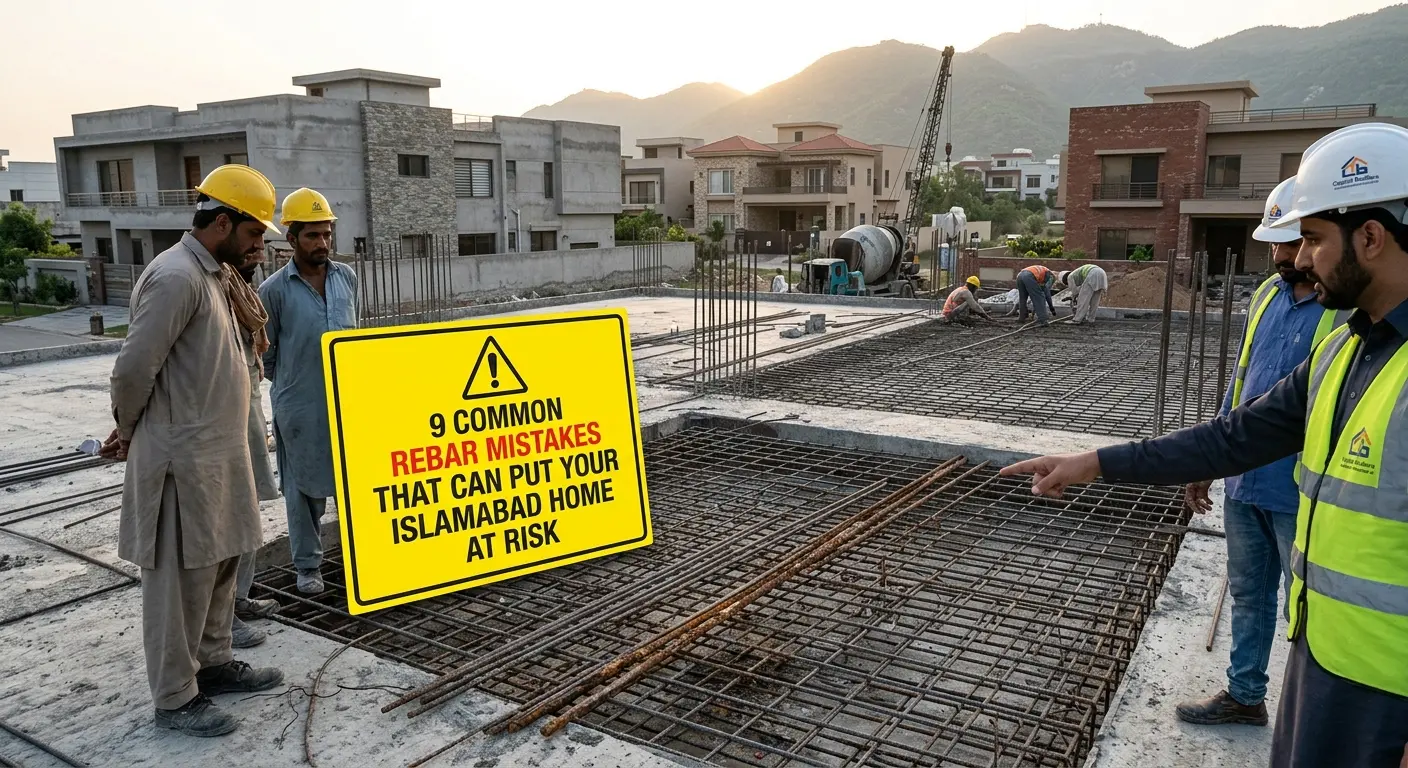
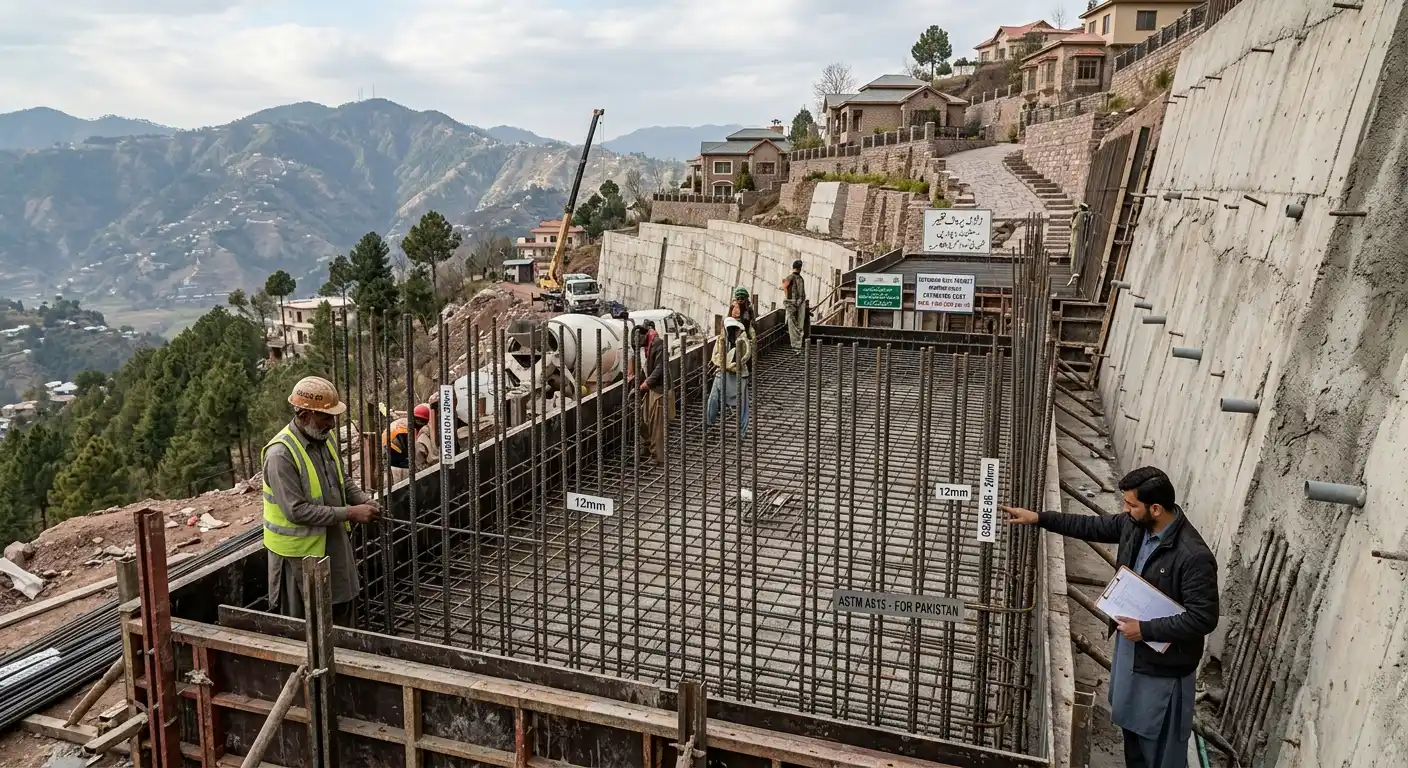
The monsoon season in Pakistan brings heavy rain, humidity, and waterlogging, which can create problems for construction materials. If you are building a house or managing a construction project, keeping your saria (steel reinforcement bars) safe from rain is important.
Many people leave steel bars directly on the ground or in open areas without proper covering. This can expose the bars to moisture, mud, and rust (zang). Poor storage may also create extra cleaning costs and delays in construction.
How to Store Steel Bars on a Construction Site During Monsoon?
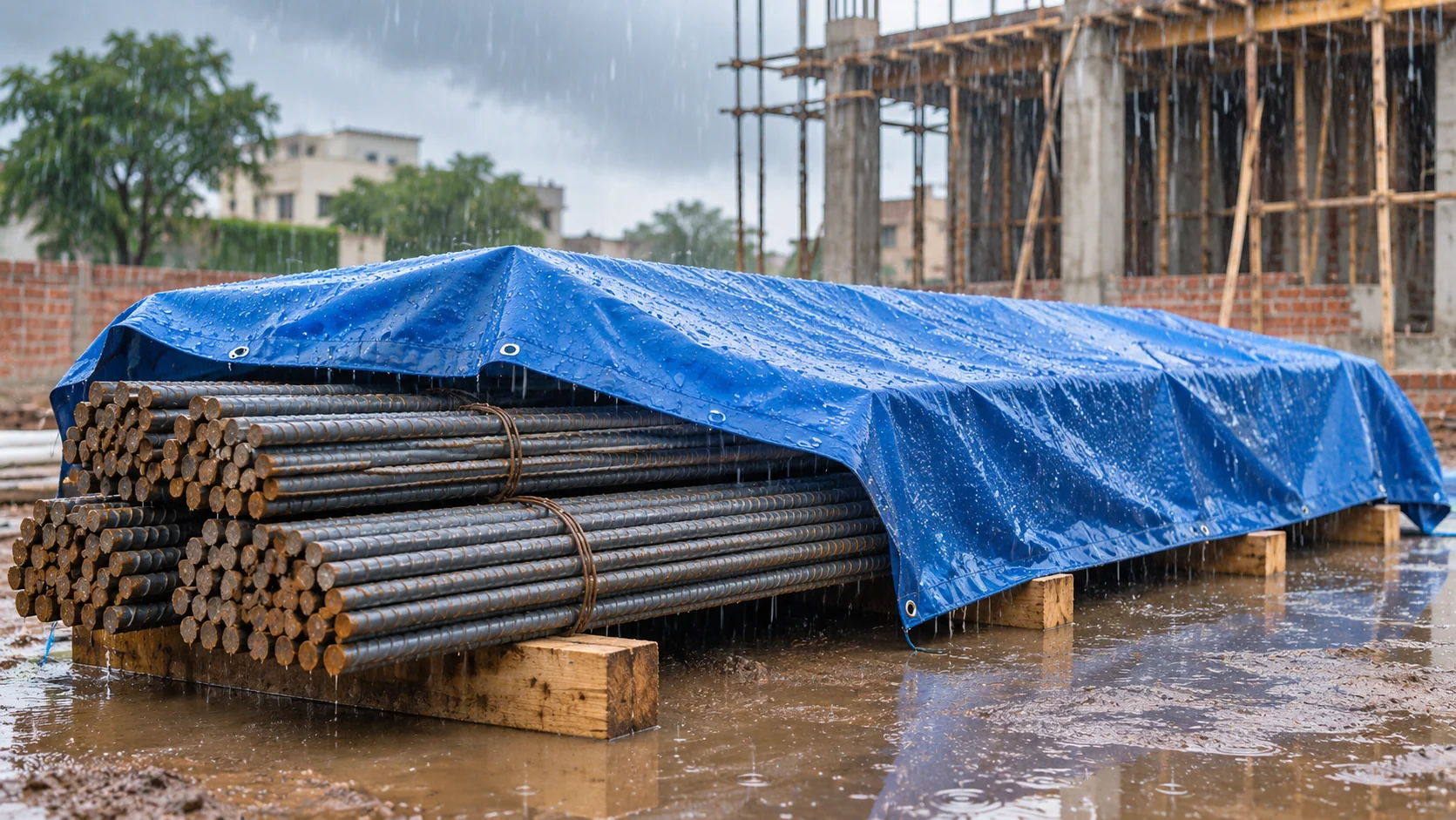
The best way to store steel bars during monsoon is to keep them above the ground, cover them with a waterproof sheet, and choose an area with proper drainage. Steel bars should not remain in standing water or direct contact with wet soil. Regular inspection is also important to identify moisture, mud, and rust before the bars are used.
Follow these five basic steps:
- Select a dry, elevated storage area.
- Place steel bars on wooden sleepers or suitable concrete supports.
- Cover the bars with a waterproof tarpaulin.
- Allow air to circulate beneath the covering.
- Check the bars regularly, especially after heavy rain.
These precautions make rebar storage during monsoon easier and more manageable on construction sites in Pakistan.
Why Is Proper Saria Storage Important During the Monsoon?
Saria is used to reinforce concrete in foundations, columns, beams, and slabs. It plays an important role in reinforced concrete construction.
During the monsoon season, steel bars stored outdoors are exposed to rainwater, moisture, and muddy conditions. When steel remains wet for long periods, rust can develop on its surface.
Light surface rust does not always mean the steel is unsuitable for construction. However, heavy corrosion can damage the surface and reduce the effective steel section.
Improper storage can also cause:
- Mud and dirt to collect on steel bars.
- Difficulty in handling and separating different bar sizes.
- Extra cleaning work before construction.
- Delays when materials need inspection.
- Potential material losses if corrosion becomes severe.
Proper storage helps maintain the condition of steel bars until they are ready for installation.
7 Easy Ways to Protect Saria From Rain and Rust
If you are wondering how to protect saria from rain, the following methods can be used on most residential and commercial construction sites.
1. Choose a Dry and Raised Storage Area
The first step is selecting the right location for storing saria.
Avoid low areas where rainwater collects. On construction sites, especially open residential plots, water may remain on the ground for several hours or days after heavy rainfall.
Choose a slightly elevated area with firm ground and proper drainage.
Before placing steel bars, check that:
- Rainwater can flow away from the storage area.
- The ground is stable and does not become muddy easily.
- The location is away from drains and standing water.
- Workers can access the stored material safely.
A suitable storage location reduces unnecessary exposure to moisture.
2. Keep Steel Bars Off the Ground Using Wooden or Concrete Supports
One of the most important rules for steel bar storage off the ground is to avoid direct contact with soil.
Wet soil holds moisture, which can keep the underside of steel bars damp even after the rain stops.
Use wooden sleepers, suitable concrete blocks, or properly designed steel racks to raise the bars above the ground.
As a practical guideline, keeping the steel at least 150 mm (approximately 6 inches) above ground level is often recommended. Greater clearance may be needed where flooding or waterlogging is possible.
Make sure the supports are stable, strong enough for the weight, and placed at suitable intervals to prevent excessive bending or unsafe movement.
3. Cover Saria With a Waterproof Tarpaulin
A waterproof tarpaulin is a practical way to protect steel bars from direct rainfall.
After stacking the bars on raised supports, place a strong waterproof sheet over the bundle.
The covering should:
- Protect the steel from direct rain.
- Extend beyond the sides of the stack.
- Be secured against strong winds.
- Allow rainwater to run off instead of collecting on top.
- Avoid trapping moisture against the steel.
Do not wrap wet steel bars tightly in plastic for long periods. Moisture trapped inside can keep the bars damp and encourage corrosion.
If water enters the covering, remove it when conditions are safe, allow the bars to dry, and replace the cover properly.
4. Leave Space for Air Circulation
Covering steel bars is important, but ventilation matters too.
When a plastic sheet is tightly wrapped around a steel bundle, moisture may become trapped inside. Changes in temperature can also cause condensation beneath the cover.
To avoid this problem, use a raised covering arrangement that provides protection from rain while allowing air movement.
Keep the sides protected from wind-driven rain without completely sealing the storage area.
Good ventilation helps stored steel bars dry after exposure to moisture.
5. Keep Rainwater and Mud Away From the Storage Area
Good drainage is essential for outdoor rebar storage on site.
Even when steel bars are raised, water collecting around the supports can make the storage area muddy and unsafe.
Before the monsoon season:
- Clear blocked drainage paths.
- Remove rubbish that may stop water from flowing.
- Keep the storage area away from water discharge points.
- Check that the ground beneath the supports remains stable.
- Inspect the area after heavy rainfall.
If your construction plot frequently collects rainwater, consider moving the steel to a safer location before the next rainfall.
6. Store Different Saria Sizes and Grades Separately
Construction projects often use different saria sizes, such as 10 mm, 12 mm, 16 mm, and 20 mm, depending on the structural design.
Mixing these bars during storage can create confusion and waste time.
Keep different sizes and grades in separate, clearly identified bundles.
For example:
| Saria Size | Storage Recommendation |
| 10 mm | Keep in a separate, labelled bundle |
| 12 mm | Store on raised supports |
| 16 mm | Use stable supports suitable for the bundle weight |
| 20 mm | Keep properly supported and secured against rolling |
These are storage recommendations only. Always use the steel sizes and grades specified in your approved structural drawings.
Proper separation makes it easier for workers to identify and use the required material.
7. Inspect Steel Bars Regularly During Rainy Weather
Regular inspection is one of the simplest ways to prevent rust on stored steel bars from becoming a bigger problem.
Check stored saria after heavy rainfall and periodically throughout the monsoon season.
Look for:
- Water trapped beneath the covering.
- Mud or dirt on the steel surface.
- Signs of rust or corrosion.
- Damaged waterproof sheets.
- Unstable wooden or concrete supports.
If the steel becomes wet, allow it to dry under suitable conditions and restore proper protection.
If you notice significant rust, pitting, or damage, ask your site engineer to assess the bars before using them.
Barish Mein Saria Kaise Rakhein?
Agar aap ghar bana rahe hain aur soch rahe hain ke barish mein saria kaise rakhein, to kuch asaan ehtiyati tadabeer apna kar saria ko pani aur zang se bachaya ja sakta hai.
Sab se pehle saria ko seedha mitti par na rakhein. Is ke neeche lakri ke mazboot blocks ya munasib concrete supports lagayein, taake saria zameen se ooncha rahe.
Saria ko waterproof tirpal se cover karein, lekin hawa guzarnay ki jagah bhi rakhein. Barish ka pani saria ke neeche jama nahi hona chahiye.
Saria ko zang se kaise bachayein? Is ke liye saria ko zyada dair geela na rehne dein, pani ki nikasi ka intezam karein, aur barish ke baad us ki condition check karein.
Agar saria par bohat zyada zang ya gehre nishan nazar aayein, to istemal se pehle site engineer se check karwayein.
What Should You Do if Saria Gets Wet or Starts Rusting?
If your steel bars get wet during the monsoon, there is no need to assume that they are immediately damaged.
Steel reinforcement bars may develop light surface rust when exposed to moisture. However, the condition of the steel should be checked before it is used in concrete.
Is Light Rust on Saria Acceptable?
A thin layer of surface rust may be acceptable if the steel meets the applicable project specifications and has no significant loss of cross-section.
Light rust is different from heavy, flaky corrosion.
Before using steel bars, remove mud, loose rust, oil, and other materials that could interfere with bonding between steel and concrete.
You can also read our guide on how to check saria quality to understand important checks before construction.
When Should Rusted Steel Bars Be Checked Before Use?
Ask your site engineer to inspect the bars if you notice:
- Thick or flaky rust.
- Deep corrosion marks or pitting.
- Visible reduction in bar thickness.
- Damaged ribs or unusual surface deterioration.
Do not automatically use heavily corroded bars or try to hide the damage with paint, oil, or another coating.
The engineer should determine whether cleaning, further testing, or replacement is necessary according to the project requirements.
Common Mistakes to Avoid When Storing Saria in Rain
Many construction sites experience storage problems because of a few avoidable mistakes.
Here is a quick comparison:
| Don’t | Do |
| Place saria directly on wet soil | Keep it on stable, raised supports |
| Leave steel uncovered in heavy rain | Use a secured waterproof tarpaulin |
| Wrap wet bars tightly in plastic | Allow ventilation and drying |
| Store steel where water collects | Choose a well-drained location |
| Mix different bar sizes | Keep bundles separate and labelled |
| Ignore rust and damaged covers | Inspect the material regularly |
These simple precautions can help reduce storage-related problems during the rainy season.
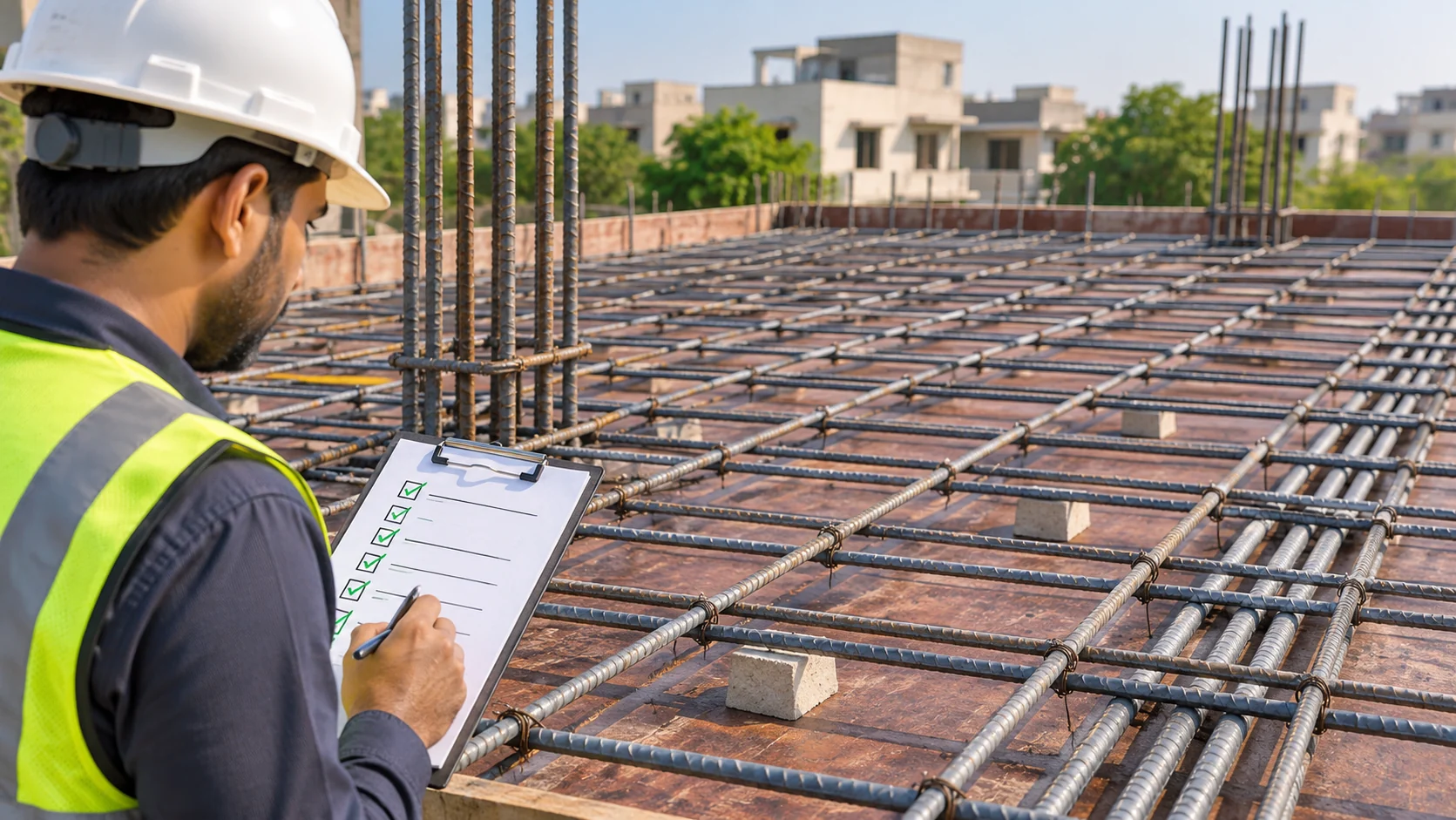
Quick Monsoon Saria Storage Checklist for Construction Sites
Before and during the monsoon season, use this checklist to keep your steel storage area organised.
- Choose a firm, raised storage location.
- Keep saria off the ground using suitable supports.
- Arrange proper rainwater drainage.
- Cover the bars with a waterproof tarpaulin.
- Leave space for ventilation.
- Separate and label different saria sizes.
- Inspect the storage area after heavy rain.
- Check for rust, mud, and other contamination before use.
Choose Quality Saria for Your Construction Project
Proper storage helps protect steel reinforcement bars, but choosing the right material is equally important.
Before purchasing saria, check the required steel grade, size, and relevant quality documentation. Always follow the specifications provided by your structural engineer.
At Kohsar Steel Industries, we understand the importance of reliable steel reinforcement for construction projects in Pakistan.
Along with following proper storage practices, buyers should verify the identity and specifications of the steel they purchase.
You can learn more about how to identify original saria and understand steel quality standards and rebar verification in Pakistan.
For information about Kohsar Steel Industries’ steel products, visit our official website.
FAQs
Q1. Can steel bars be stored outside during the rainy season?
Ans: Yes, steel bars can be stored outdoors during the rainy season if proper precautions are taken. Keep them on raised supports, protect them from direct rain, provide ventilation, and maintain good drainage. Inspect the bars regularly for moisture and corrosion.
Q2. How do you protect saria from rain at a construction site?
Ans: To protect saria from rain, store it above ground level on stable supports and cover it with a waterproof tarpaulin. Make sure rainwater can drain away and air can circulate around the stored bars. Avoid leaving steel in standing water.
Q3. How high should steel bars be stored above the ground?
Ans: A practical guideline is to keep steel bars at least 150 mm (approximately 6 inches) above the ground. Additional clearance may be necessary on waterlogged sites. The exact arrangement should follow site conditions, safe stacking practices, and project specifications.
Q4. Can rusted saria be used in construction?
Ans: Steel bars with light surface rust may still be suitable if they meet the relevant project requirements. However, bars with heavy rust, pitting, loose scale, or reduced thickness should be inspected by a qualified site engineer before use.
Q5. Should steel bars be covered with plastic sheets?
Ans: Yes, waterproof plastic sheets or tarpaulins can protect steel bars from rain. However, the covering should not trap moisture against the steel. A raised, well-secured cover with suitable ventilation is better than tightly wrapping wet bars.
Q6. Saria ko zang se kaise bachayein?
Ans: Saria ko zang se bachane ke liye usay geeli mitti se ooncha rakhein, waterproof tirpal se cover karein, aur hawa guzarnay ka intezam karein. Barish ka pani jama na hone dein aur waqtan fawaqtan saria ki condition check karte rahein.