
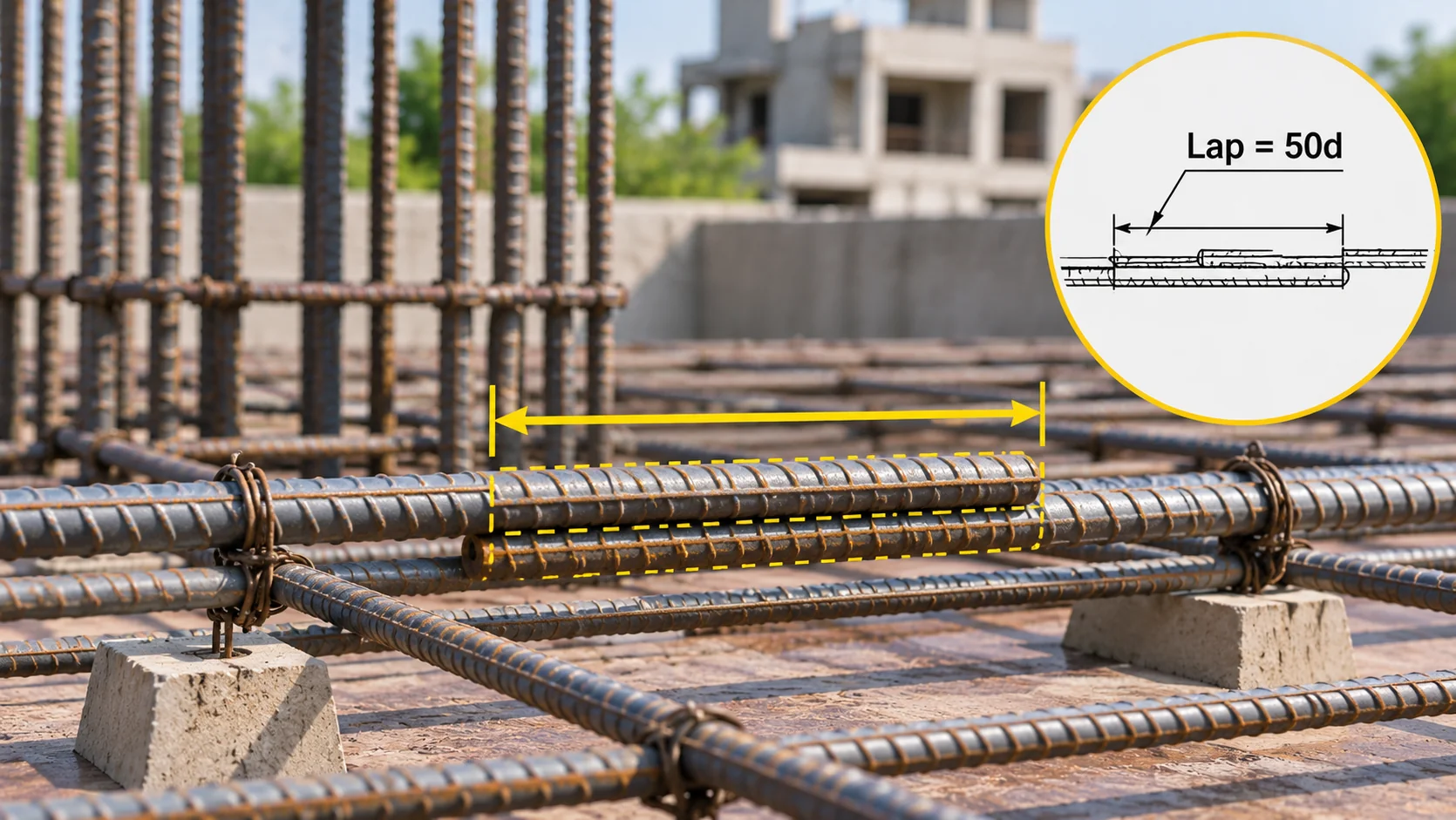
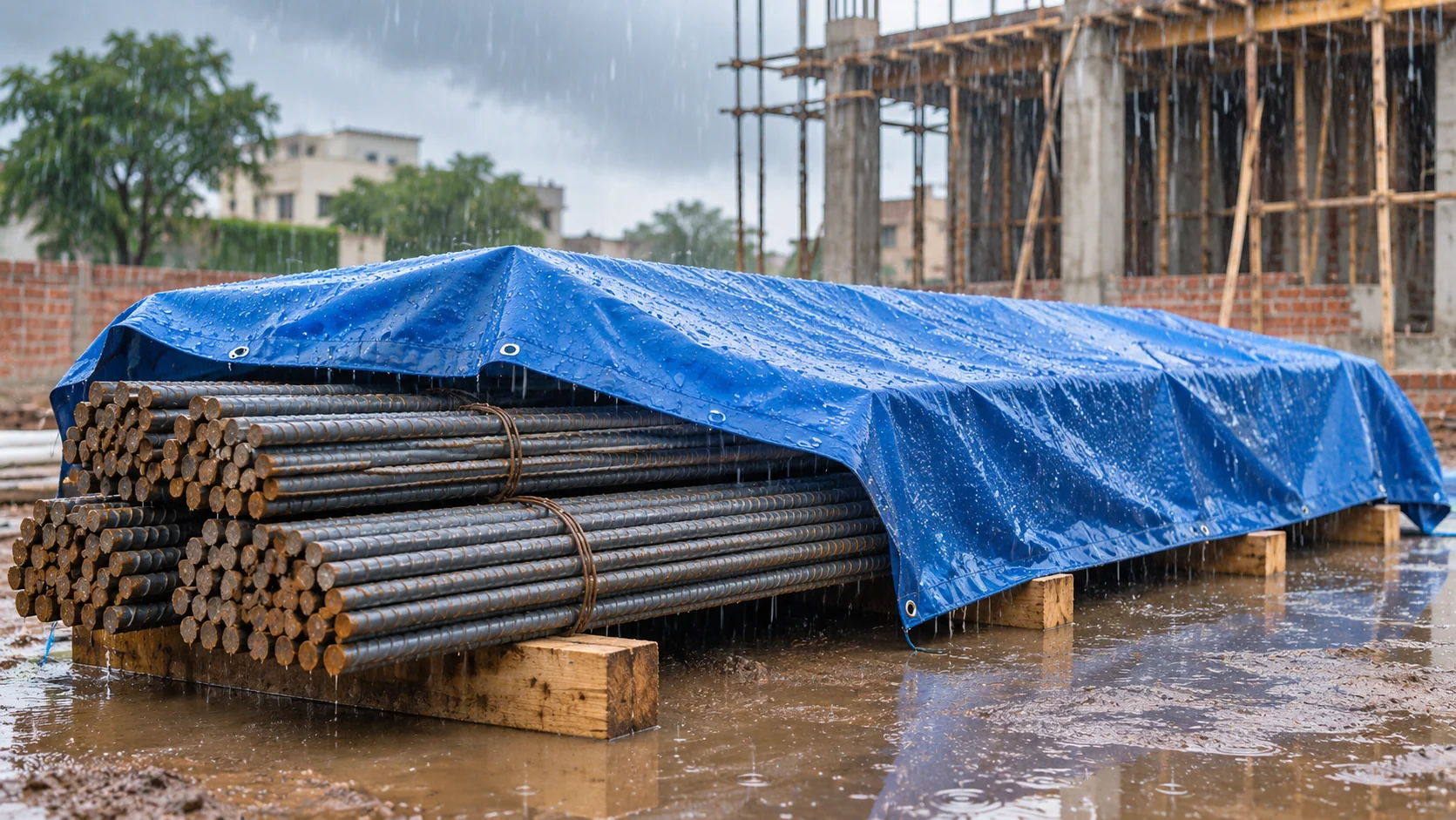
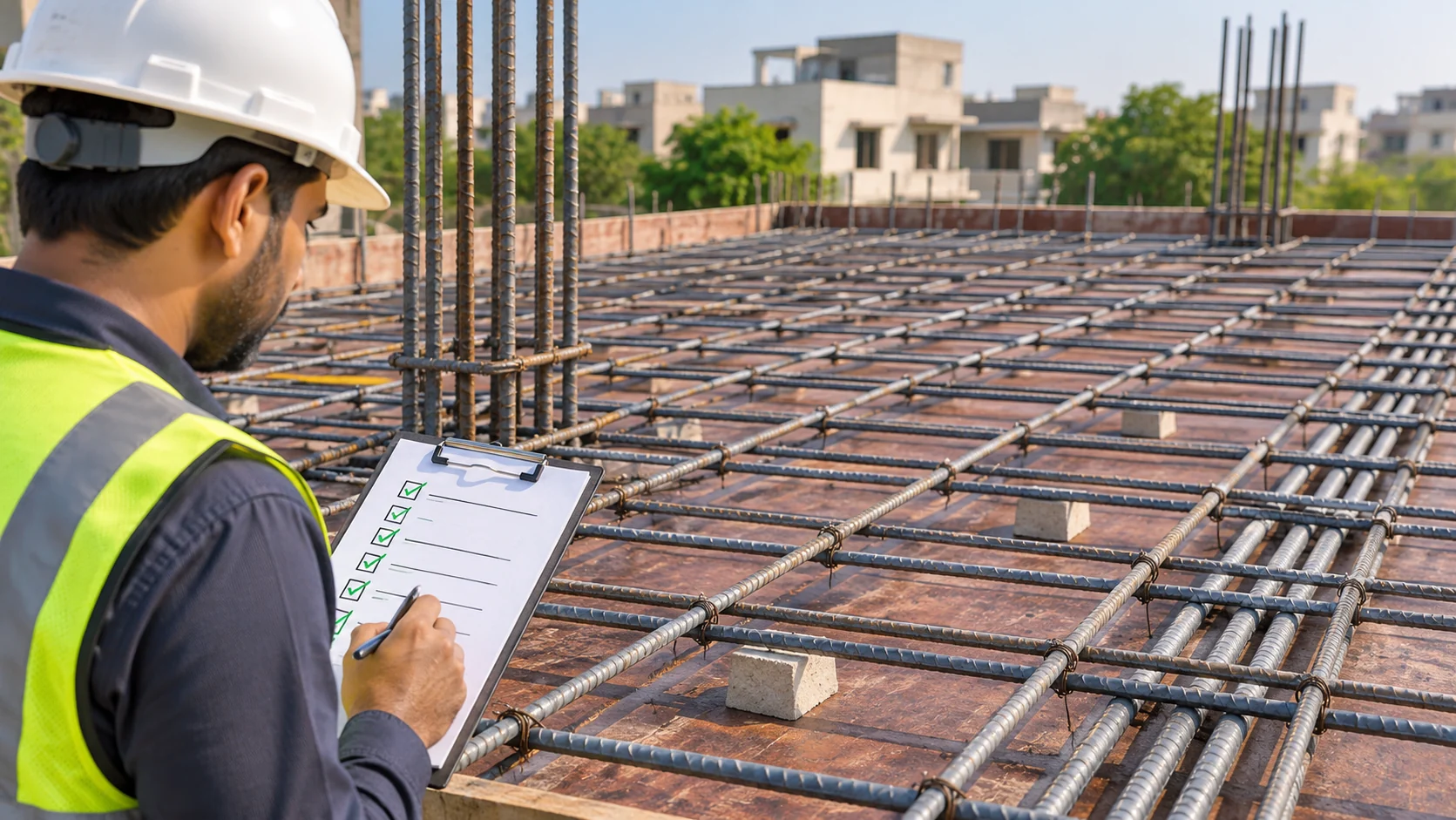
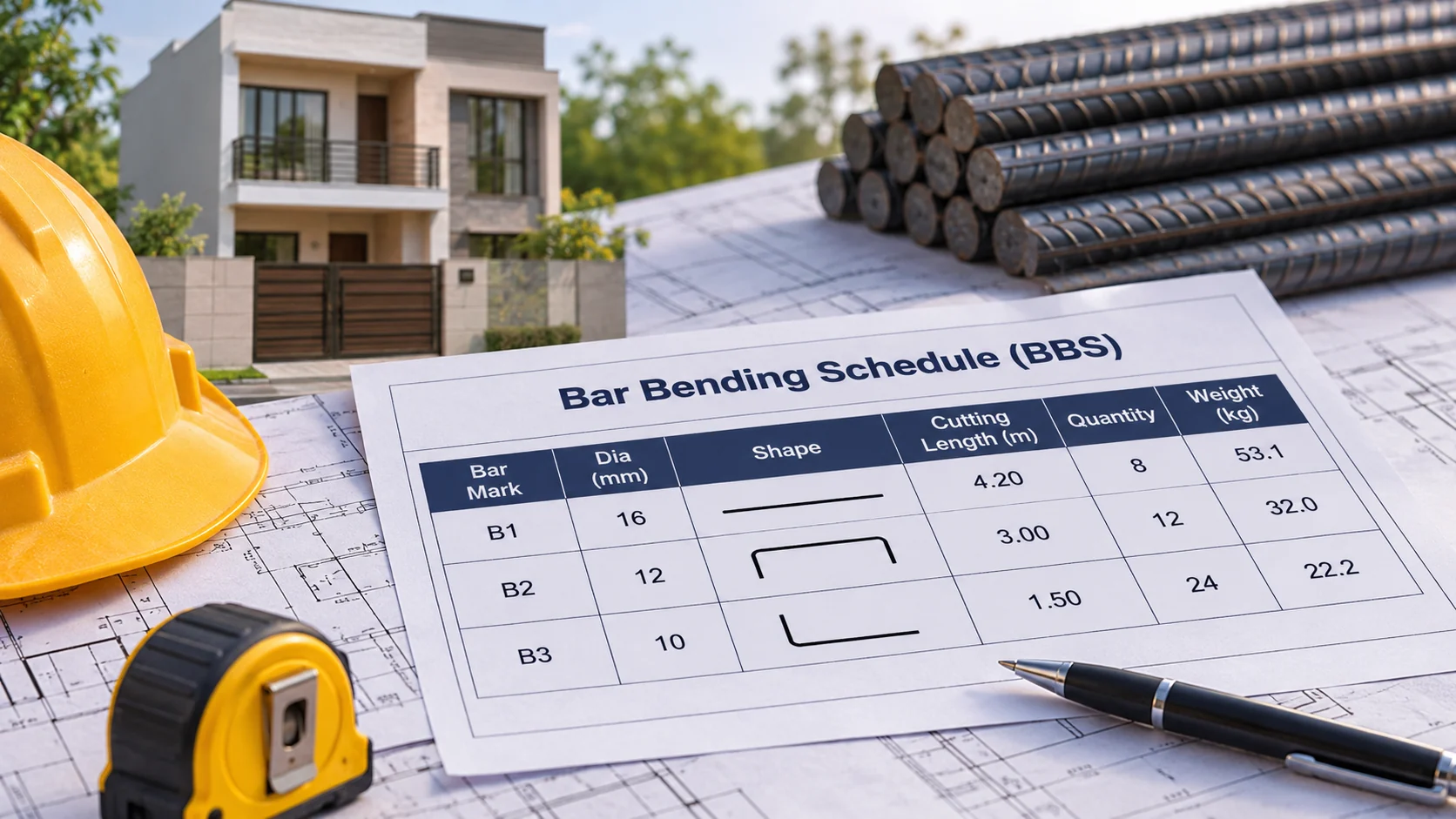
When you’re building a home, commercial plaza, or major construction project, the strength of your structure depends on something you might never see once construction is complete: the steel reinforcement inside your concrete. But how can you be sure the steel you’re buying meets the quality standards your project demands?
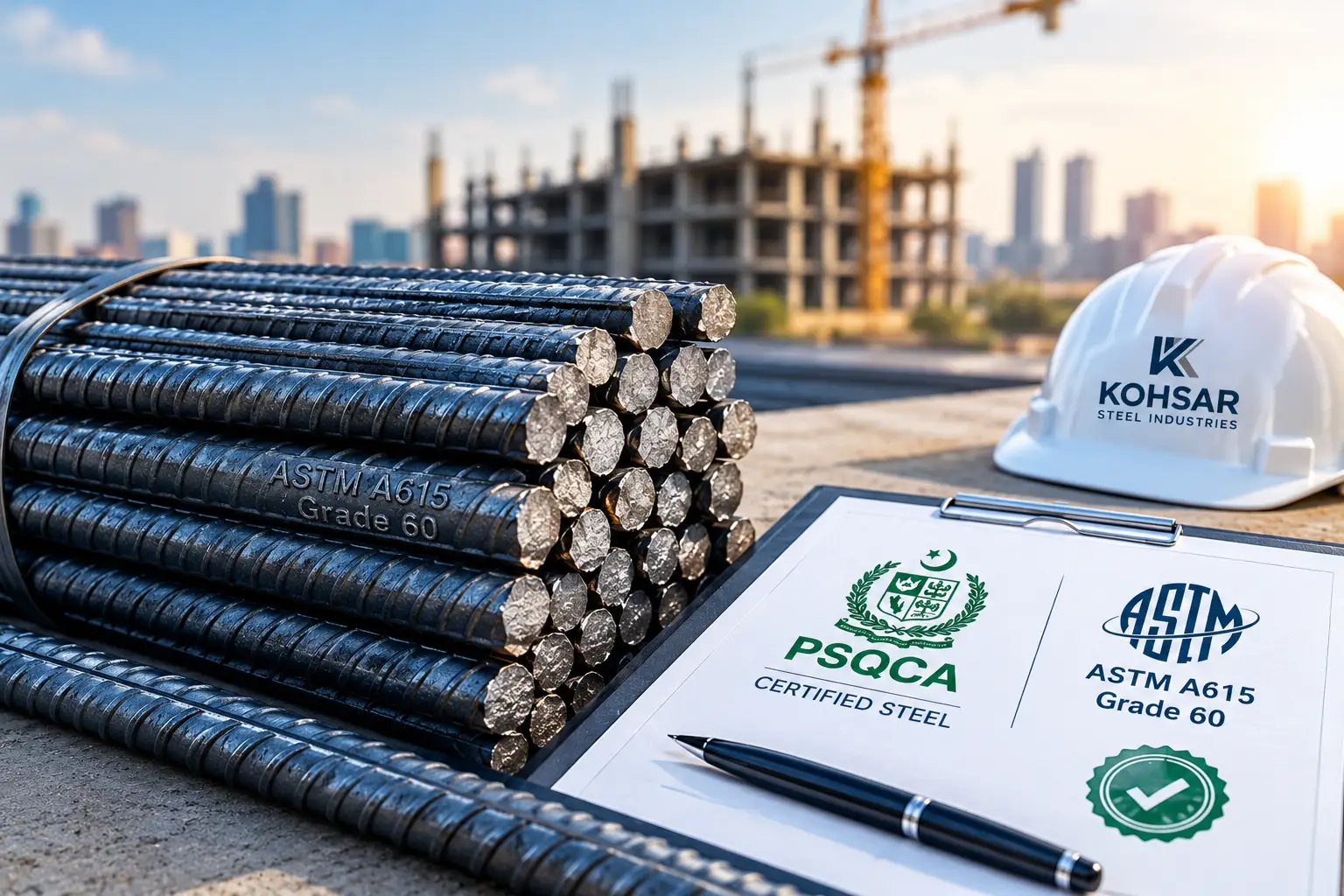
That’s where PSQCA-certified steel and ASTM A615 standards become important. In Pakistan, buyers often hear terms like Grade 60, PSQCA approval, and ASTM certification without fully understanding what they mean or how to verify them. The truth is, choosing steel based only on price or a manufacturer’s claims can put your investment at risk.
Steel certification, checking the right documents, and knowing what to look for on steel bars can help you make a more confident purchasing decision. This guide explains what PSQCA and ASTM A615 mean, how to verify rebar quality, and what every Pakistani buyer should check before purchasing saria.
What Is PSQCA Certified Steel?
PSQCA certified steel refers to steel products covered by a valid certification-mark licence issued by the Pakistan Standards and Quality Control Authority (PSQCA) for an applicable Pakistan Standard.
PSQCA is Pakistan’s national standards and quality control authority. Its responsibilities include developing and adopting standards, assessing conformity, and administering certification schemes for products within its scope.
For steel buyers, PSQCA certification provides an important way to evaluate whether a manufacturer’s product is subject to recognized conformity requirements.
However, certification should never be treated as a blanket guarantee that every steel bar is suitable for every construction project. Buyers must still confirm the correct steel grade, product specifications, batch documentation, and structural design requirements.
What Is the PSQCA Rebar Standard in Pakistan?
The PSQCA rebar standard establishes applicable requirements for reinforcing steel products, including characteristics relevant to their intended use in reinforced concrete construction.
Pakistan Standards such as PS 1879 and PS 1612 may be relevant depending on the steel product and its classification. Buyers should verify the current applicable edition and scope rather than assuming that one standard covers every type of reinforcement bar.
When reviewing steel certification in Pakistan, check:
- The Pakistan Standard number applicable to the product.
- The steel grade and product category covered by the licence.
- The manufacturer’s name and licensed manufacturing location.
- The certification-mark licence number and current status.
- The availability of supporting quality and testing documents.
A manufacturer’s general quality certificate is not necessarily equivalent to a PSQCA product certification-mark licence.
For buyers, the key question is not simply whether a company mentions PSQCA. It is whether the specific steel product being purchased falls within a valid certification scope.
What Is ASTM A615 Certification for Steel Rebar?
ASTM A615/A615M is an internationally recognized technical specification for deformed and plain carbon-steel bars used in concrete reinforcement.
Developed by ASTM International, the specification establishes requirements related to mechanical properties, chemical composition, dimensions, bar deformations, and testing.
It is widely referenced in construction projects where engineers specify reinforcing steel according to ASTM requirements.
An important distinction is that ASTM A615 is a specification, not automatically a third-party certification. A manufacturer may produce steel that conforms to ASTM A615, but a compliance claim should be supported by appropriate testing and documentation.
When purchasing reinforcement bars, understanding the ASTM A615 steel bar specifications can help you evaluate whether the steel meets your project’s technical requirements.
ASTM A615 Grade 60 Yield Strength and Specifications
One of the most commonly specified reinforcement grades is ASTM A615 Grade 60.
The term Grade 60 refers to a minimum yield strength of 60,000 pounds per square inch (psi), equivalent to approximately 420 megapascals (MPa).
Yield strength is particularly important because it describes the stress level at which steel begins to undergo permanent deformation.
Here is a simplified overview of the ASTM A615 Grade 60 mechanical requirements:
| Property | ASTM A615 Grade 60 |
| Minimum yield strength | 60,000 psi (420 MPa class) |
| Minimum tensile strength | 90,000 psi (620 MPa class) |
| Steel type | Carbon-steel reinforcement |
| Common applications | Beams, columns, slabs, foundations |
| Surface configuration | Deformed bars commonly used for concrete reinforcement |
Note: Exact requirements, including elongation, bending, dimensions, and applicable grade designations, should be checked against the edition of ASTM A615/A615M specified for the project.
Yield strength and tensile strength serve different purposes. Yield strength indicates when permanent deformation begins, while tensile strength represents the maximum engineering stress a material can withstand during a tensile test.
Both properties matter when evaluating the performance of reinforcement steel.
For projects specifying this grade, reviewing the available Grade 60 steel bars in Pakistan can help buyers understand the product category and discuss their requirements with the supplier.
However, Grade 60 strength alone does not establish suitability for every structural or seismic application. The project’s structural engineer should determine the appropriate material specification.
PSQCA vs. ASTM A615: What Is the Difference?
Many buyers assume that PSQCA certification and ASTM A615 certification mean the same thing. In reality, they serve different purposes.
PSQCA is a Pakistani standards and conformity-assessment authority, while ASTM A615 is a technical specification describing requirements for reinforcing steel.
Understanding this difference is essential when evaluating steel certification in Pakistan.
| Comparison | PSQCA | ASTM A615 |
| What it is | National standards and quality control authority | International material specification |
| Main purpose | Standards and conformity assessment | Technical requirements for reinforcing bars |
| Geographic context | Pakistan | Used internationally |
| What buyers verify | Licence, product scope, status | Grade, test results, specification compliance |
| Evidence | Valid certification-mark licence and related records | Mill test certificate and supporting test results |
A steel manufacturer may claim compliance with ASTM A615 while also holding a PSQCA certification-mark licence for an applicable product standard.
However, one does not automatically prove the other.
The safest purchasing approach is to verify both the applicable regulatory or certification requirements and the technical specifications stated in your construction drawings.
How to Verify PSQCA Certification for Steel in Pakistan
Buying steel from a well-known supplier is a good starting point, but how do you know whether the steel actually meets the standards being advertised?
If you’re wondering how to verify PSQCA certification, the process is more straightforward than you might expect. You need to examine the product identification, confirm the manufacturer’s licence, and review the steel’s technical documentation.
Here are four essential steps every steel buyer should follow.
Step 1: Check the PSQCA Mark on Steel Bars and Packaging
Start by examining the steel bars, bundles, and accompanying labels.
The PSQCA mark on steel bars or their packaging, where applicable under the certification scheme, can help identify products represented as conforming to a relevant Pakistan Standard.
Look for manufacturer identification, grade markings, applicable standard references, and batch information.
Remember that ASTM bar markings and PSQCA certification marks serve different purposes. A manufacturer’s rolled identification or Grade 60 marking does not independently establish PSQCA certification.
The presence of a logo or quality claim should also not be your only evidence. Marks can be misused, and certification status can change.
Always verify the manufacturer’s licence through an official source before relying on the certification claim.
Step 2: Verify the Manufacturer’s PSQCA Licence Online
This is one of the most important steps when purchasing certified reinforcement steel.
The Pakistan Standards and Quality Control Authority provides an official facility for checking registered product licences.
To verify a manufacturer:
- Visit the official PSQCA website and follow its product licence verification guidance.
- Open the certification-mark licence verification service.
- Enter the manufacturer’s or licence details as required.
- Check the manufacturer’s registered name, product description, applicable standard, and licence status.
- Confirm that the licence covers the particular steel product and manufacturing location.
PSQCA’s official guidance identifies its online licence verification facility as a way to confirm registered product licences.
If you cannot find a manufacturer, do not immediately assume its steel is counterfeit. Request clarification and verify the details directly with PSQCA.
A company appearing on a general business registration or industry association list is not equivalent to being included among PSQCA-approved steel manufacturers.
Step 3: Request a Mill Test Certificate (MTC)
A Mill Test Certificate is an important document for verifying the technical characteristics of a steel batch.
It generally records the results of material tests conducted during production or quality inspection.
For ASTM A615 Grade 60 rebar, buyers should look for information such as:
- Manufacturer and product identification.
- Heat number or batch reference.
- Steel grade and applicable ASTM specification.
- Yield strength and tensile strength results.
- Elongation and relevant bend-test results.
- Chemical analysis, where required.
- Testing date and traceability information.
Compare these details with your purchase documents and the identification provided on the delivered steel.
For example, if your construction project specifies ASTM A615 Grade 60, the test report should demonstrate compliance with the applicable mechanical requirements, including the minimum yield strength.
A mill test certificate is valuable evidence, but it should be authentic, traceable to the delivered material, and assessed against the correct specification.
Step 4: Inspect Rebar Quality and Confirm Test Results
Even when documents appear satisfactory, physical inspection remains important.
Check the steel for significant visible defects, inconsistent bar identification, damage, and discrepancies in dimensions or bundle information.
Surface rust alone does not necessarily mean steel is unsuitable. The extent of corrosion, loss of section, surface condition, and applicable acceptance requirements matter.
For large construction projects or when there is uncertainty about the material, arrange testing through a competent independent laboratory.
Relevant tests may include tensile strength, yield strength, elongation, bend performance, and dimensional checks.
The key takeaway: Reliable steel verification combines official licence checks, product traceability, technical documentation, and testing where necessary. No single marking or certificate should replace all these checks.
PSQCA Saria Ki Pehchan: Certified Saria Kaise Check Karen?
Pakistan mein ghar ya commercial building banate waqt saria ki quality check karna bohat zaroori hai. Sirf brand name, price ya dukandar ki baat par bharosa karne ke bajaye steel ki certification aur test reports bhi verify karni chahiye.
Agar aap soch rahe hain ke PSQCA certified saria kaise check karen, to sab se pehle manufacturer ka naam, steel grade aur available markings check karein.
PSQCA saria ki pehchan ke liye yeh baatein yaad rakhein:
- Saria ke bundle par manufacturer aur grade ki details check karein.
- Manufacturer se PSQCA certification-mark licence number maangein.
- Official PSQCA website par licence ki validity aur product scope verify karein.
- Grade 60 saria khareedte waqt mill test certificate aur yield strength results check karein.
- Agar quality par shak ho, to independent laboratory se testing karwaein.
Yaad rakhein, sirf saria par Grade 60 likha hona PSQCA certification ka proof nahi hai.
Behtar construction ke liye sirf saria ki qeemat nahi, balkay uski verified quality aur technical specifications bhi check karein.
Why PSQCA and ASTM Standards Matter When Buying Steel
Steel reinforcement plays a critical role in how reinforced concrete structures resist loads and maintain their structural integrity.
When steel does not meet the specified material requirements, the consequences can include construction delays, rejected materials, additional testing expenses, and potential structural performance concerns.
This is why recognized standards and verifiable documentation matter.
1. Greater Confidence in Material Quality
Certification and documented compliance provide buyers with a stronger basis for evaluating product quality.
Instead of relying entirely on marketing claims, buyers can review technical requirements, licence information, and test results.
2. Better Consistency Across Construction Projects
Large construction projects require materials with predictable characteristics.
ASTM specifications establish measurable requirements for steel properties, helping engineers and contractors assess whether supplied reinforcement meets project specifications.
3. Improved Product Traceability
Batch records and mill test certificates help connect delivered material to manufacturing and testing information.
This is especially important when questions arise during construction inspections or quality audits.
4. Reduced Risk of Purchasing Misrepresented Steel
Verifying product identification, certification status, and testing documentation can help buyers identify inconsistencies before installation.
Although no verification process eliminates every risk, it supports more informed purchasing decisions.
Ultimately, buying reinforcement steel should be about more than finding the lowest price. The goal is to obtain material that meets the technical and quality requirements of the project.
How to Choose a Reliable Steel Manufacturer in Pakistan
With numerous steel suppliers operating across Pakistan, choosing the right manufacturer can feel overwhelming.
Some buyers focus on price, while others prioritize delivery speed or brand recognition. These factors matter, but they should not overshadow product specifications, quality assurance, and documentation.
Before selecting a manufacturer, ask whether it can clearly explain the grades it supplies, provide relevant technical documentation, and support verification of its quality claims.
You should also evaluate the manufacturer’s production capabilities, testing practices, product availability, and ability to meet your project’s requirements.
What to Look for in a Steel Manufacturer
A reliable supplier should be able to provide clear answers to questions such as:
- Which ASTM or Pakistan Standards apply to the steel being supplied?
- Can the manufacturer provide batch-specific mill test documentation?
- Are the required Grade 40 or Grade 60 products available?
- Can certification claims be independently verified?
- Is the supplier able to provide the quantities and delivery schedule your project requires?
These questions can help distinguish a documented product offering from an unsupported quality claim.
Explore Steel Products from Kohsar Steel Industries
For buyers comparing reinforcement steel suppliers, Kohsar Steel Industries is a Pakistan-based manufacturer offering reinforcement and structural steel products.
The company publishes information about its Grade 40 and Grade 60 steel bars, ASTM A615 and ASTM A706 specifications, and production processes involving chemical and physical testing.
This information can help engineers, contractors, and procurement teams begin evaluating available products against their construction requirements.
However, buyers should request current, product-specific supporting documents and independently verify any certification claims relevant to their purchase.
By combining the right steel grade with reliable documentation and appropriate engineering guidance, construction professionals can make better-informed material decisions.
Summary
Every strong structure begins with the right materials, and reinforcement steel is too important to purchase on assumptions alone.
Understanding PSQCA-certified steel, the ASTM A615 rebar specification, and Grade 60 yield strength requirements helps you ask better questions and evaluate steel products with greater confidence.
Before placing an order, confirm the applicable standards, verify certification claims, request traceable test documentation, and ensure the steel grade matches your structural engineer’s specifications.
Whether you’re constructing a family home, a commercial building, or a large infrastructure project, these checks can help protect your investment and support responsible construction practices.
Looking for Grade 60 reinforcement steel for your next project?
Explore the steel products in Pakistan offered by Kohsar Steel Industries and contact the team to discuss available grades, product specifications, and supporting quality documentation.
Choose steel with confidence. Build with verified specifications. And give your project a stronger foundation from the start.
FAQs
Q: How can I verify PSQCA certified steel in Pakistan?
Ans: You can verify PSQCA-certified steel by checking the manufacturer’s certification-mark licence through the official PSQCA verification service. Confirm that the licence is valid and covers the steel product you intend to purchase. You should also review manufacturer identification, applicable standards, and supporting test documents.
Q: What is the PSQCA mark on steel bars?
Ans: The PSQCA certification mark indicates that a product is represented as certified under the authority’s certification-mark scheme. Its use is governed by PSQCA requirements. Buyers should verify the mark and associated licence rather than assuming that any logo or manufacturer marking proves certification.
Q: What is the minimum ASTM A615 Grade 60 yield strength?
Ans: The minimum ASTM A615 yield strength for Grade 60 reinforcing steel is 60,000 psi, corresponding to the 420 MPa grade designation. Grade 60 also has a minimum tensile strength requirement of 90,000 psi under the commonly referenced ASTM A615 requirements.
Q: Is ASTM A615 the same as PSQCA certification?
Ans: No. ASTM A615 is a technical specification for carbon-steel reinforcement bars, while PSQCA administers standards and conformity-assessment activities in Pakistan. A manufacturer’s claim of ASTM A615 compliance does not automatically establish that it holds a valid PSQCA certification-mark licence.
Q: How can I check whether a steel manufacturer is PSQCA approved?
Ans: Visit the official PSQCA website and use its certification-mark licence verification facility. Check the manufacturer’s registered details, product category, applicable Pakistan Standard, and current licence status. If information is unclear, contact PSQCA for confirmation before purchasing.
Q: PSQCA certified saria kaise check karen?
Ans: PSQCA certified saria check karne ke liye manufacturer ka naam aur licence number hasil karein. Phir official PSQCA website par licence ki validity verify karein. Steel grade, batch details aur mill test certificate bhi check karein taake saria ki quality aur specifications ka behtar andaza ho sake.