
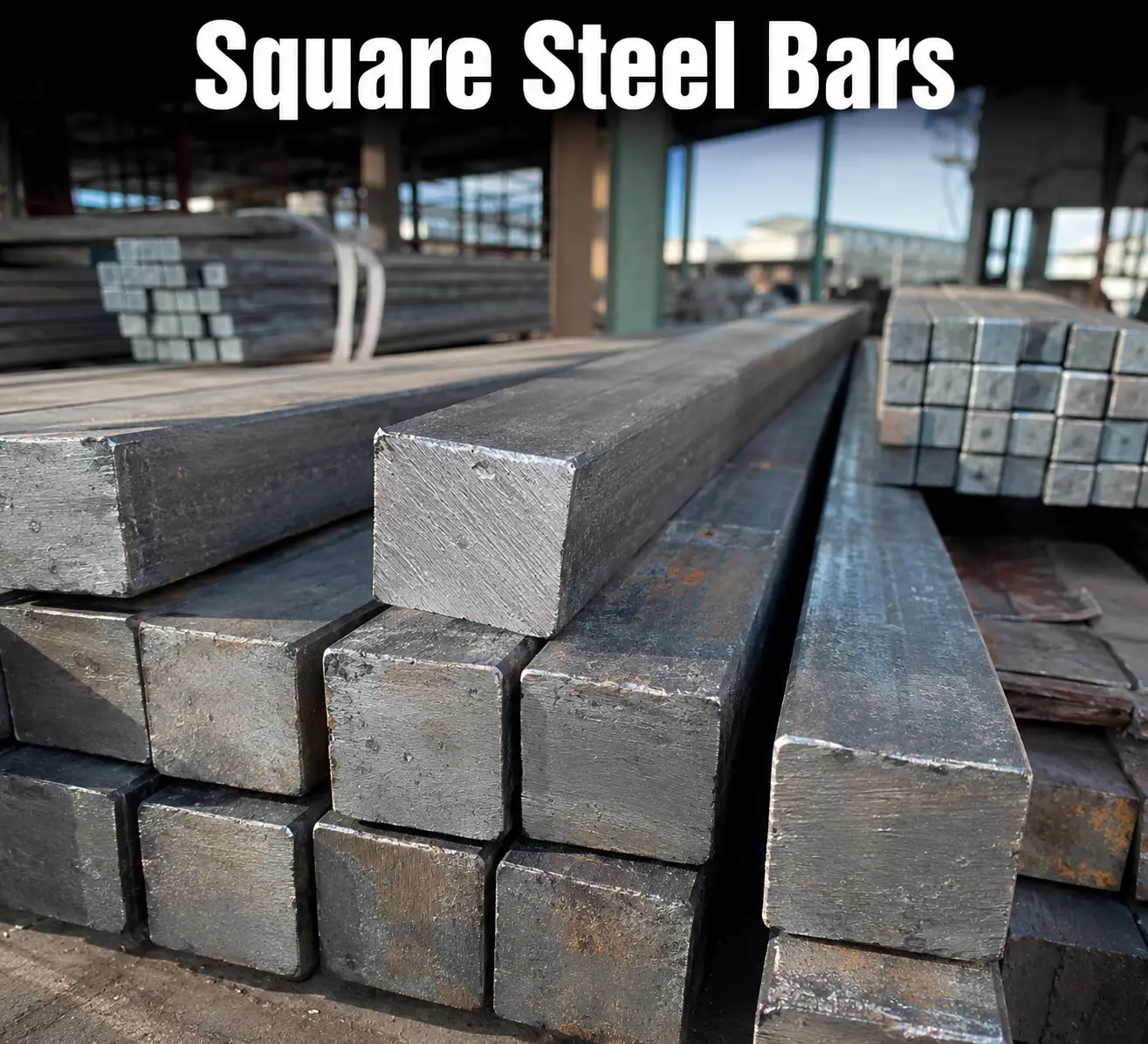
Steel may look similar from one bar to another, but its grade, strength, chemical composition, and performance can be very different. Knowing how to check steel grade is essential before using reinforcement steel in any construction project because the wrong grade can affect structural strength, safety, durability, and compliance with project specifications.
Fortunately, you can begin verification by checking the markings on the steel bar, reviewing the manufacturer’s test certificate, confirming the applicable standard, and examining mechanical or chemical test results.
Whether you are purchasing Grade 40 or Grade 60 steel, understanding these checks helps you make a confident purchasing decision and ensures that the steel you use is suitable for the job.
What Is Steel Grade?
Steel grade refers to a classification that identifies the strength, chemical composition, mechanical properties, and applicable standards of a particular type of steel. Different grades are manufactured to meet specific performance requirements, which is why knowing the grade is important before using steel in construction.
For reinforcement bars, the grade can indicate how much stress the steel can withstand before it begins to deform. For example, Grade 40 and Grade 60 steel have different minimum yield-strength requirements. Choosing between them should depend on the structural design, project specifications, and applicable standards rather than appearance or price alone.
Why Is Steel Grade Important?
The correct steel grade plays an important role in the overall performance of a reinforced concrete structure. Using steel that does not meet the required specification can compromise the intended strength and durability of the construction.
Checking the grade helps you verify:
- Strength: Whether the steel can withstand the required loads.
- Safety: Whether the reinforcement meets the project’s engineering requirements.
- Durability: Whether the material is suitable for its intended environment and application.
- Compliance: Whether the steel meets the relevant national or international standard.
- Quality: Whether the supplied material matches what was specified or purchased.
For buyers, checking the grade before accepting a shipment is particularly important. Documentation, markings, and testing can provide much stronger evidence than simply examining the physical appearance of the bars.
How to Check Steel Grade
There is no single visual feature that can reliably tell you the exact grade of steel. Instead, grade verification should involve several checks. The most practical methods include examining the markings on the bar, reviewing the manufacturer’s documentation, checking the applicable standard, and confirming the mechanical properties through testing when necessary.
Here are the main ways to check steel grade:
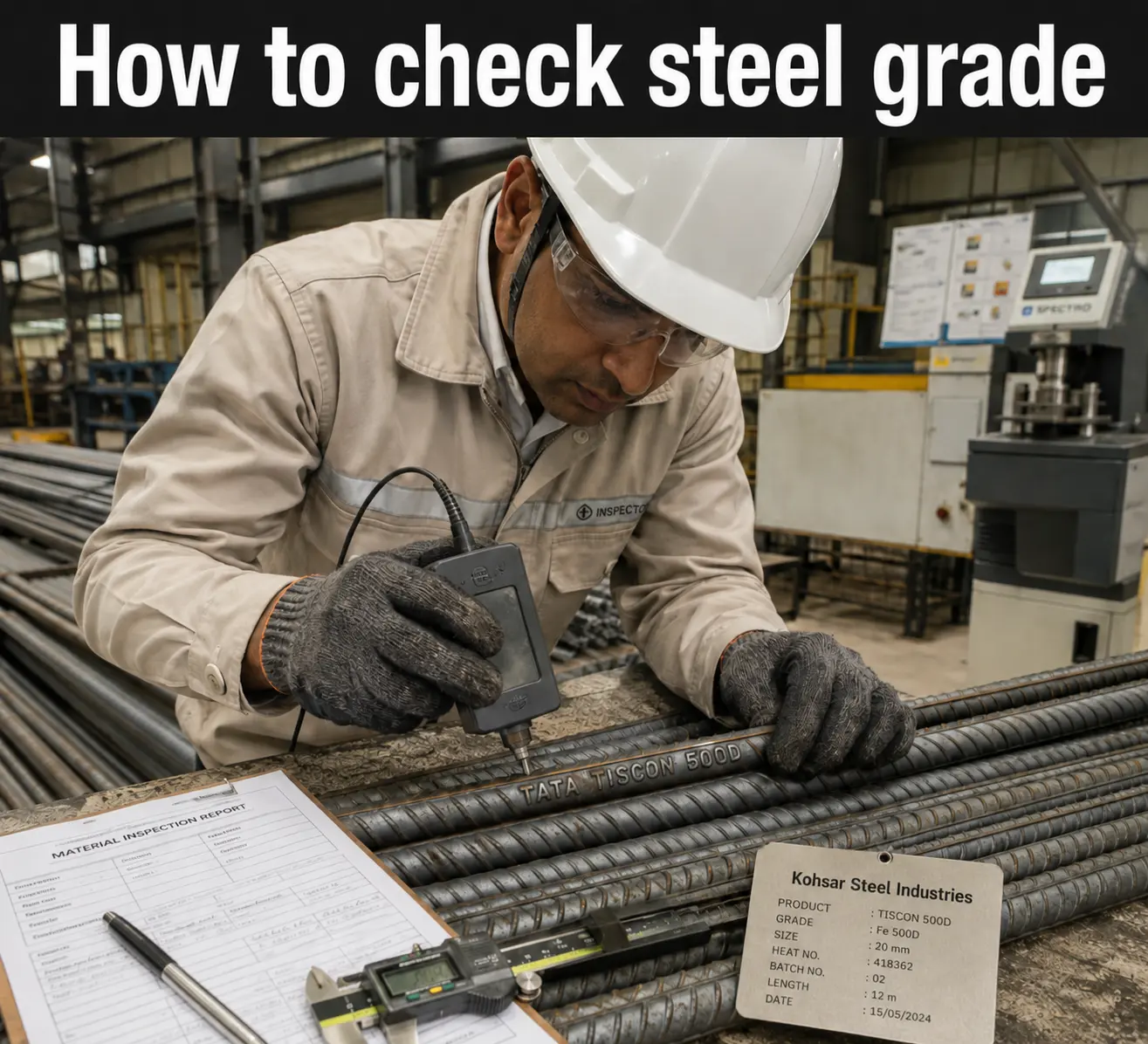
- Check the markings on the steel bar.
- Review the Mill Test Certificate (MTC).
- Confirm the applicable steel standard.
- Compare yield and tensile strength.
- Check the chemical composition when required.
- Perform tensile or other mechanical testing.
- Verify the material with the manufacturer or an independent laboratory.
Using more than one of these methods gives you greater confidence that the steel supplied actually meets the required specification.
1. Check the Markings on the Steel Bar
Many reinforcing bars have identifying marks rolled directly onto their surface. Depending on the applicable standard and manufacturer, these markings may provide information about the manufacturer, product identification, size, grade, or production details.
When receiving steel, inspect the bar carefully for these markings and compare the information with the purchase order and supplied documentation. Do not assume that a particular pattern or symbol automatically means Grade 40 or Grade 60. The markings need to be interpreted according to the relevant standard.
This is particularly useful when checking large quantities of reinforcement steel because you can perform an initial identification without sending every bar for laboratory analysis.
Can You Identify Steel Grade by Looking at the Bar?
Not reliably.
Two steel bars can have a similar appearance while having different mechanical properties. Surface color, texture, rib pattern, or general appearance should therefore not be treated as conclusive proof of steel grade.
Visual inspection is useful as an initial check, but proper documentation and testing provide much stronger verification.
2. Check the Mill Test Certificate
A Mill Test Certificate (MTC) is one of the most useful documents for verifying the properties of steel supplied for construction. It provides test information from the manufacturer and can help you determine whether the material meets the specified requirements.
Depending on the product and applicable specification, an MTC may include:
- Steel grade
- Applicable standard
- Heat number
- Chemical composition
- Yield strength
- Tensile strength
- Elongation
- Manufacturer information
- Test results
The heat number is particularly useful for material traceability. Where traceability is required, the information on the certificate should correspond with the material being supplied.
What Should You Check on a Steel Test Certificate?
Before accepting steel, compare the certificate with your project requirements and check:
- Grade: Does it match the specified grade?
- Standard: Is the correct specification listed?
- Heat number: Can the material be traced to the test results?
- Yield strength: Does it meet the required minimum?
- Tensile strength: Does it fall within the required specification?
- Elongation: Does it satisfy the relevant requirement?
- Chemical composition: Is it within the specified limits?
- Manufacturer details: Can the certificate be connected to the supplier and material?
A test certificate should not simply be filed away. Reviewing its information allows buyers, contractors, and engineers to confirm that the supplied material corresponds with what was ordered.
3. Check the Applicable Steel Standard
Steel grades are defined through specific standards that establish requirements for their chemical composition, mechanical properties, dimensions, testing, and other characteristics.
For reinforcement steel, standards such as ASTM, BS, and JIS may apply depending on the project and market. For example, ASTM specifications are widely used for reinforcing steel, while BS and JIS specifications may apply to projects requiring those standards.
When checking steel grade, first determine which standard your project requires. Then compare the steel’s documented properties against that standard.
For projects requiring ASTM-compliant reinforcement, you can learn more about ASTM steel standards and the requirements associated with reinforcement products.
4. Compare Yield Strength and Tensile Strength
Mechanical properties are essential when verifying the performance of reinforcement steel. Two of the most important properties are yield strength and tensile strength.
Yield strength refers to the stress at which steel begins to undergo permanent deformation. In simple terms, it indicates how much stress the steel can withstand before it no longer returns completely to its original shape.
Tensile strength refers to the maximum stress the steel can withstand while being pulled before failure.
These values can be found on the manufacturer’s test certificate or determined through laboratory testing.
Grade 40 vs Grade 60 Steel
One of the most common questions when purchasing reinforcement steel is how Grade 40 differs from Grade 60.
Under the relevant ASTM specification, Grade 40 has a minimum yield strength of 40,000 psi, while Grade 60 has a minimum yield strength of 60,000 psi.
| Property | Grade 40 | Grade 60 |
| Minimum yield strength | 40,000 psi | 60,000 psi |
| Relative yield strength | Lower | Higher |
| Typical application | Where Grade 40 is specified | Where higher-strength reinforcement is specified |
| Verification | Documentation/testing | Documentation/testing |
The grade should always be selected according to the structural design and applicable specification. A higher grade is not automatically the correct choice for every project.
For more information about higher-strength reinforcement, see Grade 60 steel bars.
5. Test the Chemical Composition of Steel
Chemical composition is another important factor in determining whether steel meets the requirements of a particular specification. Steel contains iron along with varying amounts of elements that influence its properties.
Depending on the applicable standard, testing may examine elements such as:
- Carbon
- Manganese
- Silicon
- Sulfur
- Phosphorus
- Other alloying elements
Laboratories can use specialized instruments, including spectrometric equipment, to determine the elemental composition of a steel sample.
However, chemical composition should not be considered the only factor in grade verification. Mechanical properties, documentation, and the applicable standard must also be considered.
6. Perform a Tensile Strength Test
When documentation is unavailable or independent verification is required, mechanical testing can provide direct evidence of how the steel performs under stress.
During a tensile test, a prepared steel specimen is subjected to increasing pulling force until its mechanical properties can be measured. The test can determine important values such as:
- Yield strength
- Tensile strength
- Elongation
These results can then be compared with the requirements of the relevant steel specification.
For reinforcement bars, tensile testing is particularly important because the steel is expected to work with concrete under structural loads. Testing helps determine whether the material possesses the required strength and ductility for its specified application.
7. Check the Weight and Dimensions of the Steel Bar
Measuring a steel bar’s diameter, length, and mass can help verify whether it corresponds to the specified bar size. This is an important quality check when receiving reinforcement steel.
However, there is an important distinction:
Bar size does not determine steel grade.
For example, a 16 mm reinforcement bar can be manufactured in different grades. Measuring its diameter can help confirm its size, but it cannot by itself prove whether the bar is Grade 40 or Grade 60.
Therefore, dimensions should be checked alongside the bar markings, documentation, and mechanical properties.
8. Verify Steel Grade Through Quality Testing
For construction projects where material quality is critical, steel should come from a manufacturer with established quality-control procedures. Verification can begin during production and continue through final testing and documentation.
A comprehensive quality-control process may involve:
- Raw material inspection
- Chemical analysis
- Production-process controls
- Dimensional checks
- Mechanical testing
- Final inspection
- Documentation
- Material traceability
Kohsar Steel Industries highlights chemical and physical testing as part of its manufacturing and quality-control process. You can learn more about Kohsar Steel Industries and its steel products and manufacturing processes.
Can Steel Grade Be Checked Without a Laboratory?
Yes, you can perform an initial steel grade check without laboratory equipment, but there are limits to what you can confirm. Bar markings, manufacturer documentation, and a Mill Test Certificate can provide valuable information about the material and its specified properties.
However, visual inspection alone cannot conclusively establish the steel grade. If documentation is missing, questionable, or does not match the supplied material, laboratory testing is the more reliable option.
For important structural projects, a practical approach is to combine:
- Bar identification and markings
- Manufacturer documentation
- Mill Test Certificate
- Applicable steel standard
- Mechanical test results
- Chemical analysis when required
This combination provides much stronger assurance than relying on a single identification method.
Choose Quality Steel for Your Construction Project
Knowing how to check steel grade helps you make a more informed purchasing decision, but choosing the right supplier is equally important. Quality reinforcement steel should be supported by appropriate testing, documentation, consistent manufacturing, and compliance with the required specifications.
Kohsar Steel Industries offers reinforcement steel products for construction applications, including Grade 40 and Grade 60 steel, with stated quality-control and testing processes.
If you are planning a construction project and need reliable reinforcement steel, explore Grade 60 steel bars, learn about ASTM steel standards, or visit Kohsar Steel Industries to explore its steel products and manufacturing information.