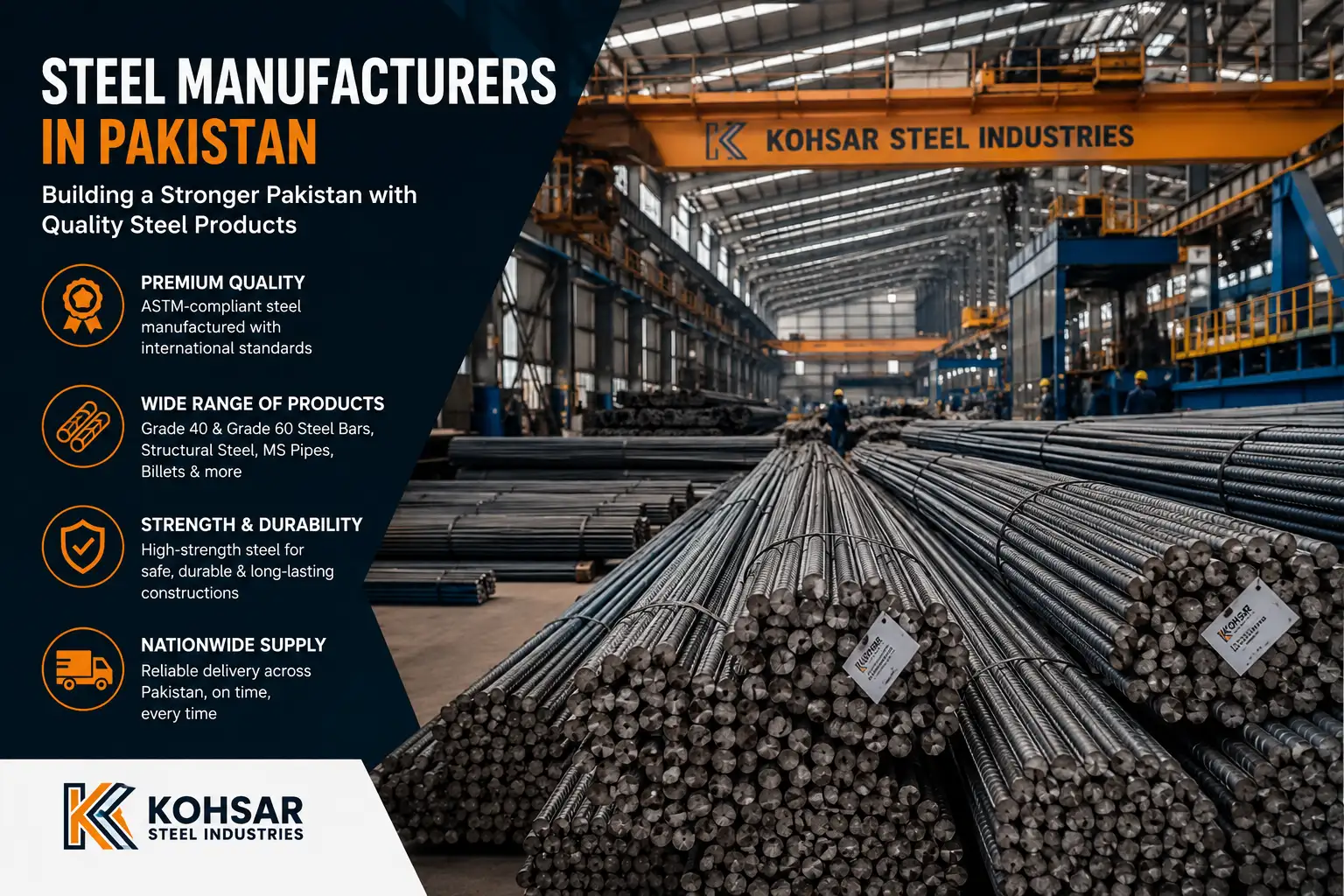
Choosing the right steel bar diameter is essential for building structures that are strong, durable, and designed to perform under demanding conditions. In Pakistan, steel bars are commonly identified by their diameter in millimeters, with sizes such as 10mm, 12mm, 16mm, 20mm, 22mm, and 25mm used for different reinforcement requirements. But which sarya size is right for your project, and how does bar diameter affect strength, weight, cost, and application?
This guide explains the different diameters of steel bars, their common uses, weight considerations, and the difference between size and steel grade. Whether you are a homeowner building a house, a contractor managing a project, an engineer specifying reinforcement, or an overseas Pakistani investing in construction back home, understanding steel bar sizes can help you make a more informed purchasing decision.
Kohsar Steel Industries manufactures Grade 40 and Grade 60 steel bars in accordance with international ASTM standards, offering reliable reinforcement solutions for construction projects across Pakistan.
Exploring Steel Bar Diameters and Sizes
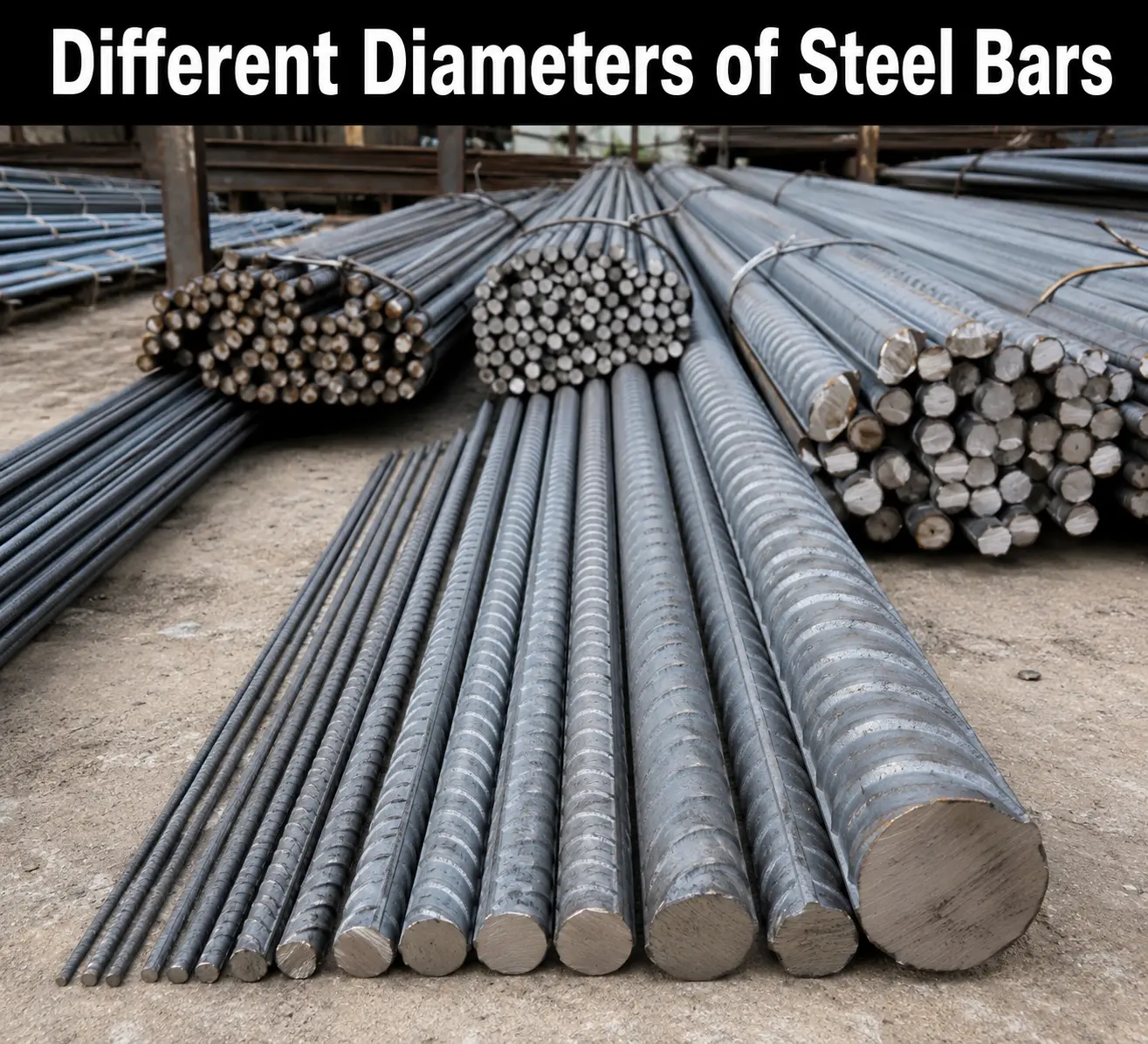
Steel bars are manufactured in different diameters because every reinforced concrete structure has different strength, load, and reinforcement requirements. The diameter of a steel bar refers to the nominal thickness of the bar, usually measured in millimeters. In Pakistan, construction professionals commonly refer to reinforcement bars as “sarya” and identify them by sizes such as 10mm, 12mm, 16mm, 20mm, 22mm, and 25mm.
At Kohsar Steel Industries, the commonly listed sizes include 10mm, 12mm, 16mm, 20mm, 22mm, and 25mm, with Grade 40 and Grade 60 options available.
What Does the Diameter of a Steel Bar Mean?
The diameter tells you how thick the steel bar is from one side to the other. As the diameter increases, the bar has a larger cross-sectional area and therefore contains more steel per unit length.
For example, a 25mm bar contains considerably more steel than a 10mm bar. However, this does not mean that a 25mm bar is automatically the right choice for every construction project. The required diameter depends on the structural design, loads, spacing, concrete specifications, and the engineer’s reinforcement drawings.
This distinction is particularly important for homeowners and overseas Pakistanis managing construction projects remotely. Choosing steel based only on the assumption that “bigger is better” can result in unnecessary costs or reinforcement that does not match the approved structural design.
Common Steel Bar Diameters in Pakistan
Different diameters serve different reinforcement requirements. Understanding the common sarya sizes can help you communicate more effectively with your contractor, engineer, or steel supplier.
1. 10mm Steel Bars
10mm steel bars are among the smaller commonly used reinforcement sizes. They are often specified where relatively smaller reinforcement is required, such as secondary reinforcement and certain slab or structural applications.
Kohsar’s ASTM specifications identify the 10mm nominal size with ASTM designation No. 3 and provide its corresponding nominal dimensions and mass.
The actual application, however, should always be determined from the project’s structural drawings rather than selected solely according to bar diameter.
2. 12mm Steel Bars
12mm steel bars provide a step up in diameter from 10mm reinforcement and are commonly encountered in residential and general construction applications.
When purchasing 12mm sarya, buyers should look beyond diameter alone. The required steel grade, applicable standard, quantity, and quality documentation are equally important when evaluating a supplier.
3. 16mm Steel Bars
16mm steel bars are a larger reinforcement option and are commonly specified for structural reinforcement where the design requires a greater amount of steel.
Kohsar’s ASTM specifications correspond the 16mm nominal size with ASTM designation No. 5.
For beams, columns, foundations, or other load-bearing members, the correct bar diameter and spacing should come directly from the structural engineer’s design.
Steel Bar Size Chart: 10mm to 25mm
For a quick comparison, the commonly listed Kohsar sizes can be presented as follows:
| Steel Bar Diameter | Common Size Reference |
| 10mm | 3/8″, #3 |
| 12mm | 1/2″, #4 |
| 16mm | 5/8″, #5 |
| 20mm | 3/4″, #6 |
| 22mm | 7/8″, #7 |
| 25mm | 1″, #8 |
Kohsar’s website uses these size references for its listed Grade 40 and Grade 60 steel bars.
20mm Steel Bars
20mm steel bars are used when a project requires larger reinforcement than smaller diameters can provide. They may be specified for heavier structural reinforcement depending on the design of the building or infrastructure project.
A larger diameter can provide a greater cross-sectional area, but the correct selection still depends on the structural calculations. Engineers may specify a particular combination of diameter and spacing to achieve the required reinforcement area while maintaining proper concrete cover and constructability.
22mm Steel Bars
22mm bars provide another larger-diameter option for structural reinforcement. In ASTM terminology, Kohsar’s specifications associate the 22mm nominal size with designation No. 7.
This size can be relevant to projects requiring substantial reinforcement, but buyers should always confirm the exact specification before ordering.
25mm Steel Bars
25mm steel bars are among the largest commonly listed sizes in Kohsar’s standard range. They are generally considered for heavier reinforcement requirements where the structural design calls for a larger steel cross-sectional area.
Kohsar’s ASTM specifications identify 25mm with designation No. 8 and provide corresponding nominal mass and dimensions.
For a construction project, however, the question should not simply be “What is the biggest sarya size?” Instead, the better question is: “Which diameter does my structural design require?”
How Does Steel Bar Diameter Affect Weight?
Diameter has a direct relationship with the amount of steel contained in a bar. As the diameter increases, the cross-sectional area increases, which means the bar becomes heavier per meter.
A commonly used theoretical formula for estimating the unit weight of a round steel bar is:
Weight per meter (kg) ≈ D² ÷ 162
Here, D represents the bar diameter in millimeters.
For example, a 10mm bar has a theoretical weight of approximately 0.617 kg per meter, while a 25mm bar is approximately 3.86 kg per meter.
This relationship is particularly useful when estimating the amount of steel required for a project, comparing quantities, and understanding how many tonnes of sarya may be needed. It also helps buyers evaluate quotations more accurately instead of comparing suppliers solely on the quoted price.
Does a Larger Steel Bar Mean Stronger Construction?
Not necessarily.
The strength and performance of a reinforced concrete structure depend on much more than bar diameter. Steel grade, quantity, spacing, concrete strength, structural design, workmanship, and applicable standards all contribute to the final performance of the structure.
For example, Kohsar’s ASTM information distinguishes between Grade 40 and Grade 60 based on yield and tensile strength requirements. Grade 40 has a minimum yield strength of 40,000 psi, while Grade 60 has a minimum yield strength of 60,000 psi.
Therefore, diameter and grade should not be confused. A 16mm Grade 60 bar and a 16mm Grade 40 bar have the same nominal diameter but different specified mechanical properties.
Grade 40 vs. Grade 60 Steel Bars
When selecting sarya in Pakistan, diameter is only one part of the specification. You also need to consider the steel grade.
Grade 40 Steel Bars
Grade 40 reinforcement has a specified minimum yield strength of 40,000 psi (280 MPa) under the ASTM information published by Kohsar.
Grade 60 Steel Bars
Grade 60 has a specified minimum yield strength of 60,000 psi (420 MPa), making it a higher-strength reinforcement grade. Kohsar manufactures Grade 60 deformed bars according to ASTM A615 and ASTM A706 requirements.
The appropriate grade should be selected according to the structural design and project specifications rather than simply choosing the higher grade because it sounds stronger.
How to Choose the Right Steel Bar Diameter for Your Project
Choosing the right steel bar diameter is not simply about selecting the thickest or heaviest sarya available. The correct diameter depends on the structural requirements of the project, including the type of structural member, expected loads, concrete specifications, reinforcement spacing, and the design prepared by a qualified structural engineer.
For homeowners, contractors, and overseas Pakistanis managing construction in Pakistan, it is particularly important to obtain the required steel specifications before placing an order. Your engineer or contractor should provide details such as the required diameter, grade, quantity, spacing, and applicable standard.
Steel Bar Diameter for Residential Construction
Residential projects can require several different steel bar diameters within the same building. A house may use smaller-diameter reinforcement in some applications and larger bars in heavily loaded structural members.
For example, the reinforcement specified for a slab may differ from that required for a column, beam, footing, or foundation. This is why there is no universal “best sarya size for house construction.”
Instead, follow the structural drawings and reinforcement schedule for each part of the building.
Steel Bar Diameter for Commercial and Large Construction Projects
Commercial buildings, industrial facilities, bridges, infrastructure, and other large projects may have considerably more demanding reinforcement requirements.
Such projects typically require careful coordination between structural engineers, contractors, quantity surveyors, and steel suppliers. The steel should be ordered according to the project’s approved specifications, including diameter, grade, quantity, and applicable standards.
For larger orders, buyers should also consider supplier capacity, consistency of manufacturing, testing, delivery arrangements, and documentation.
What Are Deformed Steel Bars?
Deformed steel bars are reinforcement bars with ribs or surface deformations designed to improve the mechanical bond between the steel and surrounding concrete.
This bond is important because reinforced concrete relies on the interaction between concrete and steel. Concrete provides strong resistance to compression, while reinforcement helps provide tensile capacity.
Kohsar Steel Industries lists deformed steel bars in multiple diameters and grades and states that its reinforcement products are manufactured and tested according to applicable standards.
Steel Bar Standards: Why They Matter
A steel bar’s diameter tells you its size, but a quality construction product must also meet the relevant material and performance requirements.
Depending on the project, specifications may reference standards such as:
- ASTM A615/A615M
- ASTM A706
- BS 4449
- JIS 3112
Kohsar’s website references these standards in relation to its steel products and explains its testing and quality-control processes.
What Should You Check When Buying Sarya?
Before purchasing steel bars, consider more than the diameter and price. Ask the supplier about:
- Required bar diameter
- Steel grade
- Applicable standard
- Mechanical properties
- Chemical composition
- Testing and quality control
- Quantity and weight
- Delivery requirements
- Project-specific documentation
This is especially important when purchasing steel for a major construction project where inconsistent material can create serious cost and project-management problems.
How to Check the Quality of Steel Bars
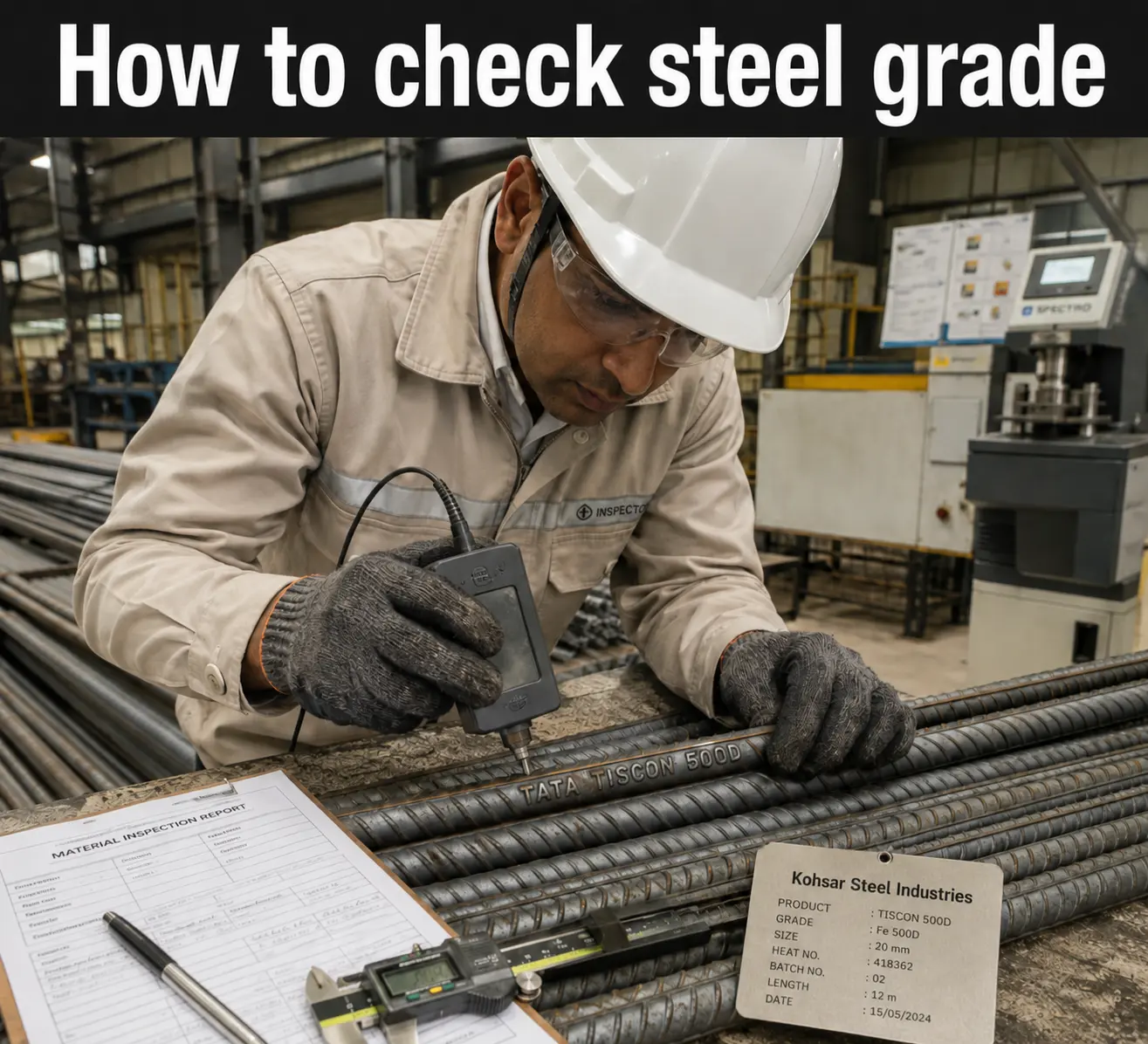
Quality steel begins with controlled manufacturing and testing. Buyers should work with suppliers that can demonstrate appropriate quality-control practices and provide relevant product information.
Kohsar describes a manufacturing process that includes chemical testing, continuous casting, reheating, rolling, and physical testing. This quality-control approach helps ensure that the finished reinforcement bars meet the specified requirements.
When purchasing large quantities, buyers can also request relevant test certificates or documentation where applicable to verify that the supplied material corresponds with the required specifications.
Final Thoughts
Different steel bar diameters exist because reinforced concrete structures have different reinforcement requirements. From 10mm and 12mm bars to heavier 20mm, 22mm, and 25mm options, each diameter provides a different cross-sectional area and unit weight.
However, choosing the right sarya is about more than diameter. Steel grade, manufacturing quality, applicable standards, testing, quantity, and structural specifications all play an important role.
For anyone building in Pakistan, including overseas Pakistanis managing construction remotely, the safest approach is to follow the structural engineer’s specifications and purchase from a reliable steel manufacturer that can provide the required quality and product information.
With the right diameter, grade, and quality of steel, you can make a more informed investment in the strength and long-term performance of your construction project.