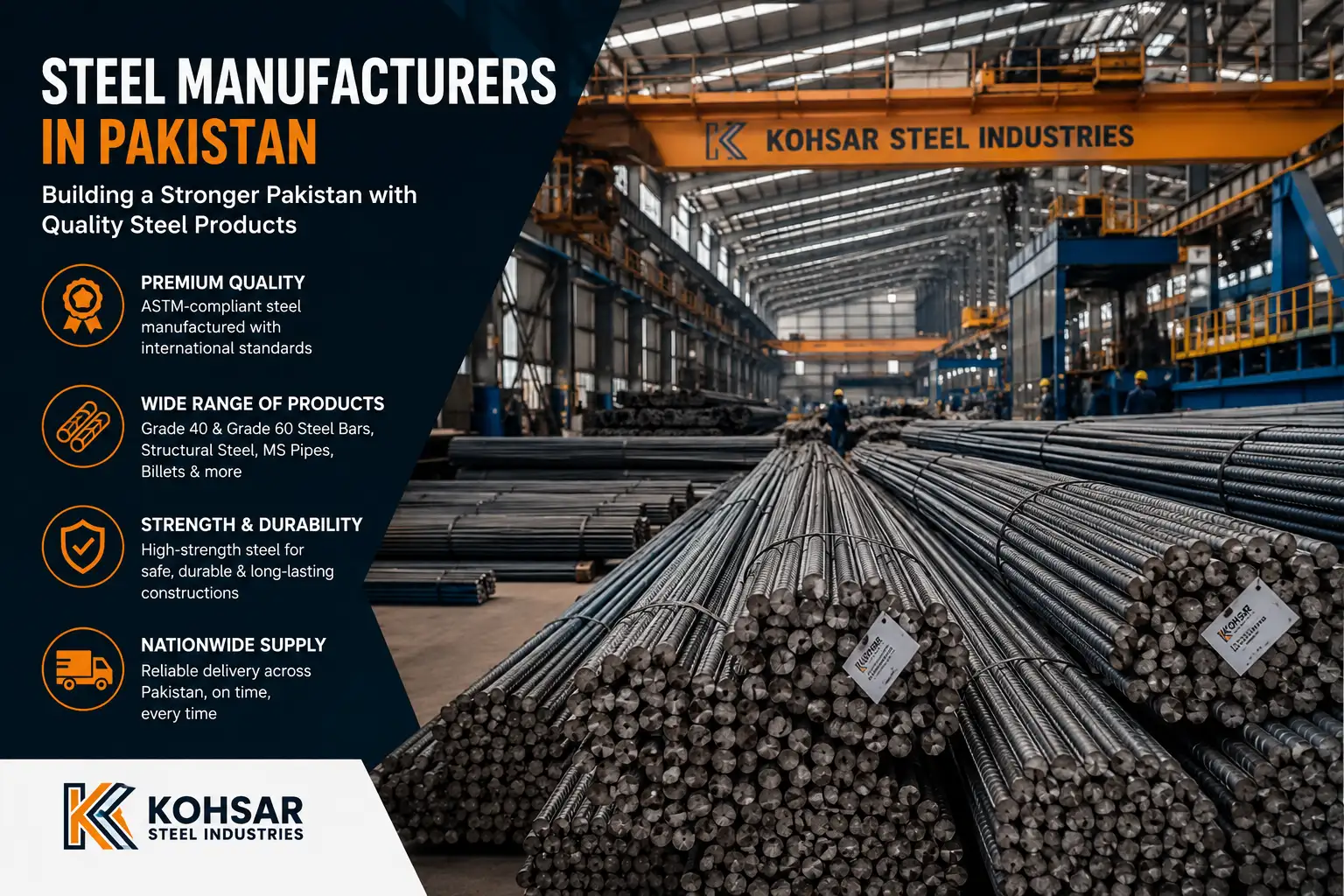
When strength, durability, and reliable fabrication matter, square steel bars are a practical choice for a wide range of construction and industrial applications. Their four equal sides provide a uniform, stable profile that makes them particularly useful for frames, gates, railings, supports, machinery components, and general steel fabrication. But choosing the right square steel bar is about more than simply selecting a size; it requires attention to steel grade, dimensions, quality, weight, application, and manufacturing standards.
Whether you are a contractor, fabricator, engineer, builder, or industrial buyer, understanding these factors can help you select steel that performs reliably and delivers better value over the life of your project.
As an established steel manufacturer serving Pakistan, Kohsar Steel Industries focuses on quality-controlled steel production and structural steel products for diverse project requirements.
What Are Square Steel Bars?
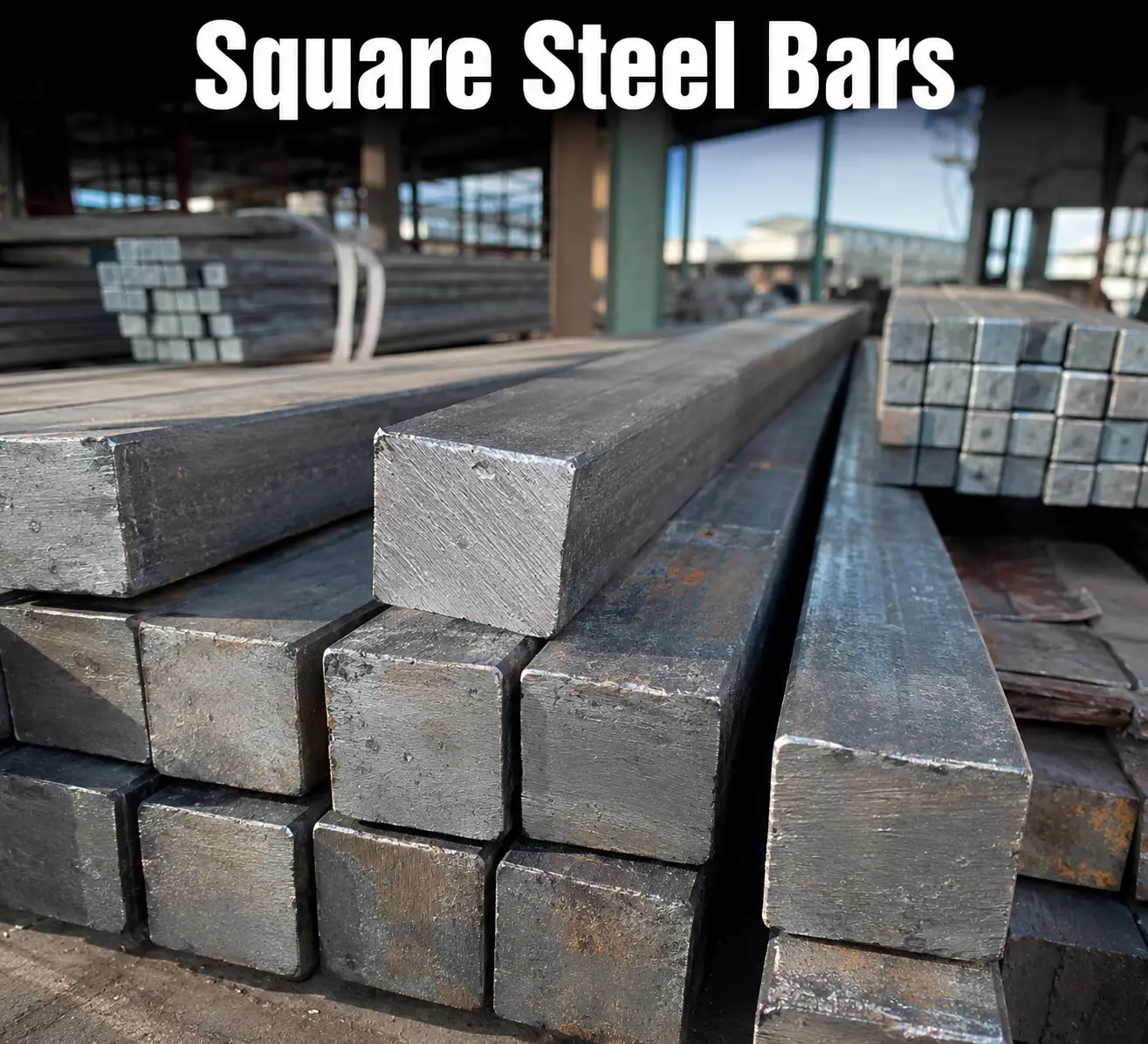
Square steel bars are solid steel sections manufactured with a square cross-sectional shape, meaning they have four equal sides and four corners. Unlike round steel bars, which have a circular profile, square bars provide flat surfaces on all four sides. This makes them particularly convenient for many fabrication, framing, support, and structural applications.
Square bars can be manufactured in different dimensions and steel grades depending on their intended use. The appropriate specification will depend on factors such as the required strength, load, fabrication process, environmental conditions, and project design.
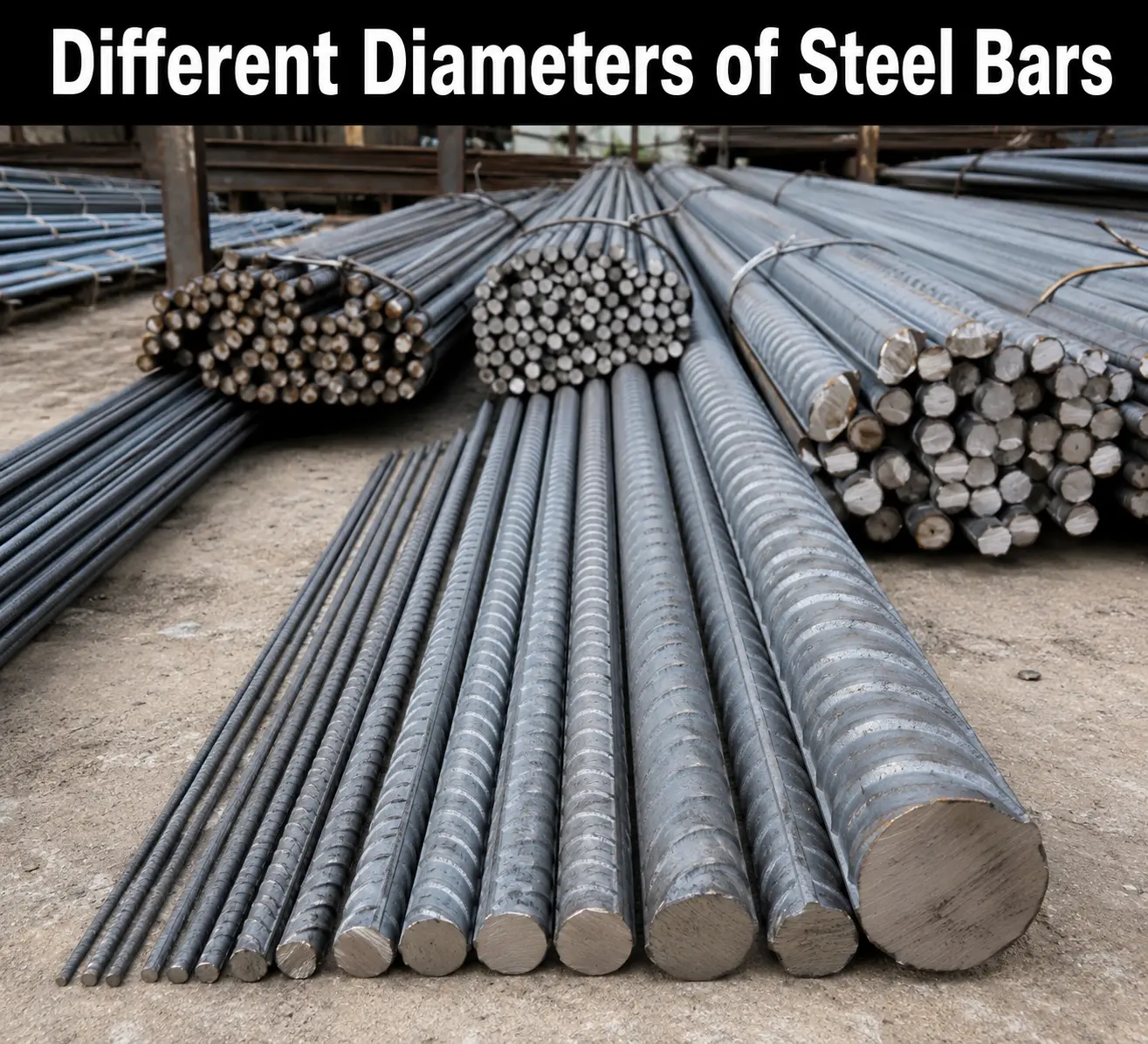
For buyers, one important distinction is that square steel bars are not the same as reinforcing bars (rebar). Reinforcing bars are specifically designed to reinforce concrete, whereas square bars are commonly used as solid steel sections in fabrication, structural components, supports, frames, and other applications.
Why Is the Square Shape Useful?
The geometry of a square steel bar offers several practical advantages. Its flat sides can make measuring, positioning, cutting, drilling, and joining more convenient during fabrication. The consistent cross-section also makes square bars suitable for applications where a uniform and rigid steel section is required.
For example, a fabricator constructing a steel frame may find the flat faces of a square bar easier to align and weld than a round section. Similarly, square bars can provide a clean, symmetrical appearance in gates, railings, grills, and other visible metalwork.
The key is to select a bar with dimensions and material properties appropriate for the specific application rather than assuming that a larger or heavier bar is automatically the best option.
What Are Square Steel Bars Used For?
One of the most common questions buyers ask is: What are square steel bars used for?
Their versatility makes them suitable for numerous construction, fabrication, engineering, and industrial applications.
1. Construction Applications
Square steel bars can be used in various construction-related fabrication requirements, including supports, frames, brackets, gates, railings, and other steel components.
The exact application depends on the project’s engineering requirements. For load-bearing or safety-critical applications, the bar should be selected according to the specifications provided by the responsible engineer or project designer.
2. Gates, Grills, and Railings
Square steel bars are widely used in metalwork because their four flat sides provide a clean and symmetrical appearance. They can be incorporated into:
- Main gates
- Security grills
- Stair railings
- Boundary fencing
- Balcony railings
- Decorative steelwork
- Metal frames
Their straightforward geometry also allows fabricators to combine them with angles, flats, sheets, and other steel sections to create customized designs.
3. Steel Fabrication
Fabricators use square bars to make different types of steel structures and components. Depending on the grade and dimensions, they can be cut, drilled, welded, and machined for specific requirements.
Common fabricated applications include:
- Equipment frames
- Machine supports
- Racks
- Brackets
- Structural frames
- Work stands
- Industrial supports
The correct welding and fabrication procedure should always be determined according to the steel grade and intended application.
4. Industrial and Engineering Applications
Square steel bars can also be useful in industrial environments where a solid and uniform steel section is required. Their applications may include machinery supports, manufacturing fixtures, equipment structures, and other engineered components.
In these situations, dimensions alone are not enough to select the right product. Mechanical properties, tolerances, machinability, welding requirements, and applicable standards may all need to be considered.
Types of Square Steel Bars
Square steel bars can differ according to their steel composition, grade, manufacturing method, surface condition, and dimensions. Understanding these differences helps buyers avoid selecting a product that does not match their project requirements.
Mild Steel Square Bars
Mild steel square bars are commonly considered for general fabrication and construction-related applications where a combination of strength, workability, and cost is required.
Their suitability depends on the specific grade and manufacturing specification. Before purchasing, buyers should confirm the material grade and mechanical properties rather than relying solely on the general term “mild steel.”
Carbon Steel Square Bars
Carbon steel contains carbon as a principal alloying element, and variations in composition can influence properties such as strength, hardness, ductility, and machinability.
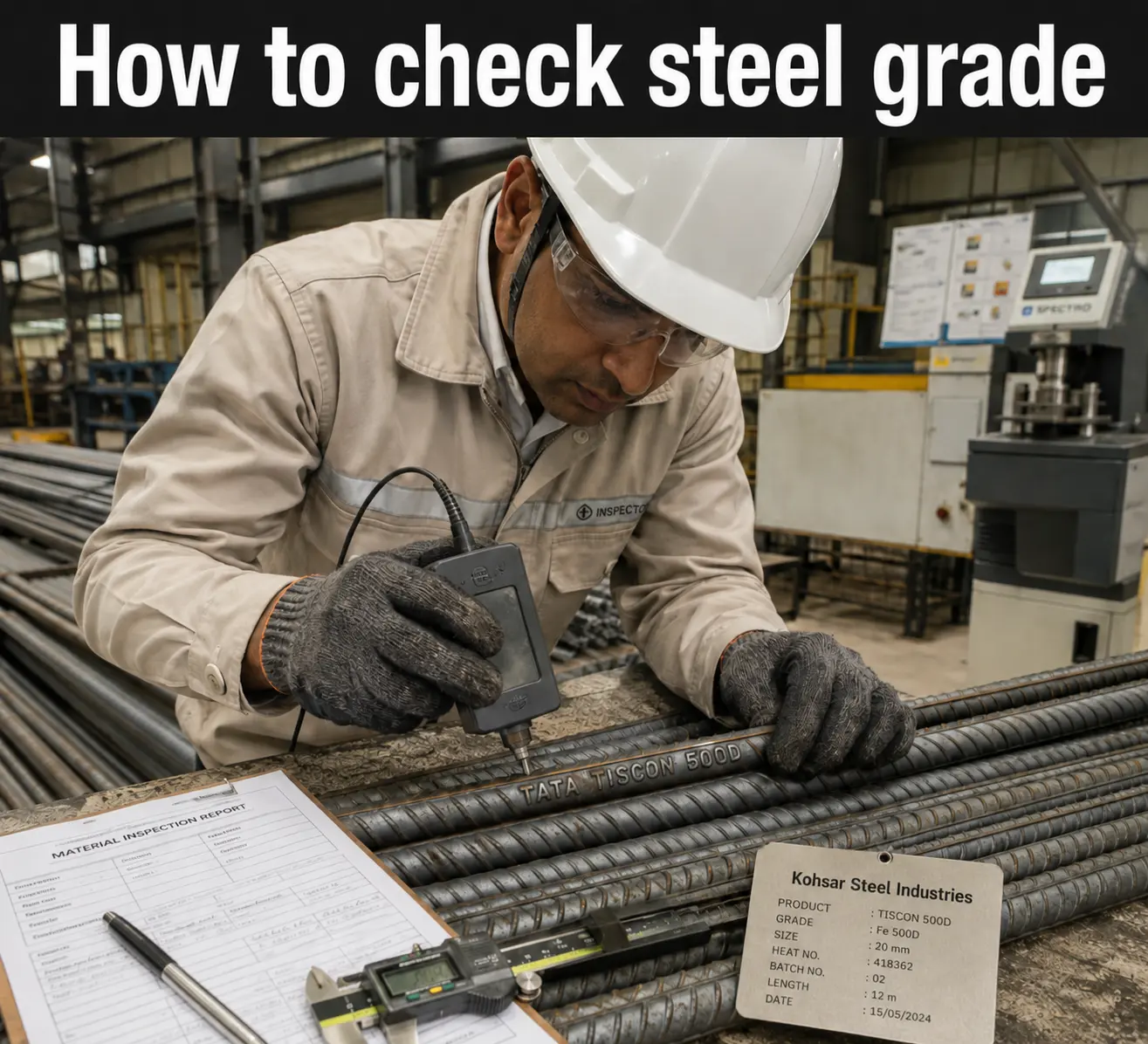
For industrial or engineering applications, the precise material specification is therefore important. A supplier should be able to provide the relevant product information and testing documentation where required.
Hot-Rolled Square Bars
Hot rolling involves heating steel to an elevated temperature before passing it through rollers to achieve the required shape and dimensions. Hot-rolled steel products are commonly used for structural and fabrication applications.
The manufacturing process is important because consistent production and quality control help ensure that the finished steel meets the required specifications.
How Are Square Steel Bars Manufactured?
The quality of a steel bar begins long before it reaches a construction site or fabrication workshop. Manufacturing and quality-control processes can have a significant impact on the consistency and performance of the finished product.
A typical steel production process can involve:
- Raw material sourcing
- Scrap charging and melting
- Chemical testing
- Metal tapping
- Continuous casting
- Billet preparation and stacking
- Final chemical testing
- Reheating
- Rolling
- Physical testing
- Storage and dispatch
Kohsar Steel Industries describes a production process that includes raw-material sourcing, chemical testing, continuous casting, billet preparation, reheating, rolling, physical testing, and final dispatch.
For readers interested in the broader steel-manufacturing industry, our guide to steel production in Pakistan provides additional information about the country’s steel sector and its role in construction and infrastructure.
Square Steel Bar Sizes
One of the most important factors when purchasing square steel bars is selecting the correct size. Square bars are available in different cross-sectional dimensions and lengths to suit various fabrication, construction, and industrial requirements.
The appropriate size depends on how the bar will be used. A small square bar may be suitable for light fabrication, grills, or decorative metalwork, while larger sections may be required for heavier frames, supports, and industrial applications.
Before ordering, consider:
- Required side dimensions
- Overall bar length
- Project load requirements
- Fabrication method
- Welding requirements
- Required quantity
- Applicable engineering specifications
It is important not to select a bar simply because it is heavier or larger. The correct dimensions should be determined according to the requirements of the project.
How Do You Choose the Right Square Steel Bar Size?
Start by identifying the purpose of the bar. For decorative applications such as gates and railings, appearance, ease of fabrication, and dimensions may be the primary considerations. For structural or industrial applications, strength, stiffness, load requirements, and engineering specifications become much more important.
If the application is load-bearing or safety-critical, the size and grade should be selected according to the relevant engineering design rather than estimated solely from general size charts.
Square Steel Bar Weight
Square steel bar weight is another important consideration, particularly when purchasing steel by weight or estimating transportation and project costs.
The theoretical weight of a square bar depends primarily on its cross-sectional area, length, and the density of steel.
For a square section:
Cross-sectional area = Side × Side
And the approximate theoretical weight can be calculated using:
Weight = Cross-sectional Area × Length × Steel Density
For example, increasing the side dimension increases the cross-sectional area significantly. This means a relatively small increase in the dimensions of a square bar can result in a noticeable increase in its overall weight.
The actual supplied weight can vary depending on manufacturing tolerances and the specific product specification. For purchasing and structural calculations, use the manufacturer’s technical information or applicable standard rather than relying only on a general online calculator.
Square Steel Bars vs. Round Steel Bars
Both square and round steel bars have important applications, but their shapes make them better suited to different requirements.
| Feature | Square Steel Bars | Round Steel Bars |
| Cross-section | Four equal sides | Circular |
| Flat surfaces | Four | None |
| Fabrication | Convenient for frames and many fabricated structures | Suitable for applications requiring a circular profile |
| Appearance | Angular and symmetrical | Smooth and rounded |
| Common applications | Frames, gates, railings, supports, fabrication | Shafts, pins, supports, machinery and other applications |
| Best choice | Depends on project requirements | Depends on project requirements |
Neither profile is universally better. The right choice depends on the design, required mechanical properties, fabrication process, and intended application.
For example, if a project requires flat surfaces for joining or alignment, a square bar may be advantageous. If the component needs a circular cross-section for rotational or machining purposes, a round bar may be more appropriate.
Square Steel Bars vs. Flat Bars
Square bars and flat bars can sometimes be confused because both have straight edges and flat surfaces, but they are different steel sections.
A square steel bar has four equal sides, while a flat bar is considerably wider than it is thick.
Flat bars are commonly used where a wide, thin steel section is required, such as brackets, plates, supports, frames, and fabrication components. Square bars are better suited to applications requiring a solid, symmetrical section.
When deciding between the two, consider the required dimensions, strength, appearance, fabrication method, and engineering requirements.
Square Steel Bar Price in Pakistan
If you are searching for the square steel bar price in Pakistan, there is no single price that applies to every square bar.
The final price can vary depending on several factors, including:
- Steel grade
- Bar dimensions
- Length
- Weight
- Order quantity
- Raw-material and market conditions
- Manufacturing requirements
- Delivery location
- Applicable specifications
- Supplier and order terms
For this reason, quoting an outdated fixed price can be misleading. Buyers should request a current quotation based on their exact product requirements.
For construction companies, fabricators, and industrial buyers, purchasing in larger quantities may also involve different commercial terms from small individual orders.
If you need current information about steel products and purchasing requirements, you can contact Kohsar Steel Industries with your required dimensions, quantity, and application.
Closing Note
Square steel bars are versatile steel sections that can provide strength, durability, and fabrication flexibility across construction, engineering, industrial, and metalworking applications. Their four-sided profile makes them particularly useful for frames, gates, railings, supports, and fabricated structures, while different grades and dimensions allow them to serve a broad range of requirements.
However, choosing the right square steel bar should never be based on size or price alone. Grade, dimensions, manufacturing quality, applicable standards, weight, intended application, and supplier reliability all deserve careful consideration.
If you’re planning a construction, fabrication, or industrial project, explore Kohsar Steel Industries’ steel products or contact the team for your steel requirements and discuss the specifications, quantities, and delivery requirements for your project.