
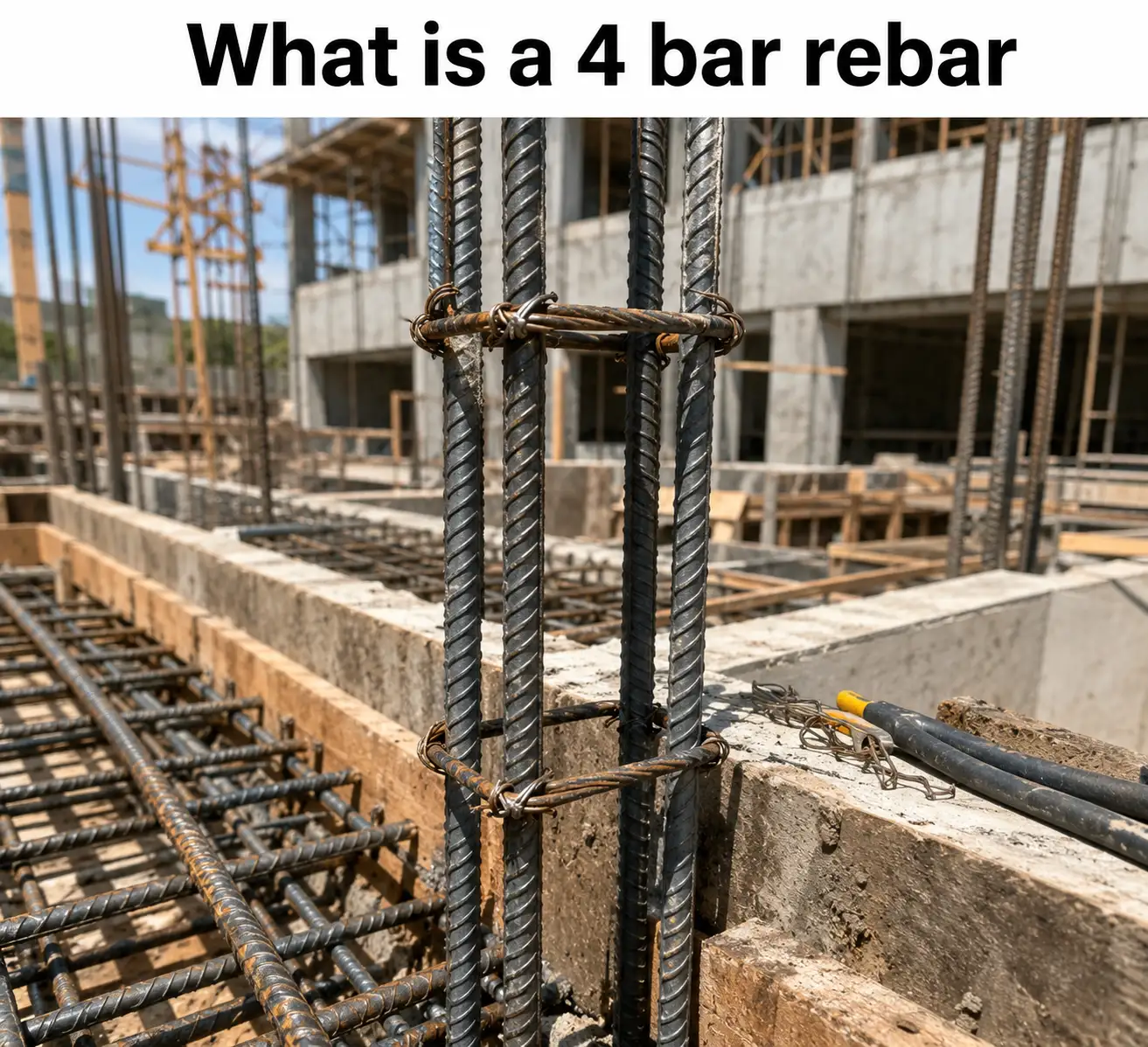

If you are involved in construction, you may have come across the term 4 bar rebar or #4 rebar and wondered what it actually means. A #4 rebar is a commonly used reinforcing steel bar with a nominal diameter of 1/2 inch, or approximately 12.7 mm under the US sizing system. It is used to strengthen concrete structures by providing reinforcement where concrete alone cannot effectively resist tensile forces.
However, #4 rebar can be confusing because it is sometimes associated with 12 mm rebar in metric markets. Understanding its actual size, weight, grade, and applications can help you select the right steel for your construction requirements.
Kohsar Steel Industries offers a range of deformed steel bars for reinforced concrete construction in different sizes and grades, making it important to understand the specifications before choosing a bar for your project.
For more information about steel products and reinforcement solutions, you can also visit Kohsar Steel Industries.
What Is a 4 Bar Rebar?
A 4 bar rebar, commonly written as #4 rebar, is a widely used reinforcing steel bar for concrete construction. Under the U.S. rebar sizing system, #4 rebar has a nominal diameter of 1/2 inch (0.500 inch), or approximately 12.7 mm. Its purpose is to reinforce concrete and help it withstand tensile forces that concrete alone cannot handle effectively.
The term can sometimes cause confusion, particularly in markets where metric measurements are commonly used. A 12 mm rebar is close in size to #4 rebar, but the two are not exactly the same nominal diameter. For structural work, the applicable standard, engineering drawings, and product specifications should always determine which bar is required.
Kohsar Steel Industries manufactures and supplies deformed steel bars for reinforced concrete structures, with reinforcing products available in different grades and specifications.
What Does #4 Mean in Rebar?
The “#4” designation identifies the size of the reinforcing bar rather than its strength or grade. In the U.S. sizing system, the number is related to the bar’s nominal diameter in eighths of an inch. Therefore, #4 represents 4/8 inch, which equals 1/2 inch.
This means #4 rebar is:
- Nominal diameter: 1/2 inch
- Diameter in decimal: 0.500 inch
- Approximate metric diameter: 12.7 mm
- Cross-sectional area: approximately 0.20 square inches or 129 mm²
It is important to remember that size and grade are different specifications. The #4 designation tells you the approximate size of the bar, while a designation such as Grade 40 or Grade 60 refers to its strength characteristics.
Is #4 Rebar the Same as 12mm Rebar?
Not exactly. Although #4 rebar and 12 mm rebar are very close in diameter, they come from different sizing conventions. #4 rebar has a nominal diameter of approximately 12.7 mm, while metric 12 mm rebar has a nominal diameter of 12 mm.
For this reason, the two should not automatically be substituted for one another simply because their dimensions are similar. The structural drawings, applicable construction standard, and material specification should be checked before selecting or replacing reinforcement.
This distinction is especially relevant when comparing 12 mm and other steel reinforcement products offered by a steel manufacturer.
What Size Is #4 Rebar?
The size of #4 rebar is generally expressed using the U.S. bar designation system. Its nominal diameter is 1/2 inch, making it a popular medium-sized reinforcing bar for many concrete applications.
| Specification | #4 Rebar |
| Bar designation | #4 |
| Nominal diameter | 1/2 inch |
| Decimal diameter | 0.500 inch |
| Approximate metric diameter | 12.7 mm |
| Cross-sectional area | 0.20 in² |
| Common form | Deformed reinforcing bar |
The actual dimensions and permissible variations can depend on the manufacturing standard being followed. For this reason, contractors and purchasers should verify the applicable specification rather than relying only on a general size conversion.
Kohsar Steel Industries states that its reinforcing products include deformed bars and cold twisted bars in Grade 40 and Grade 60, and its production process includes chemical and physical testing of the finished bars.
How Much Does #4 Rebar Weigh?
Knowing the weight of #4 rebar is important when estimating material quantities, transportation requirements, and overall construction costs. The nominal weight of a standard U.S. #4 rebar is approximately 0.668 pounds per foot, or about 0.994 kg per meter.
The weight is determined by the bar’s nominal diameter and steel density. Larger reinforcing bars contain more steel per unit length and therefore weigh more.
#4 Rebar Weight Per Foot
A standard #4 rebar weighs approximately 0.668 lb per foot. This value can be used when estimating the total weight of a project where bar lengths are specified in feet.
For example, a 20-foot length of nominal #4 rebar would weigh approximately:
20 × 0.668 = 13.36 lb
Actual supplied weight should be verified against the relevant product standard and mill documentation.
#4 Rebar Weight Per Meter
The nominal weight of #4 rebar is approximately 0.994 kg per meter.
When calculating material requirements, remember that the weight of 12 mm metric rebar is different from that of nominal #4 rebar because their nominal diameters are different. This is another reason why the terms should not be treated as perfectly interchangeable.
What is #4 Rebar Used For?
#4 rebar is used in a wide range of reinforced-concrete applications. Its relatively moderate diameter makes it suitable for projects where structural reinforcement is required without using larger and heavier reinforcing bars.
Common applications can include:
- Concrete slabs
- Foundations and footings
- Residential construction
- Concrete walls
- Beams
- Driveways
- Reinforced concrete structures
- Other structural and non-structural concrete applications
However, the fact that #4 rebar is commonly used in these applications does not mean it is automatically suitable for every project. The required bar size, spacing, grade, concrete strength, and reinforcement arrangement should be determined according to the structural design and applicable building requirements.
Is #4 Rebar Good for Concrete Slabs?
#4 rebar can be specified for concrete slabs, depending on the project’s structural requirements. The appropriate reinforcement is determined by factors such as slab thickness, loading, span, concrete properties, bar spacing, and design requirements.
For this reason, choosing #4 simply because it is a commonly used size is not a substitute for an engineered reinforcement design.
Is #4 Rebar Good for Foundations?
#4 Rebar may be used in certain foundations and footings, but the appropriate reinforcement depends on the loads and structural design of the foundation. Some projects may require larger bars, different spacing, or a different grade of reinforcement.
The safest approach is to follow the reinforcement schedule and specifications provided for the project rather than selecting a bar size based solely on its availability or general popularity.
#4 Rebar Grades
The size of a rebar and its grade are two different things. A #4 bar can be manufactured to different strength grades depending on the applicable standard and project requirements.
Two grades commonly encountered in construction are Grade 40 and Grade 60.
#4 Grade 40 Rebar
Grade 40 identifies the strength classification of the steel rather than its physical diameter. A #4 Grade 40 bar is therefore the same general size designation as other #4 bars, but it has different specified mechanical properties.
#4 Grade 60 Rebar
Grade 60 is another commonly specified reinforcing steel grade. A #4 Grade 60 bar has the same nominal #4 size designation but a different strength classification.
Kohsar Steel Industries lists Grade 40 and Grade 60 reinforcing products among its steel offerings and states that its bars undergo chemical and physical testing as part of its production and quality-control process.
Which Is Better: Grade 40 or Grade 60?
Neither grade is universally “better.” The appropriate choice depends on the structural design, required strength, applicable standards, and specifications for the construction project.
The key point is simple: #4 tells you the approximate bar size, while Grade 40 or Grade 60 tells you about the steel’s strength classification.
#4 Rebar vs Other Common Rebar Sizes
Rebar is available in several sizes, and each size provides a different amount of steel cross-sectional area. #4 rebar sits between smaller bars such as #3 and larger bars such as #5 and #6.
| Rebar Size | Nominal Diameter | Common Use |
| #3 | 3/8 inch | Light reinforcement |
| #4 | 1/2 inch | General reinforcement |
| #5 | 5/8 inch | Heavier reinforcement |
| #6 | 3/4 inch | Larger structural reinforcement |
| #7 | 7/8 inch | Heavy reinforcement |
| #8 | 1 inch | Large structural reinforcement |
A larger bar generally contains more steel and provides a greater cross-sectional area. However, using a larger bar does not automatically make a structure better. Engineers determine the appropriate bar size and spacing based on the loads, concrete design, structural requirements, and applicable standards.
#4 Rebar vs 12mm Rebar
The comparison between #4 rebar and 12mm rebar is particularly important when working with both imperial and metric specifications.
#4 rebar has a nominal diameter of 1/2 inch, or approximately 12.7 mm, while 12mm rebar has a nominal diameter of 12 mm. Although the difference is relatively small, they are separate nominal sizes.
| Feature | #4 Rebar | 12mm Rebar |
| Sizing system | U.S./imperial designation | Metric designation |
| Nominal diameter | 1/2 inch | 12 mm |
| Approx. diameter | 12.7 mm | 12 mm |
| Are they identical? | No | No |
| Substitution | Requires specification/design approval | Requires specification/design approval |
This distinction matters when calculating steel quantities, reinforcement areas, and weight. If construction drawings specify one size, it should not be replaced with another solely because the diameters appear similar.
For projects requiring metric reinforcement, you can review Kohsar Steel Industries’ available steel bar sizes and confirm the required specification before ordering.
How to Identify #4 Rebar
Identifying reinforcing steel correctly is important before it is used in a construction project. Simply looking at the bar may not provide enough information to determine its size, grade, and applicable manufacturing standard.
1. Check the Bar Markings
Reinforcing bars can contain markings that identify information such as the manufacturer, bar size, steel type, and grade, depending on the applicable standard.
These markings can provide useful information when checking whether the delivered material corresponds with the project specification.
2. Measure the Diameter
A measuring tool such as a caliper can help determine the approximate physical diameter of a bar. However, measuring the bar alone does not confirm its grade or complete material specification.
For procurement and structural applications, the relevant product documentation should also be checked.
3. Check the Mill Certificate or Product Specification
Material documentation can provide important information about the steel’s chemical composition, mechanical properties, grade, and manufacturing standard.
This is particularly important when large quantities of reinforcement are being purchased for a commercial or structural project.
Why Is Rebar Used in Concrete?
Concrete is highly effective at resisting compressive forces, but it is comparatively weak when subjected to tension. Reinforcing steel helps address this limitation by providing tensile capacity within the concrete structure.
Rebar is placed in strategic locations within concrete so that the steel and concrete work together. The deformations on a reinforcing bar also help improve its mechanical bond with the surrounding concrete.
This combination allows reinforced concrete to be used for a wide range of structural applications, including foundations, slabs, beams, columns, walls, and other construction elements.
For projects requiring reinforcing products, you can learn more about Kohsar Steel Industries’ deformed steel bars.
What Should You Consider When Buying #4 Rebar?
Choosing reinforcing steel involves more than simply selecting the correct diameter. Before purchasing #4 rebar, consider the following factors:
- Bar size: Confirm that #4 is the size specified for the project.
- Steel grade: Verify whether Grade 40, Grade 60, or another grade is required.
- Applicable standard: Make sure the product complies with the standard specified for the project.
- Quantity: Calculate the required number and length of bars.
- Weight: Consider the total steel weight for transportation and project calculations.
- Quality documentation: Request relevant testing and material documentation where required.
- Supplier reliability: Choose a manufacturer or supplier with appropriate production and quality-control practices.
- Delivery: Confirm available lengths, quantities, delivery location, and schedule.
Kohsar Steel Industries states that it performs chemical and physical testing of its steel products and references standards including ASTM A615/A615M, BS 4449, and JIS 3112. You can learn more about Kohsar Steel Industries and its quality standards.
How Much Does #4 Rebar Cost?
The price of #4 rebar can change over time, so there is no single price that applies to every project. Steel prices can be influenced by raw-material costs, market conditions, quantity, grade, location, transportation, and supplier requirements.
When comparing quotations, buyers should look beyond the basic price per bar or per unit of weight. Check whether the quotation includes the required grade, size, quantity, testing documentation, transportation, and other applicable costs.
If you need pricing for a specific quantity or project requirement, you can contact Kohsar Steel Industries for a quotation.
Final Takeaway
A 4 bar rebar, or #4 rebar, is a commonly used reinforcing steel bar with a nominal diameter of 1/2 inch (approximately 12.7 mm). It can be used in various reinforced-concrete applications, including slabs, foundations, walls, beams, and residential construction.
One important point is that #4 rebar and 12mm rebar are not exactly the same size, even though they are very close in diameter. Similarly, the #4 designation identifies the bar’s size, while grades such as Grade 40 and Grade 60 describe its strength classification.
Before purchasing reinforcement, always verify the required size, grade, standard, quantity, and material specifications against the project requirements. If you are looking for reinforcing steel for your construction project, explore Kohsar Steel Industries’ steel products or contact the Kohsar Steel Industries team to discuss your requirements.